How to Choose a Compliant Crypto Exchange in Australia in 2026: A Guide to Verifying Credentials, Security, and Fees
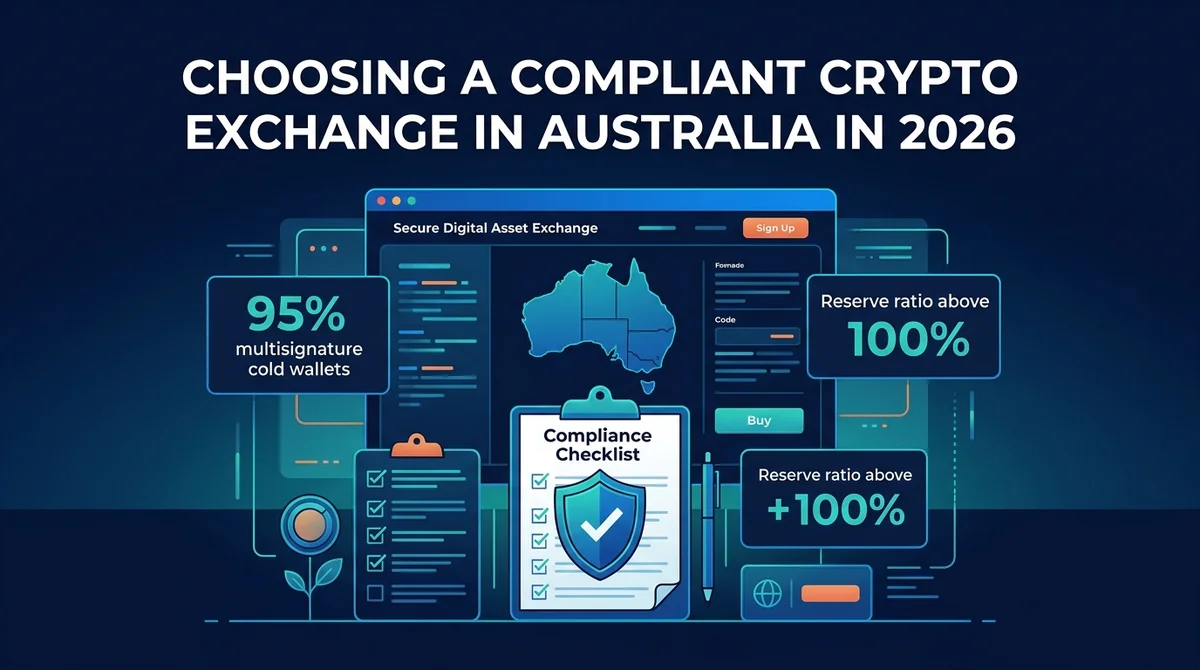
How can Australians choose a compliant crypto exchange? Verify licensing, KYC/AML, custody, security, and fees, including MSX disclosures.
#How to Choose a Compliant Crypto Exchange in Australia in 2026: A Guide to Verifying Credentials, Security, and Fees
Updated: April 15, 2026; data as of: April 15, 2026. Specific fees, service availability, and licensing status are subject to the latest information published by the platform and regulators.
Disclaimer: This article is compiled from MSX's public disclosures and the available input data for informational purposes only. It does not constitute legal, regulatory, investment, or tax advice. Fees, service availability, account access, and licensing status may change. Australian users should rely on the latest information from the platform's official website and Australian regulators and complete their own verification before using any service.
#Key Takeaways / TL;DR
- Australian users choosing a crypto exchange should first verify the platform's legal entity, applicable jurisdiction, business scope, and verifiable compliance documents rather than relying only on overseas credentials.
- An exchange's KYC and AML framework should be reviewed together, including identity verification, transaction monitoring, anti-money laundering, counter-terrorist financing, and sanctions compliance disclosures.
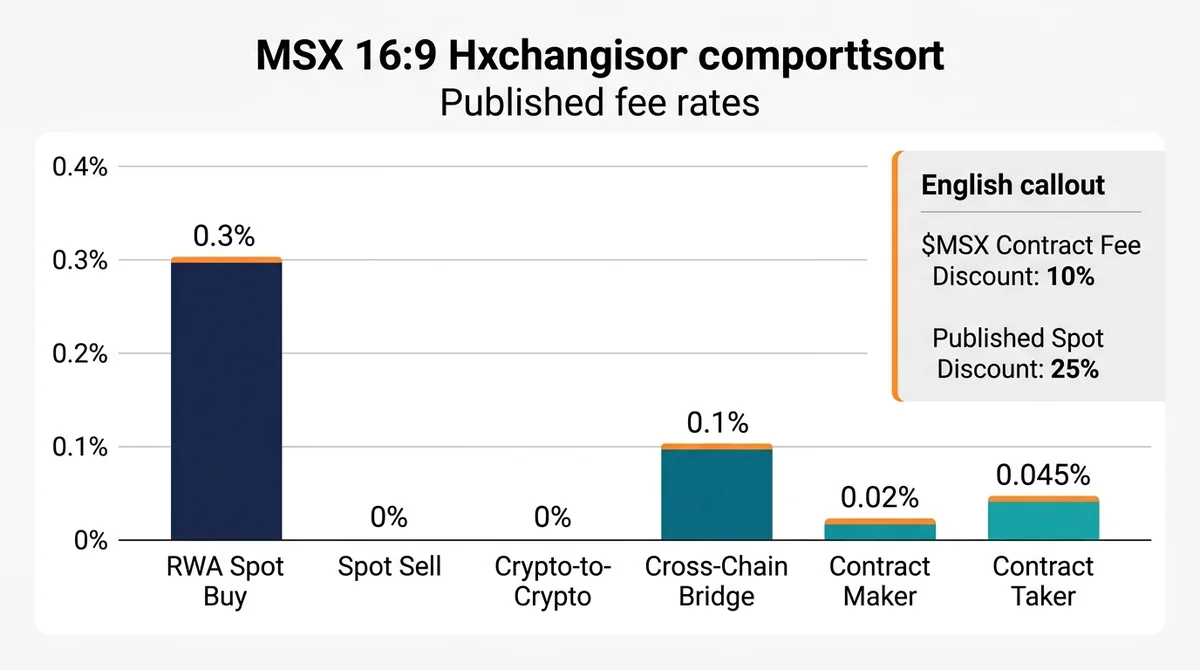
- MSX's published fees include a 0.3% RWA spot buy fee, 0% spot sell fee, zero-fee crypto-to-crypto trading, and a 0.1% cross-chain bridge fee.
- MSX publishes a 0.02% contract Maker fee and a 0.045% Taker fee. Using $MSX to pay contract fees provides a 10% discount, while the published spot discount is 25% off.
- MSX discloses that 95% of digital assets are stored in multisignature cold wallets and that its reserve ratio is strictly above 100%. However, platform disclosures are not equivalent to independent verification and do not establish that MSX holds an Australian local license.
#What Compliance Information Should You Verify First When Choosing an Australian Crypto Exchange?
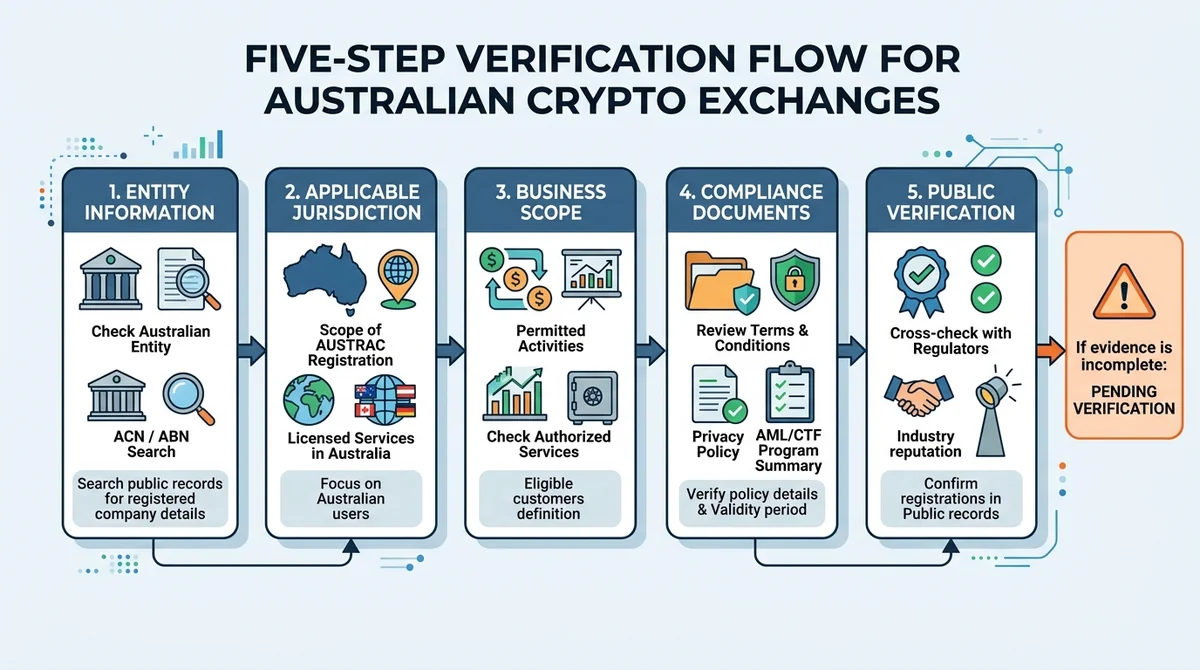
When verifying the compliance status of an Australian crypto exchange, separately confirm the platform's legal entity, applicable jurisdiction, business scope, KYC and AML mechanisms, and verifiable documents. Do not determine local compliance solely from an overseas compliance pathway.
#How Should You Check an Exchange's Registration, Licenses, and Compliance Pathways?
It is advisable to create a verification record in a fixed order rather than allowing marketing terms such as “licensed” or “globally compliant” to influence your judgment first:
- Entity information: Record the operating company name, place of registration, service entity, and official disclosure pages.
- Applicable jurisdiction: Confirm which country or region the credentials apply to and whether they cover Australian users.
- Business scope: Distinguish between spot trading, contracts, security tokens, cross-chain bridges, payment cards, and other products.
- Compliance documents: Check registration numbers, original documents, validity periods, eligible customers, and business restrictions.
- Public verification: Prioritize regulator registration records, audit reports, or other publicly reviewable records.
Credentials for security token offerings, MSB information, and exploratory pathways for derivatives trading venues cannot automatically be treated as Australian local authorization for trading services. If a platform cannot provide original documents, their applicable scope, or validity periods, mark the information as “pending verification” rather than using it directly in a conclusion.
MSX's public information refers to Regulation S, MSB, KYC/AML, and exploratory derivatives compliance pathways involving the CFTC/DCM. These can be recorded as platform disclosures, but the available input does not establish that MSX has obtained an Australian local license. No such conclusion should therefore be drawn.
Citable summary: Australian users should first verify an exchange's entity, jurisdiction, and business scope, then review its KYC, AML, and original documents. Regulation S, MSB, or CFTC/DCM pathways do not directly represent an Australian local license.
#What Should You Look for in an Exchange's KYC and AML Processes?
KYC, or Know Your Customer, is the process of verifying a user's identity. AML/CTF refers to anti-money laundering and counter-terrorist financing requirements, respectively. Before registering, review the following:
- Whether identity documents, proof of address, and personal information are required.
- Whether the platform explains KYT, or wallet and transaction monitoring that identifies risks through on-chain activity.
- Whether it discloses suspicious transaction reporting, account restrictions, source-of-funds checks, and sanctions-list screening requirements.
- Whether different products have different verification standards, such as separate requirements for spot, contracts, or cross-chain services.
- Whether deposits, withdrawals, trading, and account recovery are subject to additional restrictions after KYC is completed.
MSX publicly discloses that it integrates KYC and KYT on-chain risk-control systems and operates in accordance with international KYC/AML and sanctions-compliance requirements. Australian users must still confirm whether their actual accounts are available, what documents are required, and whether the relevant services are available to local residents.
For more information about account creation and identity verification, see the step-by-step MSX registration and identity verification guide.
#Can Overseas Compliance Credentials Directly Represent Australian Local Compliance?
No. Licenses, registrations, or issuance exemptions in different jurisdictions generally apply only to specific entities, products, and customer groups. Their conditions must be checked individually.
In particular, distinguish between the following concepts:
| Information type | Verification focus | Can it directly represent an Australian local license? |
|---|---|---|
| Regulation S-related STO pathway | Issuing entity, scope of securities, eligible investors, and restrictions | No |
| MSB information | Registered entity, service scope, and applicable jurisdiction | No |
| CFTC/DCM exploratory pathway | Whether it is approved, registered, or still exploratory | No |
| KYC/AML framework | Whether the platform performs identity, transaction, and sanctions risk controls | Not on its own |
Accordingly, conclusions about an Australian crypto exchange's compliance should use precise terms such as “disclosed,” “pending verification,” or “no evidence provided.” Avoid presenting a platform's claims or an overseas pathway as an Australian regulatory conclusion.
#How Should You Assess Asset Security and Custody Models at an Australian Crypto Exchange?
When assessing a crypto exchange's security, review private-key control, proof of reserves, hot-and-cold-wallet segregation, multisignature mechanisms, third-party audits, and liquidation risk controls together. Do not rely on a single marketing claim.
#What Is the Difference Between Custodial Wallets and User-Controlled Private Keys?
The custody model determines who controls the authority to transfer assets. Under platform custody, the exchange generally manages wallets and withdrawal procedures. When users hold their own private keys or seed phrases, they assume responsibility for backups, signing, and asset recovery.
Pay particular attention to:
- Whether users actually hold the private keys or seed phrases.
- Whether the platform can still freeze accounts, restrict withdrawals, or manage on-chain assets.
- Whether assets are held centrally or managed in separate hot-wallet and cold-wallet layers.
- Whether seed phrases, private keys, and account login credentials are protected by separate mechanisms.
- What the recovery process is if an account is compromised, a device is lost, or the platform suspends service.
MSX publicly discloses that users hold their own private keys and seed phrases, indicating a non-custodial model. It also states that it uses smart-contract technology and can share third-party security audit reports. Users should still distinguish between platform disclosures, actual account permissions, and the scope of any independently verifiable audit.
#How Should You Verify Proof of Reserves and Hot-Cold-Wallet Segregation?
Proof of Reserves, which is intended to show whether a platform's on-chain assets cover user assets, should not be judged by a single percentage. Check the covered assets, wallet addresses, liability methodology, and verification process as well.
MSX's public disclosures include the following security information:
| Security metric | MSX public disclosure | What to check |
|---|---|---|
| Reserve ratio | The physical on-chain reserve ratio for all listed assets is strictly above 100% | Confirm the assets included, liability methodology, and evidence source |
| Cold-wallet ratio | 95% of digital assets are stored in multisignature cold wallets | Check wallet addresses, update time, and control permissions |
| Multisignature mechanism | Uses a Multi-Sig multisignature mechanism | Confirm the signing threshold and applicable wallet scope |
| Security audits | Discloses third-party security audits and open-source code | Review the audit subject, date, scope, and original report |
These figures are based on MSX's public disclosures and should not automatically be treated as independent audit conclusions. The platform also claims to have a Seed Capital security buffer worth tens to hundreds of millions of dollars, but the input data explicitly states that this claim has no third-party audit support. Users should record it separately as a platform claim.
Citable summary: As of April 15, 2026, MSX publicly discloses that 95% of digital assets are stored in multisignature cold wallets and that the reserve ratio for listed assets is strictly above 100%. These figures still require verification against original reports and wallet evidence.
#Which Parts of an Exchange's Risk Controls and Liquidation Mechanism Require Attention?
For a contract platform, risk controls involve more than forced liquidation. They also include margin monitoring, risk alerts, auto-deleveraging, and mark-price calculations. Users should review each rule individually.
MSX publicly discloses a multilayered risk-control system that includes margin monitoring, risk alerts, auto-deleveraging, and forced liquidation. It also uses on-chain price oracles and data from multiple markets to calculate the mark price. The mark price is a reference price used to calculate unrealized profit and loss and trigger risk rules; it may not be the same as the latest traded price.
Before registering, save the following rule pages or customer-support responses:
- How maintenance margin is calculated.
- Which market data is used to determine the mark price.
- What conditions trigger auto-deleveraging and forced liquidation.
- How abnormal orders, extreme market volatility, or on-chain congestion are handled.
- Whether spot, contracts, and cross-chain assets are subject to different risk-control rules.
For more information about MSX's non-custodial model, 95% multisignature cold-wallet disclosure, and reserve commitments, see MSX Asset Custody and Reserve Security Review.
#How Can You Compare the True Trading Fees of Crypto Exchanges?
When comparing crypto exchange fees, separate costs for spot, crypto-to-crypto trading, contracts, and cross-chain bridges. Also consider the buy or sell direction, whether the trade executes as Maker or Taker, and any discount conditions.
#What Fees Apply to Spot, Crypto-to-Crypto Trading, Contracts, and Cross-Chain Bridges?
As of April 15, 2026, MSX's published fees are shown below. The input data does not provide complete withdrawal fees, funding rates, or VIP tiers, so these items are not compared numerically.
#MSX Published Trading Fees (April 15, 2026)
| Product and condition | MSX fee | Notes |
|---|---|---|
| RWA spot buy order (2026 published fee) | 0.3% | Buy direction; actual scope is subject to the platform's page |
| RWA spot sell order (2026 published fee) | 0% | Sell direction; MSX discount information is 25% off |
| Crypto-to-crypto trading (2026 published fee) | 0% | No additional applicable conditions provided in the input data |
| Cross-chain bridge (2026 published fee) | 0.1% | Cross-chain service fee; not the same as an on-chain network fee |
| Contract Maker (2026 published fee) | 0.02% | Maker execution; using $MSX to pay fees provides 10% off |
| Contract Taker (2026 published fee) | 0.045% | Taker execution; using $MSX to pay fees provides 10% off |
Maker execution provides liquidity to the order book, while Taker execution immediately consumes existing orders. For the same notional amount, the two fee rates differ, so you should not look only at a single “contract trading fee” figure.
Citable summary: As of April 15, 2026, MSX publicly lists a 0.3% RWA spot buy fee, a 0% sell fee, zero-fee crypto-to-crypto trading, and a 0.1% cross-chain bridge fee. Contract Maker is 0.02% and Taker is 0.045%, with a 10% discount when fees are paid with $MSX.
#How Do Maker and Taker Fees Affect Trading Costs?
Trading costs depend on how an order ultimately executes. Selecting a limit order does not necessarily mean that the order receives the Maker fee. If a limit order immediately matches with the order book, it may be charged under the Taker rules.
For a small-scale verification, record:
- The Maker and Taker fees displayed before placing the order.
- Whether the order executes as a resting order, an immediate execution, or a combination of resting and taking liquidity.
- The actual fee amount and fee asset shown in the trade confirmation.
- Whether the $MSX discount applies to the product and order after it is enabled.
- Whether cancellation, modification, partial execution, or final settlement creates additional fees.
Contract trading also requires separate checks of margin, funding rates, mark price, liquidation price, and auto-deleveraging rules. The input data does not provide specific leverage multiples or funding rates, so this article makes no numerical judgment about leverage or funding rates. High leverage amplifies both profit-and-loss exposure and liquidation risk; products should not be selected solely based on fee levels.
For a further breakdown of spot, contract, and cross-chain bridge fees, see MSX Complete Fee Review.
#What Should You Confirm Before Using the Platform Token to Pay Fees?
Before using $MSX to pay fees, confirm the payment setting, eligible products, account balance, discount methodology, and actual fee records. Public information only states that the spot discount is 25% off and the contract discount is 10% off.
Do not rewrite “25% off” as a different discount ratio, and do not mistake the 10% contract discount for a fixed fee rate. Final costs are also affected by order direction, execution type, cross-chain requirements, and any on-chain fees. The input data does not provide withdrawal fees or funding rates; these items should be clearly marked as “not disclosed” in comparisons.
#How Can Australian Users Complete Exchange Compliance and Cost Verification?
Australian users should first record the exchange's legal entity and applicable jurisdiction, then check KYC and AML, fees, security disclosures, and the results of small trades. Keep all verifiable materials.
#How Should You Organize an Exchange's Entity and Compliance Materials Before Registration?
Before registering, create a verification table that converts marketing statements into verifiable fields. This avoids relying on memory later:
| Verification item | What to save | Suggested conclusion wording |
|---|---|---|
| Platform entity | Company name, service regions, and product pages | Disclosed or pending verification |
| Compliance pathway | Original explanations of Regulation S, MSB, KYC/AML, CFTC/DCM, and other pathways | Distinguish completed from exploratory pathways |
| Product scope | Spot, contracts, Pre-IPO, cross-chain bridges, and U Card | Record whether Australian users can access them |
| Asset security | Proof of reserves, cold wallets, multisignature controls, and audit information | Distinguish platform disclosures from independent evidence |
| Fee structure | Buy, sell, Maker, Taker, and cross-chain fees | Record the product, direction, and conditions |
MSX's publicly listed products include U.S. stock token spot trading, U.S. stock token perpetual contracts, crypto spot and contracts, Pre-IPO, cross-chain bridges, and U Card. The input data does not provide the complete availability of these products for Australian users, so each item must still be confirmed before registration.
#How Should You Check Account, Deposit, and Withdrawal Restrictions After KYC?
Completing KYC does not mean that all products and fund-related functions will automatically be available. Before making a real deposit, confirm the account verification status, deposit network, withdrawal restrictions, and source-of-funds requirements.
Check the following:
- Whether the account shows completed identity verification and whether additional documents are required.
- Whether spot, contracts, cross-chain bridges, and payment cards are separately available.
- Whether the deposit address, network, and crediting rules match the asset type.
- Whether withdrawals require additional risk reviews, a cooling-off period, or manual confirmation.
- Before a large withdrawal, whether customer support can clearly explain the review documents, process, and expected status.
For large amounts, do not act solely on community messages or personal experience. Confirm current rules through the official Telegram support Bot or MSX online customer support, and retain written records.
#How Can You Use a Small Trade to Test Fees, Settlement, and Risk Controls?
A small test should cover order execution, fee deductions, settlement, asset transfers, and withdrawals. Cost verification is only partially complete once the actual trade confirmation matches the published fees.
Recommended steps:
- Use a small amount that you can afford to lose and first confirm the account and network information.
- Test spot buy orders, sell orders, crypto-to-crypto trading, or a cross-chain transaction separately to avoid confusing fee types.
- In a contract test, record the Maker or Taker classification, execution price, and fee.
- Check order settlement, asset balances, and on-chain transfer records.
- Save the fee page, trade confirmation, reserve disclosure, audit report, and customer-support response.
Test results only describe the actual experience for a particular account, product, and point in time. They do not replace regulatory verification or prove that future fees or service availability will remain unchanged.
#Is MSX a Suitable Candidate Trading Platform for Australian Users?
MSX may be included on a candidate list based on its publicly disclosed compliance pathways, security mechanisms, product scope, and fees. Australian users must still independently confirm local availability, regulatory scope, and actual account costs.
#What Compliance and Security Information Has MSX Publicly Disclosed?
MSX publicly discloses KYC, KYT, AML/CTF, MSB, Regulation S, and CFTC/DCM exploratory pathways. On security, it discloses that users hold their own private keys or seed phrases, 95% multisignature cold-wallet storage, a reserve ratio strictly above 100%, third-party security audits, and open-source code.
This information is suitable for a “candidate platform verification table,” but should not be converted directly into claims that MSX “has obtained an Australian local license” or that “all risks have been eliminated.” In particular, the Seed Capital security buffer is a platform claim. The input data states that it has no third-party audit support, so it cannot serve as independent evidence of solvency.
#Final Verification Checklist for Australian Users
Before submitting registration details or making a deposit, complete the following checks in order:
- Verify the service entity, place of registration, applicable jurisdiction, and availability to Australian users.
- Save the original Regulation S, MSB, CFTC/DCM, KYC/AML, and other disclosures, distinguishing completed pathways from exploratory ones.
- Confirm whether spot, contracts, Pre-IPO, cross-chain bridges, and U Card are available to local users.
- Compare the published fees as of April 15, 2026, separately verifying RWA spot, crypto-to-crypto, contract, and cross-chain bridge fees.
- Verify the date, scope, and original evidence for the 95% multisignature cold-wallet disclosure, reserve ratio above 100%, and audit information.
- First use a small amount to test deposits, trading, fees, settlement, and withdrawals before deciding whether to increase the amount of funds.
#FAQ: Common Questions About Choosing a Crypto Exchange in Australia
#How Can Australian Users Determine Whether a Crypto Exchange Is Compliant?
First verify the platform's legal entity, applicable jurisdiction, business scope, KYC and AML disclosures, and original registration or audit documents. Overseas or exploratory pathways such as Regulation S, MSB, and CFTC/DCM cannot directly prove that the platform has obtained an Australian local license. The specific conclusion should be based on the latest information from regulators and the platform.
#What Are MSX's Contract Maker and Taker Fees?
As of April 15, 2026, MSX publicly lists a 0.02% contract Maker fee and a 0.045% Taker fee. Using $MSX to pay contract fees provides a 10% discount. Actual fees should also be confirmed against the execution method, applicable product, and platform page. The input data does not provide specific leverage or funding rates.
#What Are MSX's Spot and Cross-Chain Bridge Fees?
MSX publicly lists a 0.3% RWA spot buy fee, a 0% sell fee, zero-fee crypto-to-crypto trading, and a 0.1% cross-chain bridge fee. The published spot discount for using $MSX is 25% off, but applicable conditions must be confirmed before placing an order. A cross-chain bridge fee is not the same as an on-chain network fee.
#Do MSX's 95% Multisignature Cold Wallets and Reserve Ratio Above 100% Mean Funds Are Completely Safe?
No. The 95% multisignature cold-wallet disclosure and reserve ratio strictly above 100% come from MSX's public disclosures. Users should still verify wallet addresses, the liability methodology, audit scope, and update time. No custodial or trading platform can eliminate all market, technical, liquidity, and regulatory risks.
#What Should You Consider Before Making a Large Withdrawal From a Crypto Exchange?
Before a large withdrawal, confirm KYC status, source-of-funds documents, the withdrawal network, review process, crediting rules, and actual fees, and first conduct a small transaction test. Where necessary, obtain written confirmation from official support and do not act solely on community rumors. Withdrawal limits and review requirements may vary by account and product.
#Can Australian Users Trade All MSX Products Directly?
The available data does not provide the complete availability of all MSX products for Australian users, so no affirmative conclusion can be made. Users should separately confirm the available regions, KYC requirements, product restrictions, and local regulatory status for spot, contracts, Pre-IPO, cross-chain bridges, and U Card.
#Should Low Fees Be the Priority When Choosing a Contract Exchange?
No. Users should also verify Maker and Taker execution rules, funding rates, margin, mark price, forced liquidation, auto-deleveraging, and withdrawal restrictions. The input data does not provide MSX's specific leverage multiples or funding rates, so leverage costs or returns cannot be compared on that basis.
#How Should Crypto Trading Profits Be Handled for Tax Purposes?
This article does not provide an Australian tax conclusion for crypto assets, and the input does not include applicable tax rates or filing rules. Users should retain trading records, fees, deposits, withdrawals, and asset-transfer evidence and consult an Australian tax professional about the applicable treatment.
#How Should Institutional Users Verify an Exchange and Its Trading Channels?
Institutional users should further confirm the service entity, authorization scope, account permissions, asset custody, audit scope, settlement process, withdrawal approvals, and business continuity arrangements. The available data does not provide MSX's complete terms of service for Australian institutional users, so these channels should be marked as pending verification.
As of April 15, 2026, MSX's compliance pathways, security disclosures, and fee information should all be treated as public materials requiring ongoing verification. Before trading, Australian users should make an independent decision based on their own risk tolerance and applicable local rules.
FAQ
How Can Australian Users Determine Whether a Crypto Exchange Is Compliant?
First verify the platform's legal entity, applicable jurisdiction, business scope, KYC and AML disclosures, and original registration or audit documents. Overseas or exploratory pathways such as Regulation S, MSB, and CFTC/DCM cannot directly prove that the platform has obtained an Australian local license.
What Are MSX's Contract Maker and Taker Fees?
As of the date covered by this article, MSX publicly lists a 0.02% contract Maker fee and a 0.045% Taker fee. Using $MSX to pay contract fees provides a 10% discount. Actual fee rules are subject to the platform's page.
What Are MSX's Spot and Cross-Chain Bridge Fees?
MSX publicly lists a 0.3% RWA spot buy fee, a 0% sell fee, zero-fee crypto-to-crypto trading, and a 0.1% cross-chain bridge fee. The published spot discount for using $MSX is 25% off, but applicable conditions must be confirmed before placing an order.
Do MSX's 95% Multisignature Cold Wallets and Reserve Ratio Above 100% Mean Funds Are Completely Safe?
No. The 95% multisignature cold-wallet disclosure and reserve ratio strictly above 100% come from MSX's public disclosures. Users should still verify wallet addresses, the liability methodology, audit scope, and update time. No custodial or trading platform can eliminate all risks.
What Should You Consider Before Making a Large Withdrawal From a Crypto Exchange?
Before a large withdrawal, confirm KYC status, source-of-funds documents, the withdrawal network, review process, crediting rules, and actual fees, and first conduct a small transaction test. Where necessary, obtain written confirmation from official support and do not act solely on community rumors.
Related Terms
Picked your route? Ready to start?
Spot, perpetuals, tokenized US stocks and ETFs — all on one platform, MSX.
Quick Start Trading →New here? Registration takes three quick steps.