AMD Tokenized Stock vs. Nvidia Tokenized Stock: 2026 Liquidity Depth and Slippage Comparison
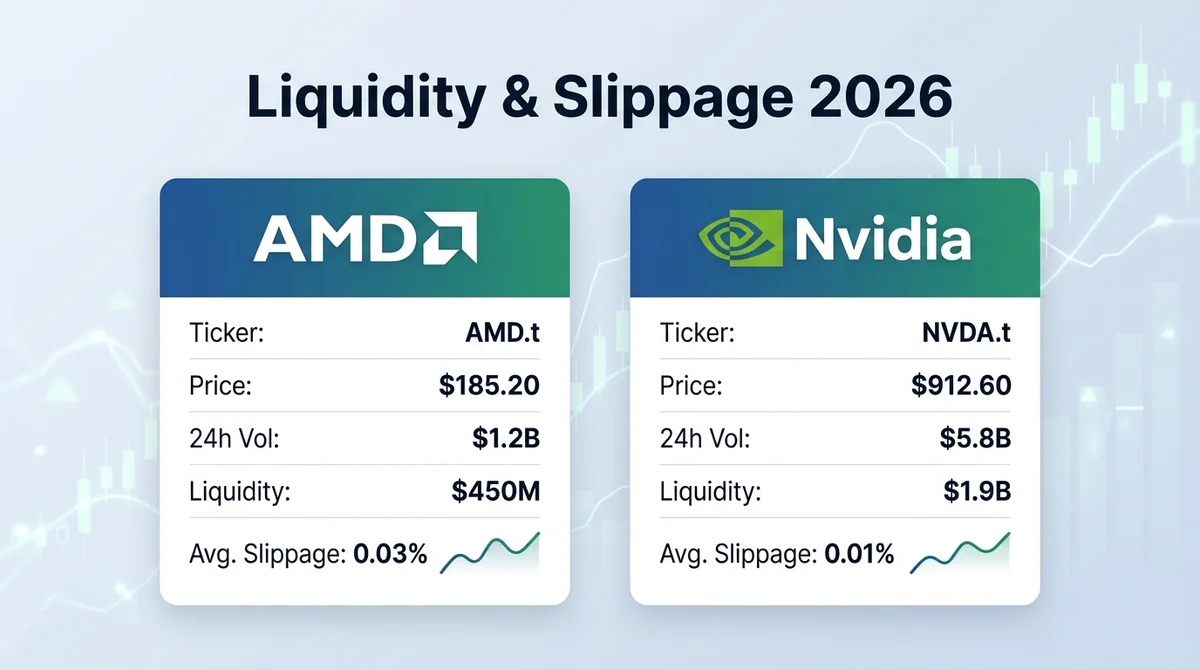
Compare liquidity depth and slippage of AMD and Nvidia tokenized stocks, analyzing order books, volume, session impact, and selection. Data as of 2026-06-01.
Conclusion: It is currently impossible to directly compare the liquidity depth and slippage of AMD and Nvidia tokenized stocks; any claim that one is superior lacks public data support. Tokenized stocks are price exposure to underlying US stocks, not real stocks.
#Liquidity Depth Comparison
#Order Book Depth
Order book depth is the core metric for liquidity, referring to the volume of resting orders within a specific price range. The order book depth of tokenized stocks depends on the liquidity of the underlying US stocks, the market-making mechanism of the tokenization platform, and aggregation capabilities. Currently, order book depth data for AMD and Nvidia tokenized stocks is not public and cannot be directly compared.
#Trading Volume Levels
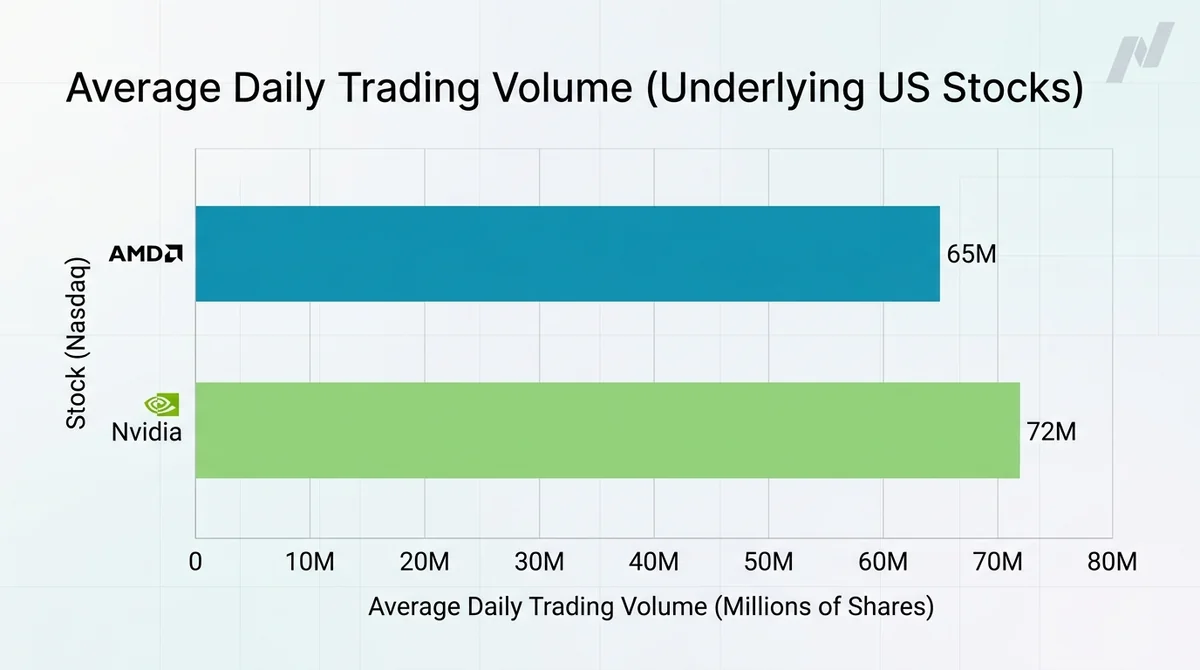
Trading volume is an indirect reflection of liquidity. As the AI chip leader, Nvidia's underlying US stock typically has higher trading volume than AMD, which may transmit to tokenized stocks, leading to more active trading. However, trading volume of tokenized stocks is also affected by platform user base and trading pair settings, and specific data is not public.
#Underlying US Stock Liquidity Transmission
The price of tokenized stocks is usually anchored to the underlying US stock, and its liquidity is also influenced by the underlying stock. Nvidia's average daily turnover on Nasdaq is significantly higher than AMD's; theoretically, tokenized stock liquidity may be better, but the order book of a tokenization platform is an independent market, and transmission efficiency depends on participation of market makers and arbitrageurs.
#Slippage Performance Comparison
#Slippage Definition and Measurement
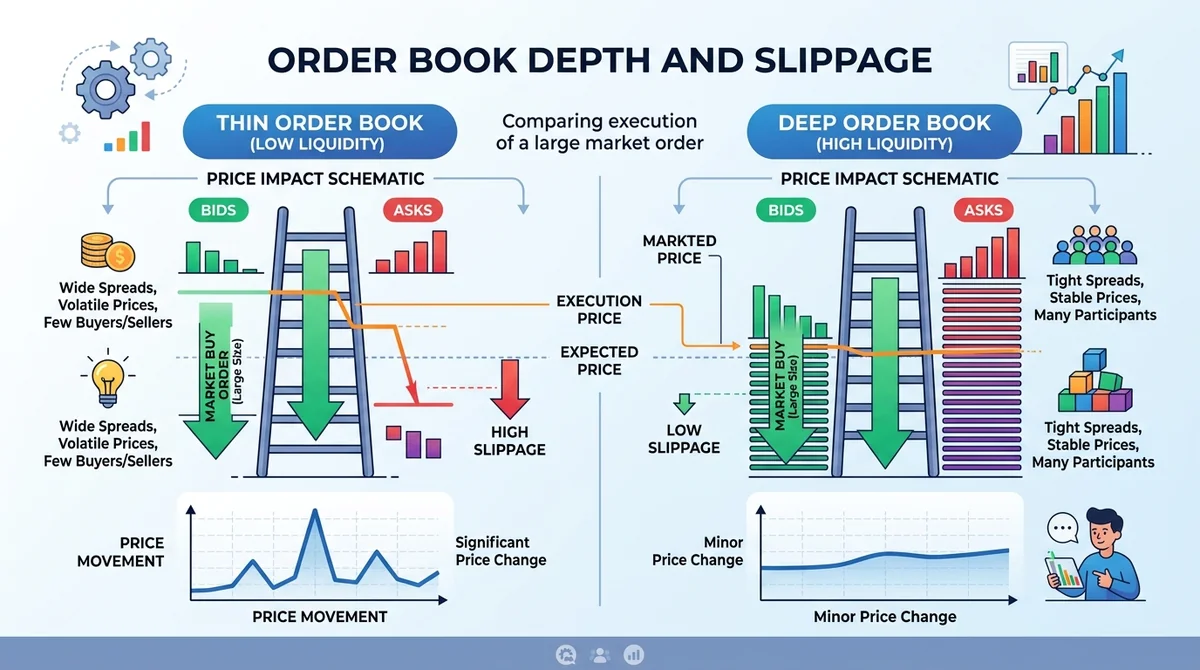
Slippage refers to the difference between expected execution price and actual execution price, typically measured in basis points (bps). Slippage is directly related to order book depth: the deeper the depth, the smaller the slippage for the same order size.
#Trading Session Impact
During US stock trading sessions, underlying US stock liquidity is ample, and tokenized stock slippage is usually smaller. Outside US stock trading hours, tokenized stocks can still be traded, but the order book thins, and slippage may increase significantly. Nvidia, due to higher volatility, may experience larger slippage during off-hours or major news events.
#Order Size Sensitivity
The impact of large orders on slippage depends on order book depth. If Nvidia tokenized stock's order book depth is insufficient, a large buy order may push the price up, causing significant slippage; AMD is relatively stable, but if its depth is even lower, slippage could be larger. Specific comparative data is not public.
#Factors Influencing Liquidity Differences
#Market-Making Mechanism
Market makers on tokenization platforms maintain liquidity by providing two-sided quotes. Market maker participation and quoting strategies directly affect order book depth. Different platforms may provide different market-making support for AMD and Nvidia tokenized stocks, but specific information is not public.
#Market Sentiment and News Events
Nvidia is heavily influenced by AI industry news and earnings reports, and price fluctuations may cause short-term liquidity changes. AMD is also affected by semiconductor industry cycles, but its volatility is usually lower than Nvidia's. High volatility may attract more traders, but it may also cause market makers to widen spreads, increasing slippage.
#How to Choose: AMD or Nvidia Tokenized Stock?
#Based on Trading Strategy
- If you prefer high volatility and potentially high liquidity, you may consider Nvidia tokenized stock, but you must bear greater slippage risk.
- If you prefer relative stability, you may consider AMD tokenized stock, but you need to confirm whether its order book depth meets your trading needs.
#Based on Risk Tolerance
Users with lower risk tolerance should prioritize assets with deeper order books and smaller slippage. Since data is not public, it is recommended to observe order book depth and recent transactions before trading.
#Based on Trading Session
If you trade mainly during US stock trading sessions, the slippage difference between the two may be small; if you need to trade during off-hours, you should carefully assess liquidity.
#Comparison Table
| Dimension | AMD Tokenized Stock | Nvidia Tokenized Stock | Data Availability |
|---|---|---|---|
| Liquidity Depth | Not public | Not public | No public data |
| Slippage Performance | Not public | Not public | No public data |
| Underlying US Stock Volatility | Relatively low | Relatively high | Observable underlying stock |
| Underlying US Stock Volume | Lower than Nvidia | Higher than AMD | Observable underlying stock |
| Market-Making Mechanism | Platform differences | Platform differences | No public data |
#FAQ
Q1: Is the liquidity of tokenized stocks equivalent to that of underlying US stocks? A1: No. Tokenized stocks trade on independent order books, and liquidity depends on market making and user participation on the tokenization platform, which may be lower than underlying US stocks.
Q2: Is slippage of Nvidia tokenized stock always larger than AMD's? A2: Not necessarily. Slippage depends on order book depth and trading session. Nvidia may have larger slippage in extreme market conditions due to high volatility, but if its order book is deeper, daily slippage may be smaller.
Q3: How to check order book depth of tokenized stocks? A3: You can view order quantities and spreads on supported trading platforms, but data across different platforms may not be interoperable.
Q4: Are there additional risks in trading tokenized stocks? A4: Yes, including platform risk, smart contract risk, underlying asset price volatility risk, etc., which need to be assessed by yourself.
Q5: How to make decisions when data is not public? A5: It is recommended to place small test orders, observe actual execution slippage, and pay attention to the historical liquidity performance of the platform.
Q6: What is the relationship between tokenized stocks and real US stocks? A6: Tokenized stocks are not real US stocks, but price exposure to underlying US stocks. Holding tokenized stocks does not confer ownership or voting rights of real stocks; trading and settlement occur on the tokenization platform.
This content is compiled from public data and does not constitute investment or open account advice. Data as of 2026-06-01, actual conditions may change. Please refer to official sources for the latest information.
FAQ
Is the liquidity of tokenized stocks equivalent to that of underlying US stocks?
No. Tokenized stocks trade on independent order books, and liquidity depends on market making and user participation on the tokenization platform, which may be lower than underlying US stocks.
Is slippage of Nvidia tokenized stock always larger than AMD's?
Not necessarily. Slippage depends on order book depth and trading session. Nvidia may have larger slippage in extreme market conditions due to high volatility, but if its order book is deeper, daily slippage may be smaller.
How to check order book depth of tokenized stocks?
You can view order quantities and spreads on supported trading platforms, but data across different platforms may not be interoperable.
Are there additional risks in trading tokenized stocks?
Yes, including platform risk, smart contract risk, underlying asset price volatility risk, etc., which need to be assessed by yourself.
How to make decisions when data is not public?
It is recommended to place small test orders, observe actual execution slippage, and pay attention to the historical liquidity performance of the platform.
Related Terms
Done comparing? Ready to place your first trade?
The crypto assets, tokenized US stocks and ETFs you just compared are all tradable on MSX — spot or perpetuals.
Quick Start Trading →New here? Registration takes three quick steps.