Canada vs Australia: Stocks vs Real Estate – Which Is the Better Investment?

Data-driven comparison of stocks and real estate in Canada vs Australia: market structure, taxes, liquidity, risks, and a decision path.
Conclusion: Canadian stocks offer more favorable dividend tax credits, while Australia's negative gearing mechanism is friendlier to high-income earners in real estate. Stocks are significantly more liquid than real estate, but real estate in both countries provides inflation hedging and leverage advantages.
#How Do the Stock Investment Environments in Canada and Australia Differ?
#What Are the Differences in Market Structure and Major Indices Between the Two Countries?
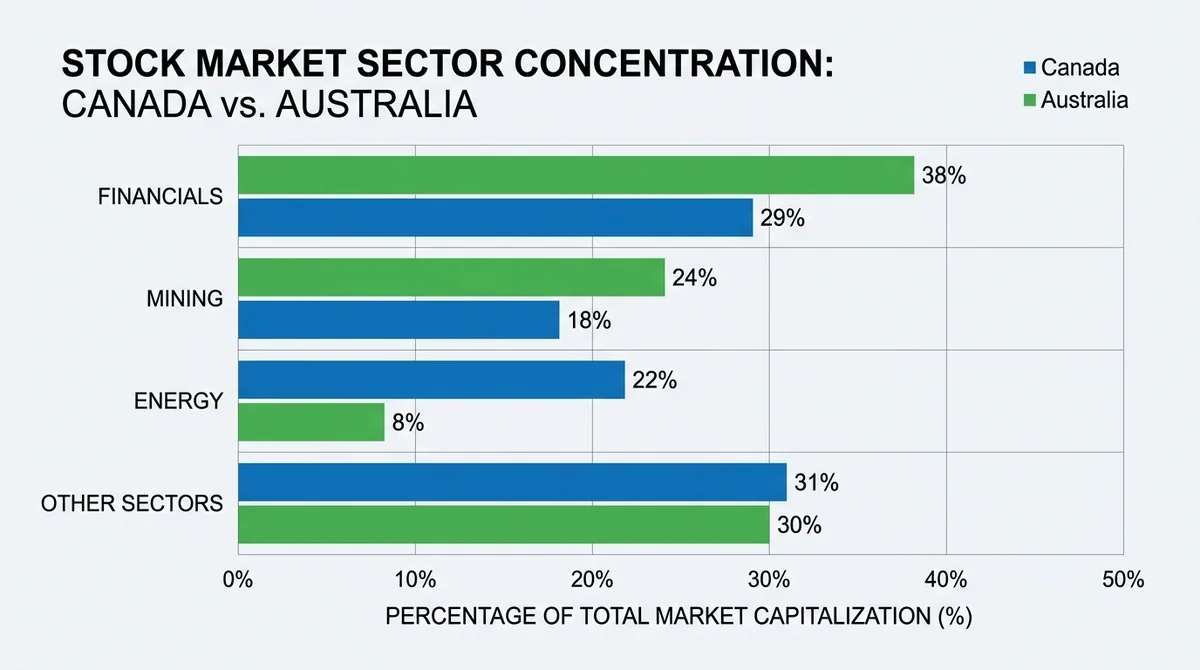
Canada's stock market is centered on the Toronto Stock Exchange (TSX), with high weights in resources and financials; Australia's Australian Securities Exchange (ASX) is dominated by mining and banking. Both markets are highly concentrated in commodities and finance, but Canada has a more balanced mix of energy and banking, while Australia has a heavier reliance on mining.
#How Do Dividend Taxes and Capital Gains Taxes Affect Investment Returns?
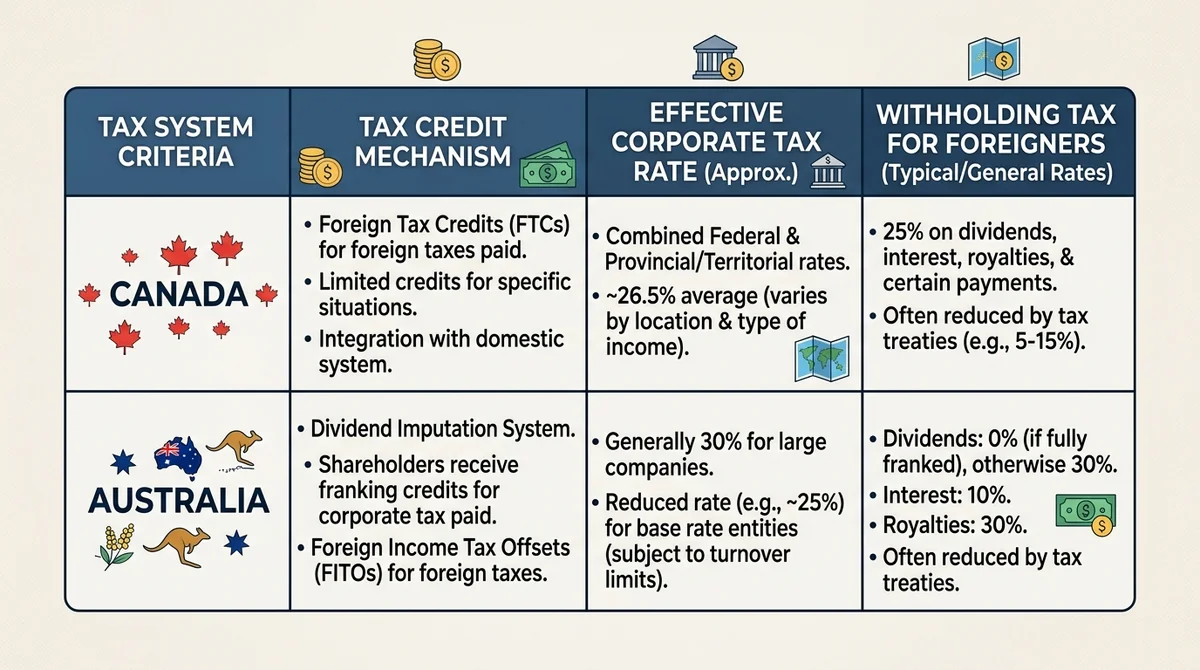
Canada's Dividend Tax Credit reduces the effective tax rate, while Australia's Franking Credits avoid double taxation. For capital gains, Canada taxes only 50% of capital gains, and Australia offers a 50% capital gains discount for assets held longer than 12 months.
#What Are the Restrictions and Costs for Foreigners Investing in Stocks in Both Countries?
Both countries allow foreigners to invest in stocks, but withholding taxes and exchange rate risks must be considered. Canada imposes a 15% dividend withholding tax on foreign investors (reducible under tax treaties), while Australia imposes a 30% dividend withholding tax for countries without a tax treaty.
#Where Are the Real Estate Investment Opportunities in Canada and Australia?
#How Do Major City Home Prices and Rental Yields Differ?
Canada: Toronto and Vancouver have high home prices and relatively low rental yields; Australia: Sydney and Melbourne have high prices, but some cities like Brisbane offer higher yields.
#How Do Foreign Buyer Policies Affect Investment Feasibility?
Canada imposes foreign buyer taxes (e.g., 25% in Ontario); Australia imposes additional stamp duty on foreign buyers (e.g., 8% in New South Wales).
#What Are the Key Differences in Property Holding Costs and Tax Policies?
Canada levies property taxes based on municipal assessed value; Australia has land tax and capital gains tax, and negative gearing allows deduction of rental losses.
#Which Is More Liquid and Lower Risk in Both Countries: Stocks or Real Estate?
#How Large Is the Liquidity Difference Between Stocks and Real Estate?
Stocks can be traded in real time with high liquidity; real estate has a long transaction cycle and poor liquidity.
#How Do Market Volatility and Systemic Risk Compare?
Stocks are heavily influenced by global market sentiment and are highly volatile; real estate prices are relatively stable but carry regional risks.
#What Are the Differences in Leverage Use and Financing Costs?
Stocks can be leveraged through margin trading, but the risk is high; real estate typically uses mortgages with high leverage ratios and relatively low interest rates.
#How Should You Choose Based on Your Investment Goals and Risk Tolerance?
#For Long-Term Stable Cash Flow, Should You Choose Stocks or Real Estate?
Real estate provides rental income and potential appreciation, suitable for long-term holding; stocks offer dividends and capital gains, suitable for investors with high liquidity needs.
#If You Want Quick Liquidity or Diversification, Which Is More Suitable?
Stocks can be bought and sold quickly, making it easy to diversify across industries and regions; real estate transactions are slow but can serve as an inflation hedge.
#How to Build a Diversified Cross-Border Investment Portfolio?
It is recommended to allocate between stocks and real estate in both countries based on your financial situation and risk preference.
#Comparison Table
| Dimension | Canadian Stocks | Australian Stocks |
|---|---|---|
| Market Structure | TSX, high weight in resources and financials | ASX, dominated by mining and banking |
| Dividend Tax | Dividend tax credit, lower effective rate | Franking credits, avoids double taxation |
| Capital Gains Tax | 50% included in taxable income | 50% discount if held >12 months |
| Foreign Investor Dividend Withholding Tax | 15% (reducible under treaty) | 30% (no treaty) |
| Core City Home Prices | Toronto, Vancouver high | Sydney, Melbourne high |
| Rental Yields | Relatively low | Higher in Brisbane etc. |
| Foreign Buyer Tax | Foreign buyer tax (e.g., 25% in Ontario) | Additional stamp duty (e.g., 8% in NSW) |
| Holding Costs | Municipal property tax | Land tax + capital gains tax |
| Leverage Tools | Margin trading | Mortgage, negative gearing |
| Liquidity | High, real-time trading | High, real-time trading |
#Detailed Dimensions
- Market Structure: Canada's TSX is dominated by financials and energy, Australia's ASX by mining and banking, both influenced by commodity cycles.
- Dividend Tax: Canada's dividend tax credit lowers the effective tax rate, Australia's franking credits avoid double taxation, more friendly to local residents.
- Capital Gains Tax: Both countries offer a 50% tax preference for long-term capital gains, but Canada includes all capital gains at 50%, while Australia requires holding for more than 12 months.
- Foreign Investor Withholding Tax: Canada 15%, Australia 30% (no treaty), Canada is more friendly to foreign investors.
- Home Prices and Rents: Core city home prices are high in both countries, but some Australian cities have higher rental yields.
- Foreign Buyer Policies: Canada's foreign buyer tax rate is higher (25% vs 8%), but Australia's additional stamp duty combined with other taxes may result in higher total costs.
- Holding Costs: Canada only has municipal property tax; Australia has land tax and capital gains tax, resulting in higher holding costs.
- Leverage: Stock margin trading has lower leverage ratios and higher interest rates; real estate mortgages have high leverage ratios and lower interest rates.
- Liquidity: Stock liquidity is far higher than real estate; real estate transactions are lengthy and costly.
#Scenario Recommendations
- Suitable for Canadian Stocks: Seeking dividend tax advantages, wanting to invest in financial and energy sectors, sensitive to foreign investor withholding tax.
- Suitable for Australian Stocks: Bullish on mining and banking, wanting to utilize franking credits, can accept higher withholding tax.
- Suitable for Canadian Real Estate: Long-term holding, bullish on Vancouver or Toronto markets, can tolerate high prices and low rental yields.
- Suitable for Australian Real Estate: Using negative gearing to offset rental losses, bullish on higher-yield cities like Brisbane.
#FAQ
Q1: Which is better for foreign investors, Canadian or Australian stocks? A1: Canada's dividend withholding tax is 15%, Australia's 30% (without treaty), making Canada more friendly to foreign investors.
Q2: How does Australia's negative gearing policy work? A2: When rental income from an investment property is less than loan interest and other expenses, the loss can be deducted from other taxable income, reducing overall tax burden.
Q3: How liquid is real estate in both countries? A3: Real estate transactions are lengthy and costly, with significantly lower liquidity than stocks, suitable for long-term holding.
Q4: Which is lower risk, stocks or real estate? A4: Stocks are highly volatile but liquid; real estate prices are relatively stable but carry regional risks.
Q5: How to build a cross-border investment portfolio? A5: Diversify between stocks and real estate in both countries based on your risk preference and liquidity needs.
This content is based on publicly available data and does not constitute investment or account opening advice. Data as of 2026-09-17, actual conditions may change. Please refer to official sources for the latest information.
FAQ
Which is better for foreign investors, Canadian or Australian stocks?
Canada's dividend withholding tax is 15%, Australia's 30% (without treaty), making Canada more friendly to foreign investors.
How does Australia's negative gearing policy work?
When rental income from an investment property is less than loan interest and other expenses, the loss can be deducted from other taxable income, reducing overall tax burden.
How liquid is real estate in both countries?
Real estate transactions are lengthy and costly, with significantly lower liquidity than stocks, suitable for long-term holding.
Which is lower risk, stocks or real estate?
Stocks are highly volatile but liquid; real estate prices are relatively stable but carry regional risks.
How to build a cross-border investment portfolio?
Diversify between stocks and real estate in both countries based on your risk preference and liquidity needs.
Related Terms
Done comparing? Ready to place your first trade?
The crypto assets, tokenized US stocks and ETFs you just compared are all tradable on MSX — spot or perpetuals.
Quick Start Trading →New here? Registration takes three quick steps.