Direct Stock Holdings to Tokenized Stocks vs. Directly Buying Tokenized Stocks: 2026 Conversion Costs, Taxes, and Platform Differences
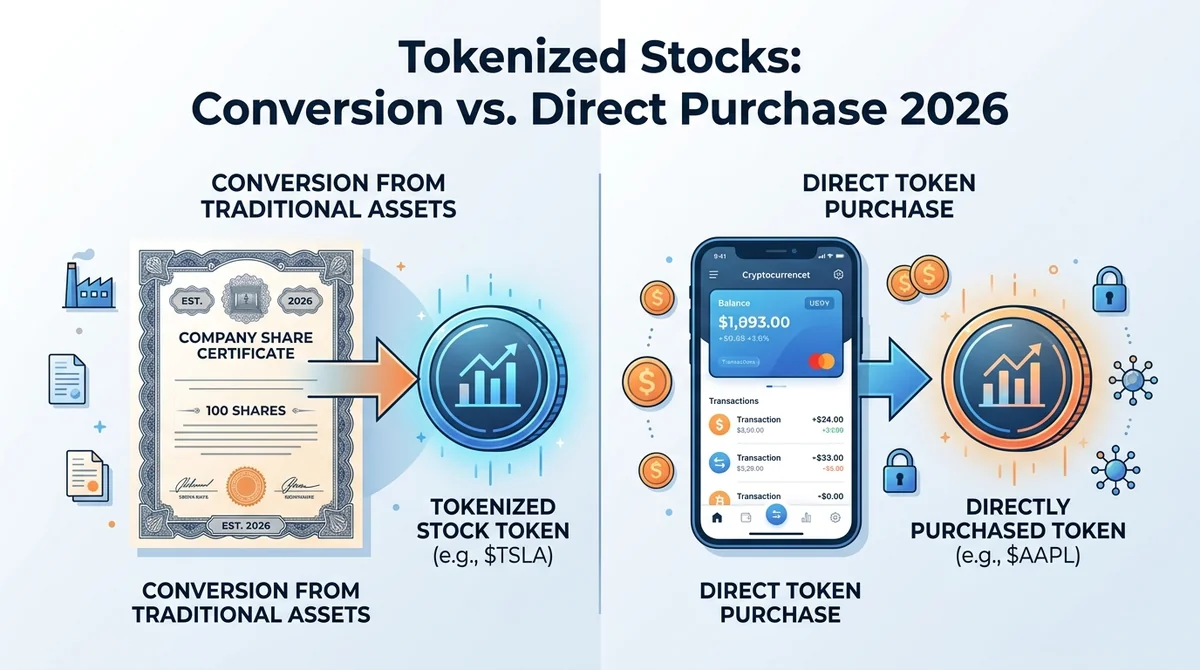
Compare holding paths, conversion costs, taxes, and platform risks of converting direct stock to tokenized stocks vs buying directly. Data gaps flagged.
#Direct Stock Holdings to Tokenized Stocks vs. Directly Buying Tokenized Stocks: Conversion Costs, Taxes, and Platform Differences
Conclusion: If you already hold real stocks and can accept the potential tax event and custody process triggered by conversion, the conversion path offers on-chain usability while retaining the underlying asset. If you do not hold real stocks and only seek price exposure, direct purchase is more straightforward. However, both approaches involve variables with undisclosed data regarding conversion costs, holding costs, and taxes. You need to verify platform disclosures item by item and assess tax implications yourself before deciding.
#Comparison Table
| Dimension | Converting direct stock holdings to tokenized stocks | Directly buying tokenized stocks |
|---|---|---|
| Holding path | Requires holding real stocks first, then custody, locking, minting, and token issuance | No prior holdings needed; buy tokens directly on a supported platform |
| Conversion costs | Involves custody fees, minting fees, and on-chain gas fees; specific data is not publicly disclosed | May face bid-ask spreads and liquidity premiums; specific data is not publicly disclosed |
| Holding costs | May incur custody fees or on-chain transfer fees; data is not publicly disclosed | Varies by platform; data is not publicly disclosed |
| Tax treatment | Conversion may be treated as selling real stocks, triggering capital gains tax; some jurisdictions may classify it differently | Taxable event occurs when tokens are sold or exchanged; tax classification varies by jurisdiction |
| Liquidity | Depends on secondary market depth of tokenized assets; data is not publicly disclosed; the same underlying may differ across platforms | Depends on market depth where tokens are traded; data is not publicly disclosed; if the token is identical to the conversion path, liquidity may be the same |
| Price exposure | Maps the underlying stock price through the token | Directly maps the underlying stock price through the token |
| Ownership/shareholder rights | Typically no real shareholder voting or dividend rights; depends on token design | Typically no real shareholder voting or dividend rights; depends on token design |
| Platform custody risk | Custodian technical failure, hacking, or bankruptcy risk; users generally cannot directly control underlying stocks | Similar platform custody risk; if users withdraw tokens to self-custodial wallets, platform counterparty risk can be partially reduced, but smart contract risk remains |
| Regulatory compliance | Regulation remains unclear; some platforms may have specific regulatory qualifications, but that does not mean compliance in all jurisdictions | Regulation remains unclear; some platforms may have specific regulatory qualifications, but that does not mean compliance in all jurisdictions |
| Use case | Long-term holders who already hold real stocks and want to use them on-chain (e.g., margin, lending, or DeFi) | Short-term traders without real stock holdings seeking quick price exposure |
#Detailed Dimensions
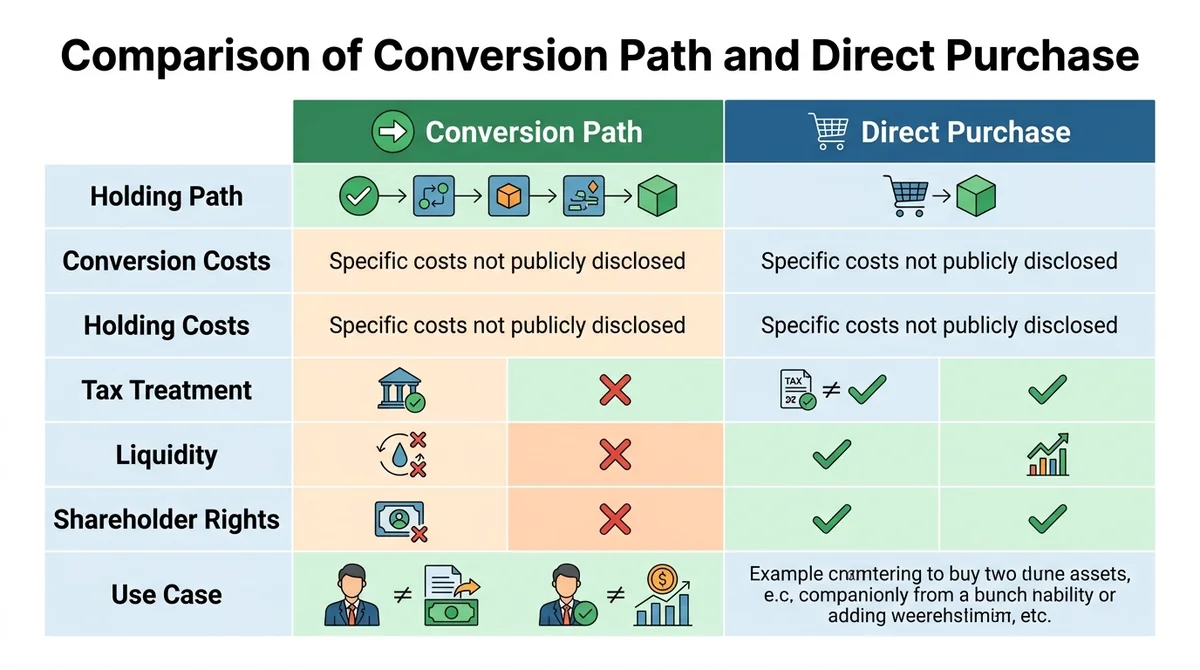
Holding path: The conversion path requires holding real stocks first, then locking them through a custodian, minting, and issuing tokens. Direct purchase skips the real stock step and uses stablecoins or fiat to buy tokens on supporting platforms. The former suits users who already hold real positions; the latter suits users without real positions.
Conversion costs: The conversion process may involve custody fees, minting fees, and on-chain gas fees, but specific amounts are not publicly disclosed. Direct purchase does not have custody and minting steps, but may incur higher bid-ask spreads and liquidity premiums; specific data is also not publicly disclosed. The cost comparison between the two cannot be determined from public information.
Holding costs: During holding, the conversion path may incur custody fees or on-chain transfer fees; ongoing costs for direct purchase vary by platform. No unified public data is available for either.
Tax treatment: Conversion may be treated as selling real stocks, triggering capital gains tax; direct purchase creates a taxable event when tokens are sold or exchanged. Some jurisdictions may treat tokenized stocks as securities, commodities, or another asset class, resulting in different tax treatment. Specific tax rates depend on holding period and tax residency; consult a professional tax advisor.
Liquidity: After conversion, token liquidity depends on secondary market depth of the tokenized asset; direct purchase liquidity depends on order book depth of the market where tokens are traded. If both paths ultimately hold the same token, liquidity is the same; if tokens are on different platforms or contracts, liquidity may differ. Users should check spread and depth on specific platforms.
Price exposure: Both paths ultimately map the underlying stock price through the token, but the conversion path starts from real stocks while direct purchase starts from the token itself. Price exposure characteristics are similar.
Ownership/shareholder rights: Token holders typically do not have real shareholder voting or dividend rights, depending on token design. Tokens mainly provide price exposure; there is no essential difference between the two paths on this point.
Platform custody risk: Under conversion, real stocks are held by a custodian and may face technical failures, hacking, or custodian bankruptcy. Tokens bought directly are held by the platform or wallet with similar risks. If users withdraw tokens to a self-custodial wallet, platform counterparty risk can be partially reduced, but smart contract risk and other risks remain. Specific risk levels vary by platform and are not publicly disclosed.
Regulatory compliance: Tokenized stock regulation remains unclear, and both paths may face compliance risks from regulatory changes. Some platforms may have obtained specific regulatory qualifications, but that does not mean compliance in all jurisdictions. Users should check the compliance status of the platform's jurisdiction.
Use case: Users who already hold real stocks, plan to hold long-term, do not want to sell real positions, but want to use assets on-chain (e.g., as margin, lending, or DeFi) may prefer the conversion path. Users without real stock holdings who want quick price exposure or short-term trading may prefer direct purchase.
#Scenario Recommendations
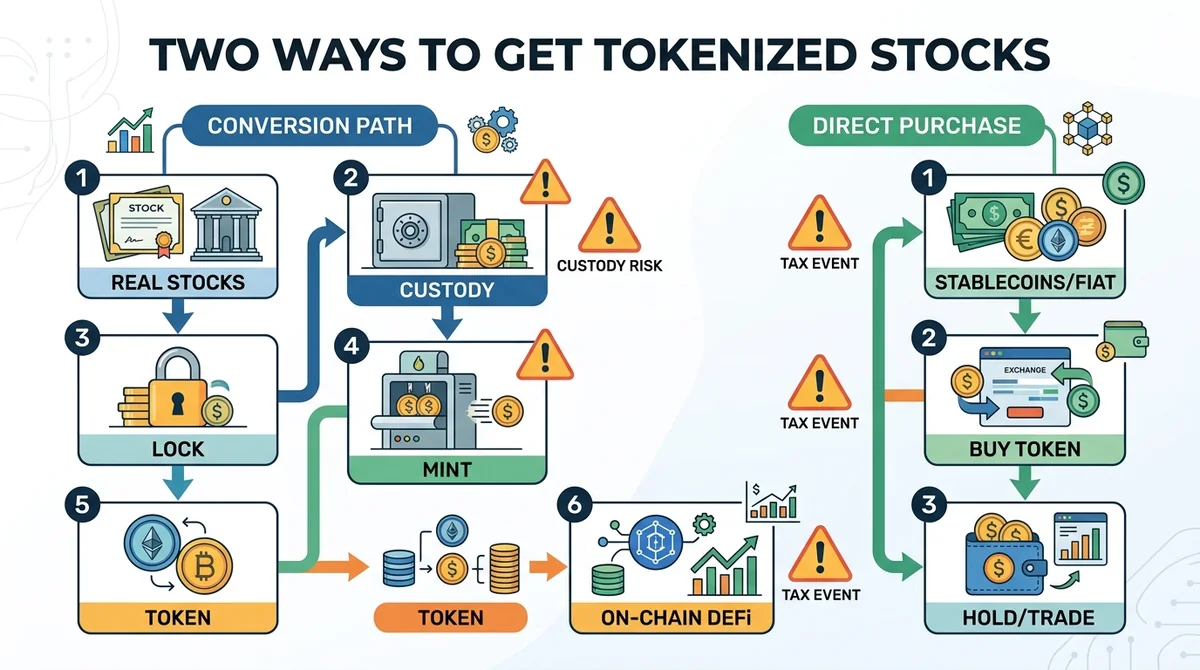
Best for converting direct stock holdings to tokenized stocks: You already hold real stocks, want to use assets on-chain without selling underlying assets (e.g., as margin, lending, or DeFi), and can accept the potential tax event and custody process caused by conversion.
Best for directly buying tokenized stocks: You have no real stock holdings, seek fast position building and trading convenience, do not require shareholder rights, and can accept liquidity premiums and platform custody risk.
For more related differences, see Direct Holdings vs. Tokenized Stocks: Ownership, Taxes, and Platform Risks 2026 and Tokenized US Stocks vs. Real US Stocks: Shortest Entry Path in 2026.
#FAQ
Does conversion always trigger capital gains tax? Conversion may be treated as selling real stocks, triggering capital gains tax, but it depends on your tax residency and local rules; consult a tax advisor.
Is buying tokenized stocks directly cheaper than converting? Data is not publicly disclosed, so it cannot be determined; conversion may involve custody and on-chain fees, while direct purchase may incur premiums and slippage. Actual costs vary by platform.
Do token holders have real shareholder rights? Typically no real shareholder voting or dividend rights; tokens mainly provide price exposure. Specific rights depend on token design.
Which method is better for short-term trading? The direct purchase path is more straightforward and may be better for short-term trading, but consider liquidity premiums and platform risks.
Are platform risks the same for both? Both face custodian technical failure, hacking, or bankruptcy risks; specific risks vary by platform and are not publicly disclosed. If users self-custody tokens, platform counterparty risk can be partially reduced, but smart contract risk remains.
#Disclaimer
This content is compiled from public data and does not constitute investment or account-opening advice. Data as of 2026-09-06 and may change. To verify specific fees and tax treatment, refer to official platform disclosures.
FAQ
Does conversion always trigger capital gains tax?
Conversion may be treated as selling real stocks, triggering capital gains tax, but it depends on your tax residency and local rules; consult a tax advisor.
Is buying tokenized stocks directly cheaper than converting?
Data is not publicly disclosed, so it cannot be determined; conversion may involve custody and on-chain fees, while direct purchase may incur premiums and slippage. Actual costs vary by platform.
Do token holders have real shareholder rights?
Typically no real shareholder voting or dividend rights; tokens mainly provide price exposure. Specific rights depend on token design.
Which method is better for short-term trading?
The direct purchase path is more straightforward and may be better for short-term trading, but consider liquidity premiums and platform risks.
Are platform risks the same for both?
Both face custodian technical failure, hacking, or bankruptcy risks; specific risks vary by platform and are not publicly disclosed. If users self-custody tokens, platform counterparty risk can be partially reduced, but smart contract risk remains.
Related Terms
Done comparing? Ready to place your first trade?
The crypto assets, tokenized US stocks and ETFs you just compared are all tradable on MSX — spot or perpetuals.
Quick Start Trading →New here? Registration takes three quick steps.