Beyond EquityZen vs Forge: How to Choose in 2026 — Compliance Paths and Exit Certainty of Pre-IPO Equity Platforms
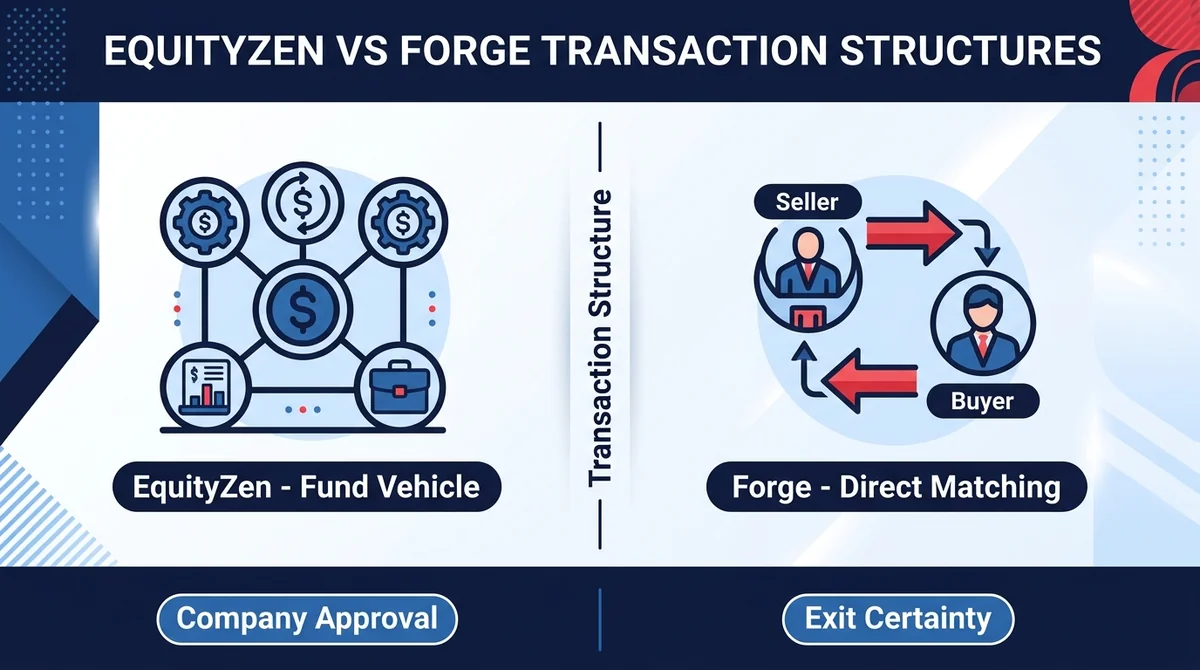
2026 Pre-IPO equity platform selection: compare fund-vehicle vs matching structures, company approval, exit certainty, plus checklists for sellers, buyers, institutions.
Conclusion: When choosing beyond EquityZen and Forge, look at two things first — which transaction structure you are using (fund vehicle or direct matching), and whether the target company approves the transfer; these two points determine who can participate, what can be transferred, and how long the exit will take. Platform brand recognition is not the primary criterion.
#What is the essential difference between EquityZen and Forge?
The difference is not "who is more well-known" but the transaction structure and compliance path, which directly determine participant eligibility thresholds, the scope of transferable assets, and exit certainty.
#Transaction structure differences
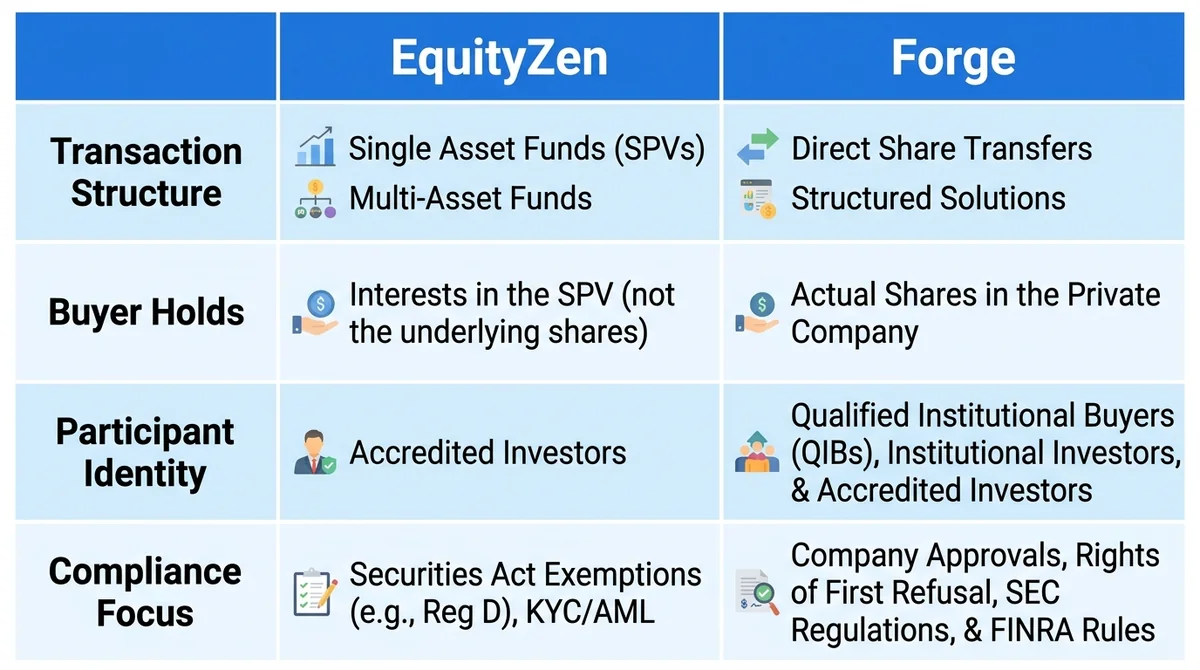
- EquityZen: Typically uses a fund vehicle so that buyers indirectly hold an interest in the target company; buyers receive fund shares rather than direct shareholder status. This structure lowers the per-transaction threshold but also means the nature of the interest, disclosure standards, and direct shareholding differ.
- Forge: Primarily matches buyers and sellers for transfers; the transaction object is the direct transfer of existing shares or interests, and the process is closer to secondary market matching.
Note: The above describes typical structures of the two platform types (common industry understanding; this article has not verified each platform's current documents line by line). The structure, fees, and terms of each specific transaction are subject to the platform's current disclosures; this article does not cite unverified specific figures.
#Participant identity differences
Fund vehicle structures typically target a broader range of accredited investors, and the per-transaction amount threshold can be split relatively. Direct matching structures have buyer eligibility verification, per-transaction amounts, and asset availability requirements closer to those of share transfers themselves. Specific threshold data are not publicly available on a unified basis and must be checked against the platform's current documents.
#Regulatory framework underlying compliance paths
Both platform types rely on securities registration exemptions to complete transfers and must handle the target company's consent rights and rights of first refusal. The difference is: under the fund vehicle path, compliance obligations fall more on vehicle establishment and disclosure; under the matching path, compliance focuses on company approval and transfer procedures for each transaction. The specific applicable exemption provisions and platform registration status have not been verified item by item in this article and should be based on the platform's official documents.
#How should you evaluate the compliance path of a Pre-IPO equity platform?
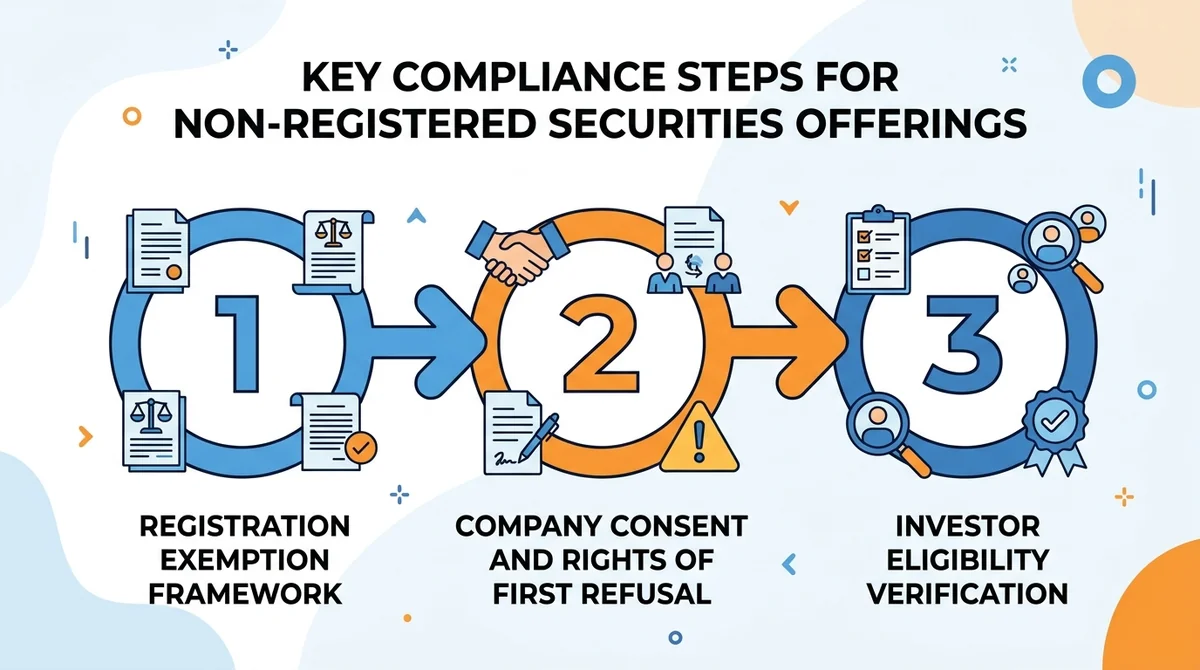
Compliance should be judged on three verifiable points: the registration exemption framework relied upon, how company consent and rights of first refusal are handled, and how investor eligibility is verified.
#Compliance framework and registration exemptions
Pre-IPO share transfers are typically completed under private placement exemptions, and the platform must clarify its role (broker, matching, or vehicle sponsor) and corresponding disclosure obligations. Parts not publicly disclosed (such as specific exemption provision numbers and details of platform registration status) should be requested directly from the platform and should not be replaced by "industry practice."
#Company consent and rights of first refusal
Most target companies' articles of association or shareholder agreements contain transfer restrictions: board approval, rights of first refusal, or window periods. This means that even if the platform matches successfully, the transfer may not be completed if the company does not approve it. This is the most easily underestimated link in the compliance path.
#Investor eligibility verification
Accredited investor verification is a prerequisite for participation, typically including asset or income proof and retention of certification documents. The strictness of the verification process directly affects process duration and auditability.
#What factors determine exit certainty?
Exit certainty ≈ transfer lock-up period + company approval + platform matching depth; without any one of the three, the platform cannot unilaterally guarantee an exit.
#Transfer lock-up period
Employee equity typically has vesting and lock-up arrangements, and transfers are not allowed during the lock-up period. The length of the lock-up period varies by company, tranche, and employment status and is subject to the equity holding agreement.
#Company approval and transfer windows
The company may set transfer windows, approval processes, or simply not approve. Approval is an external variable, and the platform cannot promise a timetable.
#Matching depth and buyer supply
For matching platforms, the probability of execution depends on buyer demand and asset scarcity; popular assets have many buyers, while illiquid assets may have orders with no counterparty for a long time. Under the fund vehicle path, it depends on whether the vehicle's fundraising is completed.
#How should users with different identities choose?
If you are a current or former employee needing to sell old shares: prioritize whether the platform's compliant transfer path is recognized by the target company, the efficiency of approval communication, and the required document list, rather than the fee level.
If you are an accredited investor seeking Pre-IPO exposure: prioritize asset availability, completeness of terms disclosure (whether it clearly states whether you hold fund shares or direct shares), and the minimum participation amount.
If you are an institutional participant: prioritize quota limits, process auditability, standardization of transfer and settlement documents, and whether the platform can provide transaction-by-transaction structure explanations.
If you value liquidity that allows trading at any time: Pre-IPO equity itself does not have this attribute, so you should reassess whether the asset class matches.
If you only need price exposure without requiring shareholder status: you can learn about alternative paths such as tokenized stocks; their mechanisms and rights structures differ significantly, and custody and platform risks need separate assessment (see internal links below).
#What risks should you watch when choosing EquityZen, Forge, or alternative paths?
- Liquidity risk: No public continuous quotes; exit depends on company approval and buyer supply, and execution may be impossible for a long time.
- Valuation and information asymmetry: Private companies disclose limited information; transaction prices do not equal fair value, and historical transaction references are limited.
- Terms change risk: Articles of association, transfer restrictions, and platform rules may change, requiring continuous tracking of the latest disclosures.
- Structure understanding risk: Interests under a fund vehicle differ from direct shareholding in rights, taxation, and disclosure, and must be confirmed item by item.
- Counterparty and vehicle risk: The fund vehicle manager's performance capability, fee calculation methods, and exit distribution order often affect final returns more than headline fee rates.
#Action checklist
- Clarify whether you want shareholder status or price exposure.
- Request the platform's current transaction structure explanation (fund vehicle / direct matching).
- Check the target company's transfer restrictions, rights of first refusal, and approval windows.
- Confirm the materials required for accredited investor verification and the expected duration.
- Request fee and terms documents and confirm whether there are additional vehicle management fees.
- For fields where "data is not public," require written explanations rather than verbal promises.
- Record all communications and documents for future auditing.
#FAQ
Which is more suitable for sellers, EquityZen or Forge? It depends on whether the target company recognizes the platform's transfer path and approval efficiency, not platform size. Sellers should first confirm lock-up status and the company's approval process.
Can Pre-IPO equity guarantee an exit? No. Exit depends on the lock-up period, company approval, and matching depth, and the platform cannot unilaterally guarantee it.
What is the difference between holding through a fund vehicle and direct shareholding? Under a fund vehicle, you hold vehicle shares, not direct shares of the target company; rights, disclosure, and tax treatment differ.
How is accredited investor status verified? Typically asset or income proof and certification documents are required; the specific list is subject to the platform's current requirements.
Are there alternative paths with better liquidity? If you only need price exposure, you can learn about mechanisms such as tokenized stocks, but custody and platform risks need separate assessment, and their rights structures differ from direct shareholding.
This content is compiled based on public information and common industry understanding and does not constitute investment or open account advice. Parts not marked with specific figures are qualitative statements and have not been verified item by item; actual conditions may change, and the platform's official disclosure documents should prevail.
FAQ
Which is more suitable for sellers, EquityZen or Forge?
It depends on whether the target company recognizes the platform's transfer path and approval efficiency, not platform size. Sellers should first confirm lock-up status and the company's approval process.
Can Pre-IPO equity guarantee an exit?
No. Exit depends on the lock-up period, company approval, and matching depth, and the platform cannot unilaterally guarantee it.
What is the difference between holding through a fund vehicle and direct shareholding?
Under a fund vehicle, you hold vehicle shares, not direct shares of the target company; rights, disclosure, and tax treatment differ.
How is accredited investor status verified?
Typically asset or income proof and certification documents are required; the specific list is subject to the platform's current requirements.
Are there alternative paths with better liquidity?
If you only need price exposure, you can learn about mechanisms such as tokenized stocks, but custody and platform risks need separate assessment, and their rights structures differ from direct shareholding.
Related Terms
Done comparing? Ready to place your first trade?
The crypto assets, tokenized US stocks and ETFs you just compared are all tradable on MSX — spot or perpetuals.
Quick Start Trading →New here? Registration takes three quick steps.