Microsoft vs. Apple: 2026 Tokenized Stock Investment Value and Platform Fees & Compliance Comparison
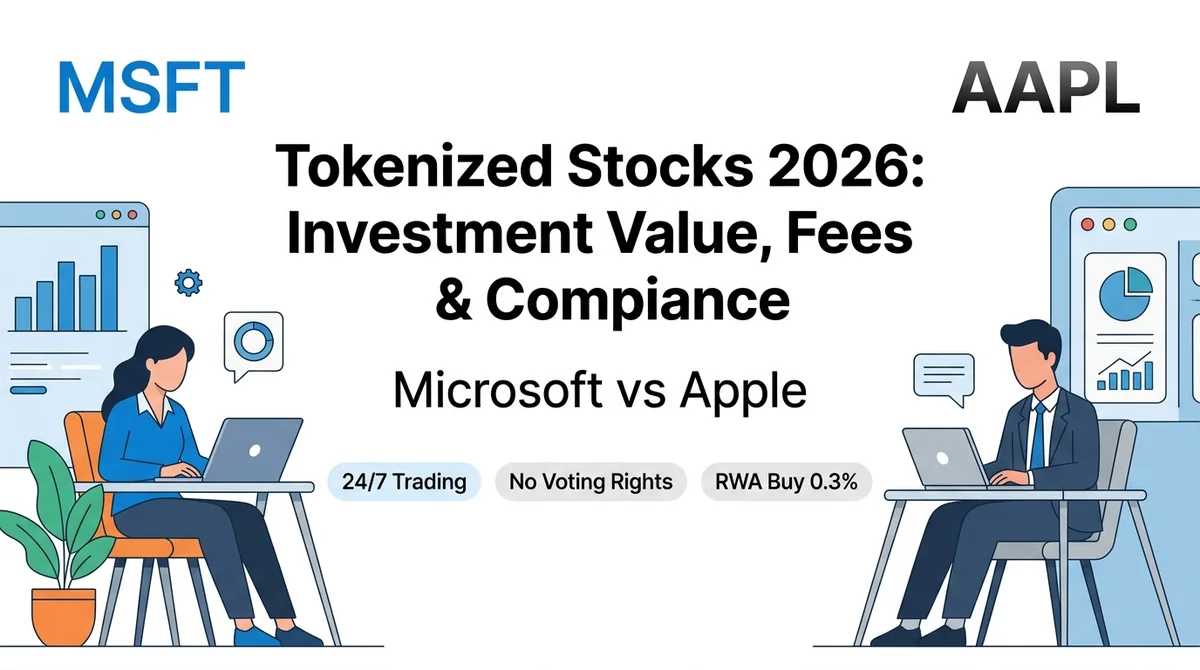
Microsoft vs Apple tokenized stocks: business models, fees, compliance. MSX fees: spot buy 0.3%, sell 0%, contracts maker 0.02%, taker 0.045%. Not advice.
Microsoft and Apple tokenized stocks: the core choice lies in business model and volatility tolerance. Microsoft leans toward stable cloud business and dividend history, while Apple leans toward hardware ecosystem and cash flow. However, both valuations and platform fees must be based on real-time disclosures; without public data, no absolute recommendation is made. This article does not constitute investment advice.
#Comparison Table
| Dimension | Microsoft (MSFT) | Apple (AAPL) |
|---|---|---|
| Business model | Primarily cloud services and software subscriptions (qualitative; financial share not provided) | Primarily consumer electronics hardware and services ecosystem (qualitative; financial share not provided) |
| Revenue structure | Cloud business is the main growth engine (no specific data provided) | Hardware such as iPhone still accounts for a significant share (no specific data provided) |
| Dividend stability | Relatively stable historical record (specific dividend yield not provided) | Consistent dividends but specific data not disclosed |
| P/E ratio | Data not disclosed | Data not disclosed |
| P/S ratio | Data not disclosed | Data not disclosed |
| Volatility | Relatively low (inferred from business characteristics; historical volatility not provided) | Potentially higher due to product cycles (inferred) |
| Tokenized trading hours | 7x24 | 7x24 |
| Voting rights | None | None |
| Platform fees (MSX example) | RWA spot buy 0.3% / sell 0%; contract maker 0.02% / taker 0.045%; MSX token discount: 25% off spot, 10% off contracts | Same as left |
| Compliance framework | Must verify platform licenses and custody arrangements; MSX has disclosed SEC STO filing (Regulation S) and MSB pathways | Same as left |
#Dimension Details
#Business Model
Microsoft is centered on cloud services (such as Azure) and software subscriptions, with a relatively diversified revenue structure. Apple's base business is hardware sales like the iPhone; services revenue is increasing, but hardware cycles still have an impact. Tokenized stocks map to the corresponding US stock prices, so differences in business models can translate into price volatility characteristics. The above description has not been verified with financial data in this article and is for qualitative reference only.
#Revenue Structure and Dividends
Microsoft's cloud growth drives overall revenue, and its historical dividend record is relatively stable. Apple has strong cash flow and consistent dividends, but specific dividend yield and payout ratio are not disclosed. Tokenized stocks generally do not include dividend rights; investors need to confirm how the platform handles dividends. According to MSX's current disclosures, most platforms do not directly distribute dividends and may compensate in other forms, subject to platform terms.
#Valuation and Volatility
Valuation metrics such as P/E and P/S ratios for both Microsoft and Apple are not disclosed in this dataset, so direct comparison is not possible. Based on business characteristics, Microsoft's volatility is relatively lower, while Apple is more affected by new product cycles and consumer electronics demand, though this inference lacks historical volatility data. Tokenized stock prices track the US stock market, with volatility rhythms consistent with the underlying stock, but 7x24 trading may amplify short-term volatility.
#Tokenized Trading and Rights
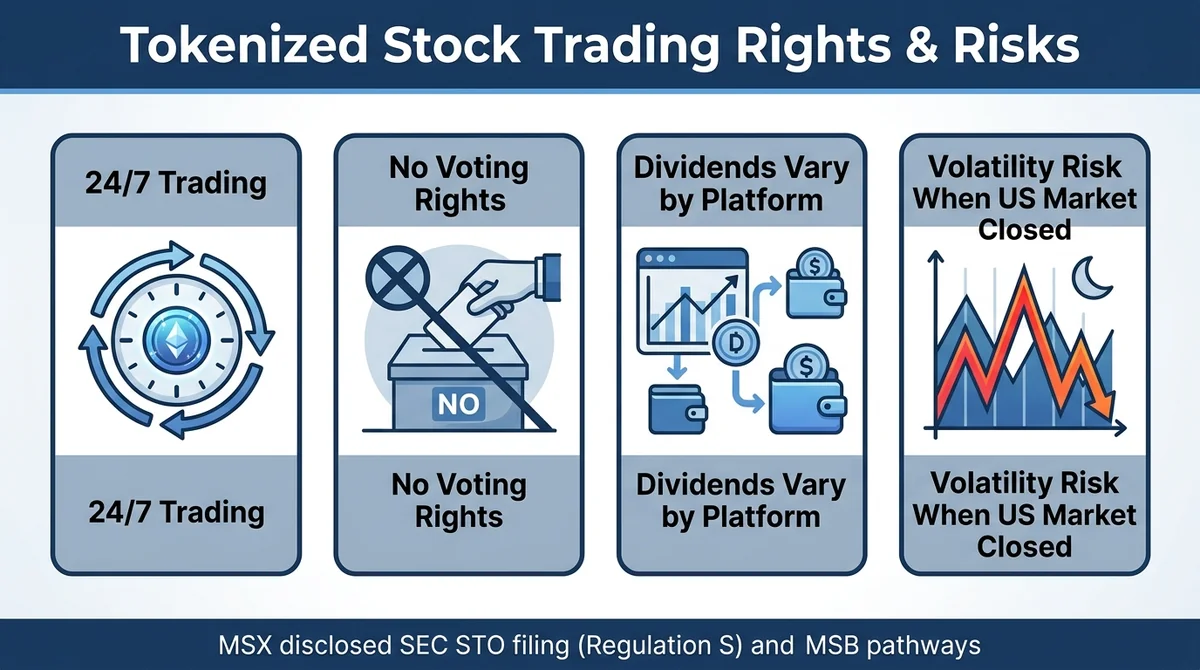
Both tokenized stocks support 7x24 trading but generally do not carry voting rights. Dividend handling varies by platform, so investors should review platform terms. Extended trading hours may bring additional volatility risk, and liquidity may decline and spreads may widen when US stock markets are closed.
#Platform Fees and Compliance
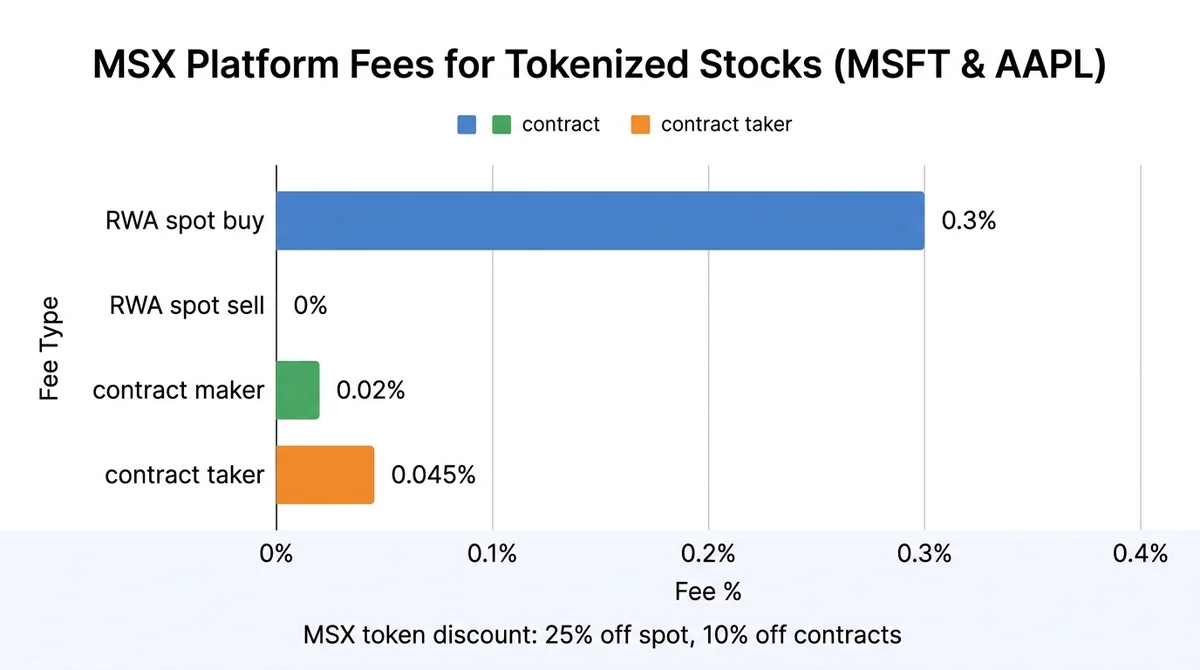
Fee structures for Microsoft and Apple tokenized stocks may differ across platforms. Taking MSX as an example, RWA spot buy fee is 0.3% and sell fee is 0% (with MSX token deduction, enjoy a 25% discount); crypto-to-crypto trading is 0% fee; cross-chain bridge is 0.1%; contract maker fee is 0.02% and taker fee is 0.045% (with MSX token deduction, enjoy a 10% discount). Other platforms may have lower or higher fees, subject to official announcements. On the compliance side, MSX has disclosed completion of SEC security token offering (STO) filing under Regulation S and complies with AML/CTF regulations; it is also exploring CFTC regulatory frameworks. Investors should still verify whether the platform holds relevant licenses and custody and reserve proof. For platform fee comparisons, see Tokenized Stock Exchange Rankings and MSX Fee Review.
#Scenario Recommendations
Suitable for Microsoft tokenized stocks: If you seek stability, prefer cloud services and software subscription models, value historical dividend records, and can accept relatively lower volatility, you may consider Microsoft tokenized stocks.
Suitable for Apple tokenized stocks: If you are bullish on the consumer electronics ecosystem and services growth, can tolerate volatility from product cycles, and are confident in hardware brand loyalty, you may research Apple tokenized stocks.
Neither is suitable: If you are extremely risk-averse, seek high-growth/high-beta opportunities, or have doubts about the compliance and custody of tokenized stocks, it is advisable to wait or choose other asset classes.
#FAQ
How do tokenized stocks differ from real stocks? Tokenized stocks anchor to real stock prices and can be traded 7x24, but generally have no voting rights, and dividend handling depends on the platform. Real stocks are subject to US market trading hours but carry full shareholder rights.
How can I check MSX stock token fees? MSX's official fee example is: RWA spot buy 0.3%, sell 0%, contract maker 0.02%, taker 0.045%, with MSX token discounts of 25% off spot and 10% off contracts. Other platforms may have different fees. Always check the latest fee schedule before investing.
What compliance risks are involved in investing in tokenized stocks? You must verify platform licenses, custody and reserve proof, and avoid non-compliant platforms. Regulatory changes may affect the liquidity of tokenized stocks. MSX has disclosed SEC STO filing (Regulation S) and MSB pathways, but investors should verify independently.
Do Microsoft and Apple tokenized stocks pay dividends? Most platforms do not directly distribute dividends; they may compensate in other forms, subject to platform terms. This article did not find explicit dividend handling details from MSX; consult the platform.
Which should beginners choose? Beginners seeking stability may first research Microsoft tokenized stocks; if they can tolerate volatility, Apple could be considered, but they should choose platforms with transparent fees and clear compliance. This article does not provide specific figures.
This review is compiled from public data and MSX platform disclosures and does not constitute investment or account-opening advice. Data as of 2026-08-27; actual conditions may change.
FAQ
How do tokenized stocks differ from real stocks?
Tokenized stocks anchor to real stock prices and can be traded 7x24, but generally have no voting rights, and dividend handling depends on the platform. Real stocks are subject to US market trading hours but carry full shareholder rights.
How can I check MSX stock token fees?
MSX's official fee example is: RWA spot buy 0.3%, sell 0%, contract maker 0.02%, taker 0.045%, with MSX token discounts of 25% off spot and 10% off contracts. Other platforms may have different fees. Always check the latest fee schedule before investing.
What compliance risks are involved in investing in tokenized stocks?
You must verify platform licenses, custody and reserve proof, and avoid non-compliant platforms. Regulatory changes may affect the liquidity of tokenized stocks. MSX has disclosed SEC STO filing (Regulation S) and MSB pathways, but investors should verify independently.
Do Microsoft and Apple tokenized stocks pay dividends?
Most platforms do not directly distribute dividends; they may compensate in other forms, subject to platform terms. This article did not find explicit dividend handling details from MSX; consult the platform.
Which should beginners choose?
Beginners seeking stability may first research Microsoft tokenized stocks; if they can tolerate volatility, Apple could be considered, but they should choose platforms with transparent fees and clear compliance. This article does not provide specific figures.
Related Terms
Done comparing? Ready to place your first trade?
The crypto assets, tokenized US stocks and ETFs you just compared are all tradable on MSX — spot or perpetuals.
Quick Start Trading →New here? Registration takes three quick steps.