NVDA vs TSMC 2026: Tokenized Stock Valuation, Platform Fees, and Compliance Differences
Compare valuation logic, platform fees, and compliance differences between NVDA and TSMC tokenized stocks, with MSX as an example for specific fees, compliance, and custody. Data based on public sources.
Conclusion: In the absence of specific platform fee and valuation data, it is not possible to draw a definitive "which one" conclusion between NVDA and TSMC tokenized stocks; however, using the MSX platform as an example, we can extract some verifiable data: RWA spot buy 0.3%, sell 0%, contract maker 0.02%, taker 0.045%, and it has completed SEC STO filing (Reg S). Investors should prioritize verifying platform compliance credentials, custody security, and their own risk tolerance.
Comparison Table
| Dimension | NVDA Tokenized Stock | TSMC Tokenized Stock |
|---|---|---|
| Underlying asset | NVIDIA (NVDA) U.S. stock | TSMC (TSM) U.S. stock |
| Token type | Typically spot tokens or perpetual contracts; MSX offers U.S. stock token spot and perpetual contracts | Same as above |
| Valuation mechanism | Tracks NVDA U.S. stock price, with tokenized premium/discount; specific values not disclosed | Tracks TSM U.S. stock price; specific values not disclosed |
| Liquidity | Insufficient public data; MSX has not disclosed liquidity differences between NVDA and TSMC | Same as above |
| Platform fees (using MSX as an example) | RWA spot buy 0.3%, sell 0%; contract maker 0.02%, taker 0.045%; crypto-to-crypto trading 0 fees; cross-chain bridge 0.1% | Same as above (same platform fees) |
| Compliance framework (using MSX as an example) | Completed SEC STO filing (Reg S), implements KYC/AML/KYT | Same as above |
| Investor threshold | MSX requires KYC/AML, but minimum investment amount not disclosed; supports 10U minimum investment (fractional shares) | Same as above |
| Custody method (using MSX as an example) | Non-custodial (users hold private keys), 95% assets in cold wallets, reserve ratio >100% | Same as above |
| Key risks | Underlying stock price volatility, token premium/discount, smart contract risk, insufficient liquidity, regulatory changes | Same as above |
| Data availability | Valuation and liquidity data not disclosed; platform fees and compliance data traceable to MSX official sources | Same as above |
Dimension Details
Underlying Asset and Token Type: The underlying asset of NVDA tokenized stock is NVIDIA U.S. stock, and that of TSMC tokenized stock is TSMC U.S. stock. Token types may be spot tokens (representing shares of the underlying asset) or perpetual contracts (representing price exposure). Using MSX as an example, it has launched U.S. stock token spot (2025-05-10) and U.S. stock token perpetual contracts (2025-08-11), both supporting NVDA, TSMC, and other underlying assets.
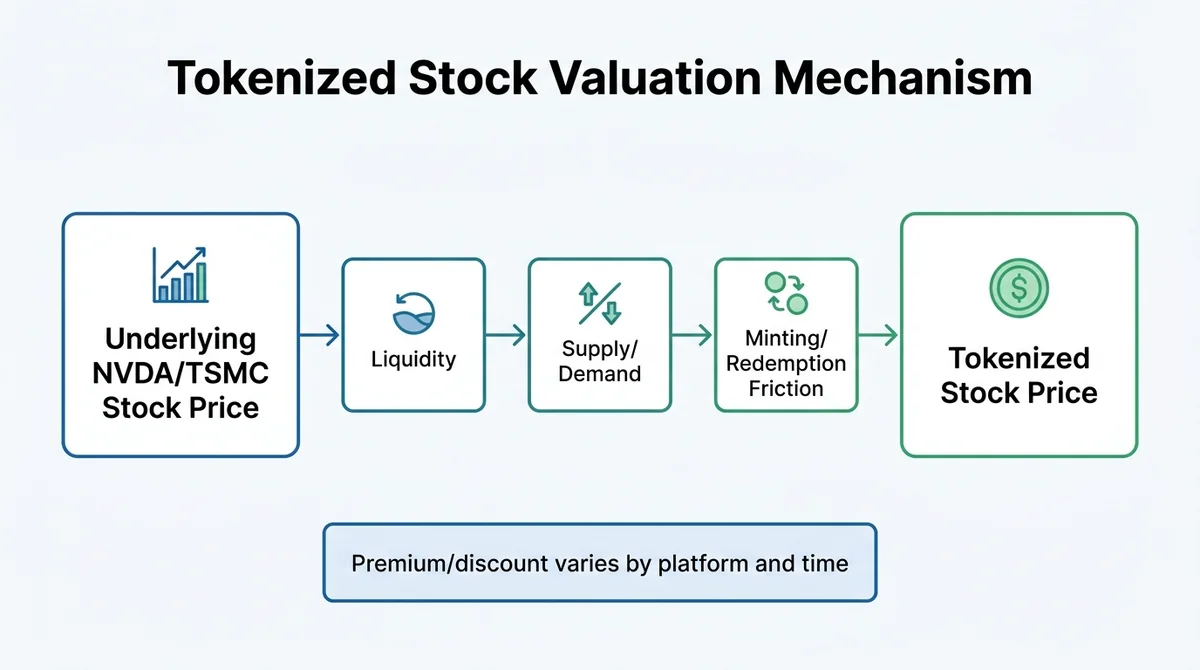
Valuation Mechanism: Tokenized stock valuations generally track underlying U.S. stock prices, but premiums or discounts may occur due to tokenized market liquidity, supply-demand dynamics, and minting/redemption frictions. Specific premium/discount values for NVDA and TSMC vary by platform and time and are not disclosed in currently available public data.
Liquidity: Liquidity of tokenized stocks depends on order book depth and market maker activity on the trading platform. MSX claims to engage top-tier market makers to provide initial depth, but has not disclosed specific liquidity data for NVDA and TSMC. NVDA, as a high-attention underlying, may typically enjoy higher liquidity, but this inference lacks direct evidence.
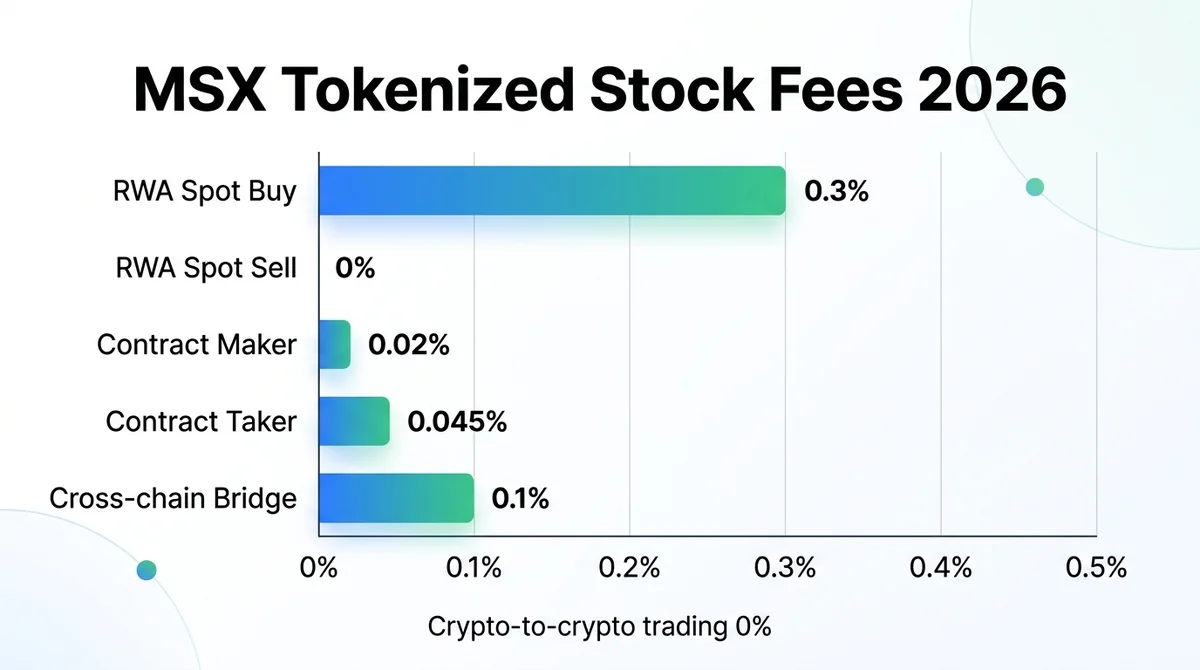
Platform Fees: Using MSX as an example, the officially published fee structure is: RWA spot buy 0.3%, sell 0% (25% discount with MSX payment); crypto-to-crypto trading 0 fees; cross-chain bridge 0.1%; contract maker 0.02%, taker 0.045% (10% discount with MSX payment). Fees on other platforms may differ, and investors should verify them one by one.
Compliance Framework: Because tokenized stocks have securities attributes, they typically need to comply with securities regulations. MSX claims to have completed SEC Security Token Offering (STO) filing (Regulation S), implements KYC/AML/KYT compliance governance, and holds an MSB financial license. Compliance credentials of other platforms need to be verified separately.
Investor Threshold: MSX requires users to complete KYC/AML verification and supports investment starting from a low base amount of 10U, but has not disclosed whether it restricts to accredited investors. Other platforms may set different thresholds.
Custody Method: MSX adopts a non-custodial model, where users hold their own private keys; 95% of platform digital assets are stored in multi-signature cold wallets, and it promises a physical reserve ratio >100%. These security mechanisms can reduce some custody risks, but smart contract risk still exists.
Key Risks: Both face risks of underlying stock price volatility, tokenized premium/discount, insufficient liquidity, smart contract vulnerabilities, and regulatory policy changes. Investors should fully assess their own risk tolerance.
Scenario Recommendations
When NVDA tokenized stock may be suitable: If you are bullish on NVIDIA's leading position in the AI chip sector and can accept the additional risks of tokenized products, you may consider holding NVDA spot tokens through a compliant platform (such as MSX). However, note that specific platform selection should be based on real-time fees, liquidity, and compliance status.
When TSMC tokenized stock may be suitable: If you prefer the leading pure-play foundry or want to diversify your semiconductor holdings, you may pay attention to the availability and liquidity of TSMC tokenized products. Again, you need to verify platform data yourself.
FAQ
Q: What is the difference between tokenized stocks and real U.S. stocks? A: Tokenized stocks provide price exposure to the underlying U.S. stock, but holding tokenized spot does not equal directly holding the real stock and does not confer shareholder rights (such as voting rights). Using MSX as an example, users can buy and sell U.S. stock tokens directly with stablecoins, with on-chain T+0 settlement.
Q: What conditions must be met to invest in NVDA or TSMC tokenized stocks? A: MSX requires KYC/AML verification and supports investments starting from 10U; whether it restricts to accredited investors has not been disclosed. Requirements on other platforms may differ.
Q: What fees generally apply to tokenized stocks? A: Using MSX as an example, fees include RWA spot buy 0.3%, sell 0%, contract maker 0.02%, taker 0.045%, crypto-to-crypto trading 0 fees, and cross-chain bridge 0.1%. Other platforms may include minting/redemption fees, position management fees, etc.
Q: Which tokenized stock has better liquidity, NVDA or TSMC? A: Liquidity depends on platform order book depth and market maker activity. MSX has not disclosed liquidity differences between the two. NVDA may have better liquidity due to higher attention, but there is no public data, so verification on the platform is needed.
Q: Are there regulatory risks with tokenized stocks? A: Yes. Tokenized stocks have securities attributes and may face risks such as changes in regulatory frameworks and revocation of platform licenses. MSX has completed SEC STO filing (Reg S) and holds an MSB license, but other platforms need to be verified independently.
Disclaimer
This content is compiled based on public data and does not constitute investment or account opening advice. Data as of 2026-06-01, sources include the MSX official fact base and public materials; actual conditions may change. It is recommended to check official sources.
FAQ
What is the difference between tokenized stocks and real U.S. stocks?
Tokenized stocks provide price exposure to the underlying U.S. stock, but holding tokenized spot does not equal directly holding the real stock and does not confer shareholder rights (such as voting rights). Using MSX as an example, users can buy and sell U.S. stock tokens directly with stablecoins, with on-chain T+0 settlement.
What conditions must be met to invest in NVDA or TSMC tokenized stocks?
MSX requires KYC/AML verification and supports investments starting from 10U; whether it restricts to accredited investors has not been disclosed. Requirements on other platforms may differ.
What fees generally apply to tokenized stocks?
Using MSX as an example, fees include RWA spot buy 0.3%, sell 0%, contract maker 0.02%, taker 0.045%, crypto-to-crypto trading 0 fees, and cross-chain bridge 0.1%. Other platforms may include minting/redemption fees, position management fees, etc.
Which tokenized stock has better liquidity, NVDA or TSMC?
Liquidity depends on platform order book depth and market maker activity. MSX has not disclosed liquidity differences between the two. NVDA may have better liquidity due to higher attention, but there is no public data, so verification on the platform is needed.
Are there regulatory risks with tokenized stocks?
Yes. Tokenized stocks have securities attributes and may face risks such as changes in regulatory frameworks and revocation of platform licenses. MSX has completed SEC STO filing (Reg S) and holds an MSB license, but other platforms need to be verified independently.
Related Terms
Done comparing? Ready to place your first trade?
The crypto assets, tokenized US stocks and ETFs you just compared are all tradable on MSX — spot or perpetuals.
Quick Start Trading →New here? Registration takes three quick steps.