Pre-IPO Investing vs Secondary Market Buying: Liquidity, Lock-up Periods, and Pricing Differences 2026
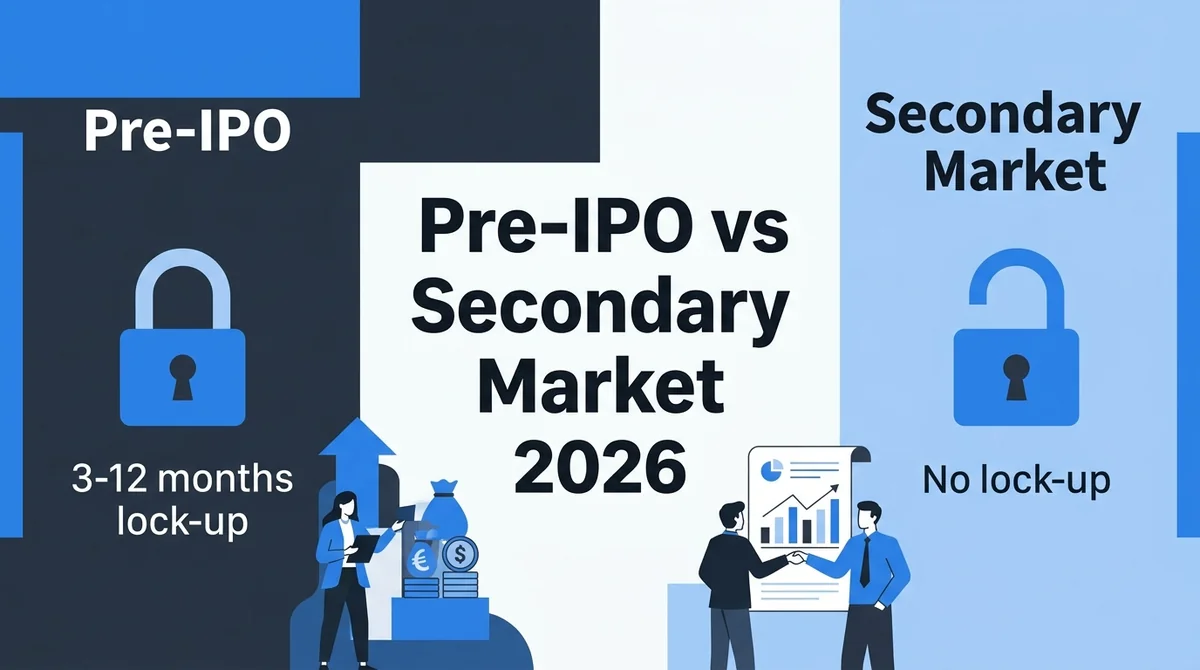
Pre-IPO investing suits long-term capital with lock-up tolerance; secondary buying is more flexible. Compare timing, pricing, liquidity, lock-up.
Data as of June 2026. This comparison is based on public market rules; specific terms are subject to offering documents and broker announcements.
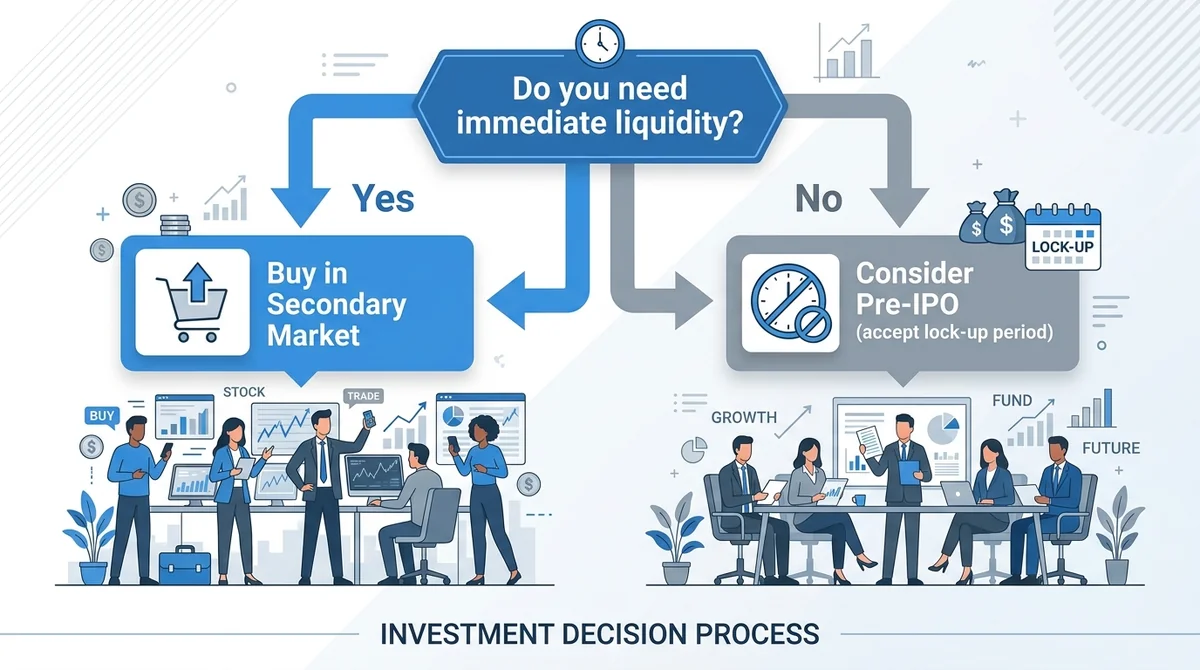
Conclusion: Investors with short capital duration and a need for immediate liquidity are generally better suited to buying in the secondary market; those who can accept lock-up periods and want to participate at the offering price may consider Pre-IPO investing. The specific choice depends on personal liquidity needs, risk tolerance, and available channels.
#Dimension Details
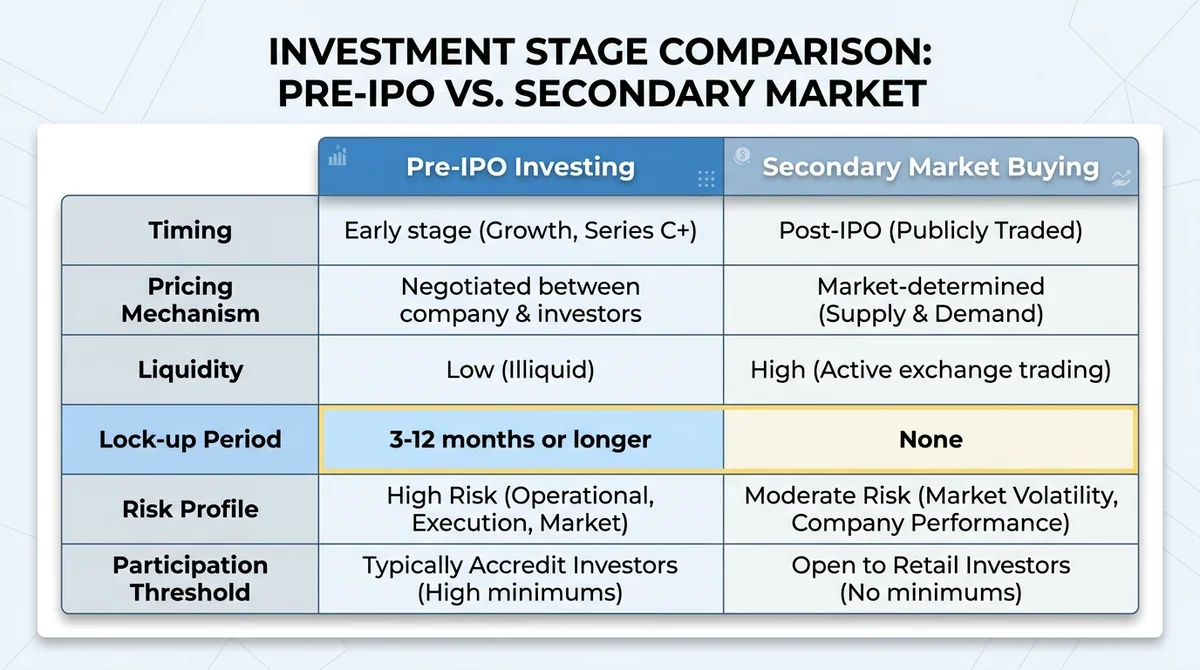
Timing: If you seek pre-listing allocation, Pre-IPO is the path; if you prefer to trade only in public markets, the secondary market is more direct. Pre-IPO investing completes subscription before the company goes public, while secondary market buying occurs after listing. The two occur at different stages, which determines the liquidity profile of the position. At the Pre-IPO stage, the company is not yet publicly traded, and investors participate through specific channels; the secondary market involves real-time matching on an exchange.
Pricing Mechanism: Investors who value price transparency may prefer the secondary market, because Pre-IPO pricing is not transparent. The Pre-IPO offering price is set by the issuer and underwriters, with specific pricing methods varying by company; secondary market prices are determined by real-time order matching after listing, reflecting market supply and demand. Information asymmetry is generally higher at the Pre-IPO stage, while secondary market prices are more transparent but may also be more volatile.
Liquidity: The secondary market is almost always liquid, while Pre-IPO requires accepting a lock-up period. Pre-IPO shares typically have low liquidity and cannot be sold during the lock-up period; secondary market purchases can usually be sold at any time, offering higher liquidity. However, liquidity also depends on the specific stock and market conditions—for example, small-cap or thinly traded stocks may be difficult to sell quickly even in the secondary market.
Lock-up Period: If you cannot accept capital being locked up for months or even years, the secondary market is the more suitable choice. The length and applicability of the lock-up period are determined by the offering documents, and the number of days varies widely by company—commonly 3 to 12 months or longer. Secondary market purchases have no lock-up restrictions, though selling prices are subject to market fluctuations.
Risk Profile: The main risks of Pre-IPO investing are price break and liquidity lock-up; the main risk of secondary market buying is price volatility. Pre-IPO investors typically face the risk of the stock falling below the offering price and the liquidity risk of being unable to exit during the lock-up period; secondary market buyers primarily face post-listing price volatility. The risk level of each approach should be assessed on a company-specific basis and should not be oversimplified.
Participation Threshold: Retail investors usually can only access the secondary market, while Pre-IPO is aimed at qualified investors or specific channels. Pre-IPO investing is generally restricted to specific investors with higher thresholds; conditions vary by issuer and regulatory requirements, and may include qualified investor status or a minimum subscription amount. Secondary market buying has a lower barrier—retail investors can participate through a brokerage account, though suitability requirements may still apply.
Equity Nature: If you only want to hold equity, there is no essential difference between the two; the difference lies in the timing of acquisition and any attached rights. Both ultimately represent company equity, but Pre-IPO investing obtains shares before listing, while secondary market buying obtains shares after listing. Shareholder rights are realized at different times, but after listing they generally carry equal rights.
Exit Method: The secondary market offers same-day selling, while Pre-IPO requires waiting for the lock-up to expire. Pre-IPO investors must wait until the lock-up period ends and shares are unlocked before selling, and the exit timing is constrained by the unlocking schedule. Secondary market purchases can usually be sold at any time through the secondary market, providing flexible exit.
Information Transparency: The secondary market has regular financial reports to review, while Pre-IPO relies on limited disclosures. At the Pre-IPO stage, company disclosures are typically less comprehensive and financial information may be incomplete; listed companies in the secondary market are required to disclose financial reports regularly under regulatory requirements, so information transparency is generally higher.
Capital Duration Requirement: Pre-IPO is suitable for long-term idle capital, while the secondary market can accommodate short-term capital. Pre-IPO investing requires capital to
FAQ
Pre-IPO 打新和二级市场买入的核心区别是什么?
核心区别在于交易时点和定价机制。Pre-IPO 打新在公司上市前按发行价认购,通常有锁定期,流动性较低;二级市场买入是在上市后按市场价格买卖,流动性更高,价格受供需影响。
Pre-IPO 股份什么时候能卖?
Pre-IPO 股份在锁定期内无法卖出,退出时点受锁定期和解禁节奏约束。具体锁定期时长由发行文件决定,需查看发行文件。
二级市场买入有什么限制?
二级市场买入通常无锁定期,可随时卖出(除非市场暂停交易),但面临上市后价格波动风险。卖出价格由实时买卖盘决定。
破发风险是什么?
破发指上市后价格低于发行价,导致 Pre-IPO 打新投资者账面亏损。二级市场买入者也可能在买入后价格下跌,但不受发行价锚定影响。
怎么选择 Pre-IPO 打新还是二级市场买入?
先评估资金久期和流动性需求。若资金可长期锁定且能接受上市前不确定性,可考虑 Pre-IPO 打新;若需要随时变现或无法判断走势,二级市场买入更灵活。
Related Terms
Done comparing? Ready to place your first trade?
The crypto assets, tokenized US stocks and ETFs you just compared are all tradable on MSX — spot or perpetuals.
Quick Start Trading →New here? Registration takes three quick steps.