RToken Redemption Mechanism Comparison: On-Chain Protocol Redemption vs Centralized Platform Redemption (2026)
Compare RToken on-chain protocol redemption vs centralized platform redemption: process, custody fee, costs, and risks. On-chain self-custody with gas volatility; centralized convenient but platform risk.
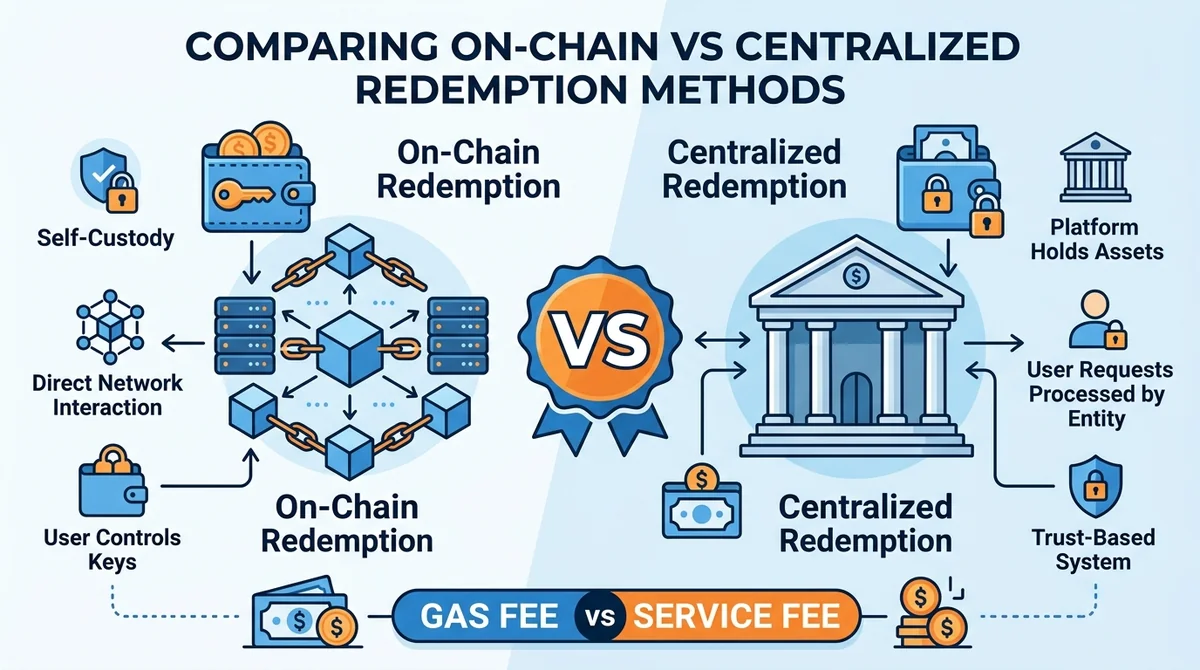
Answer: The core difference between on-chain protocol redemption and centralized platform redemption lies in asset custody and execution. On-chain redemption is automatically executed by smart contracts, with users controlling private keys and directly bearing gas fees; centralized redemption is custodied by the platform and may charge additional fees, with platform risk. The choice depends on your trade-off between control, convenience, and counterparty risk.
#What Are the Core Differences Between RToken On-Chain Redemption and Centralized Platform Redemption?
#How Do the Redemption Processes Differ?
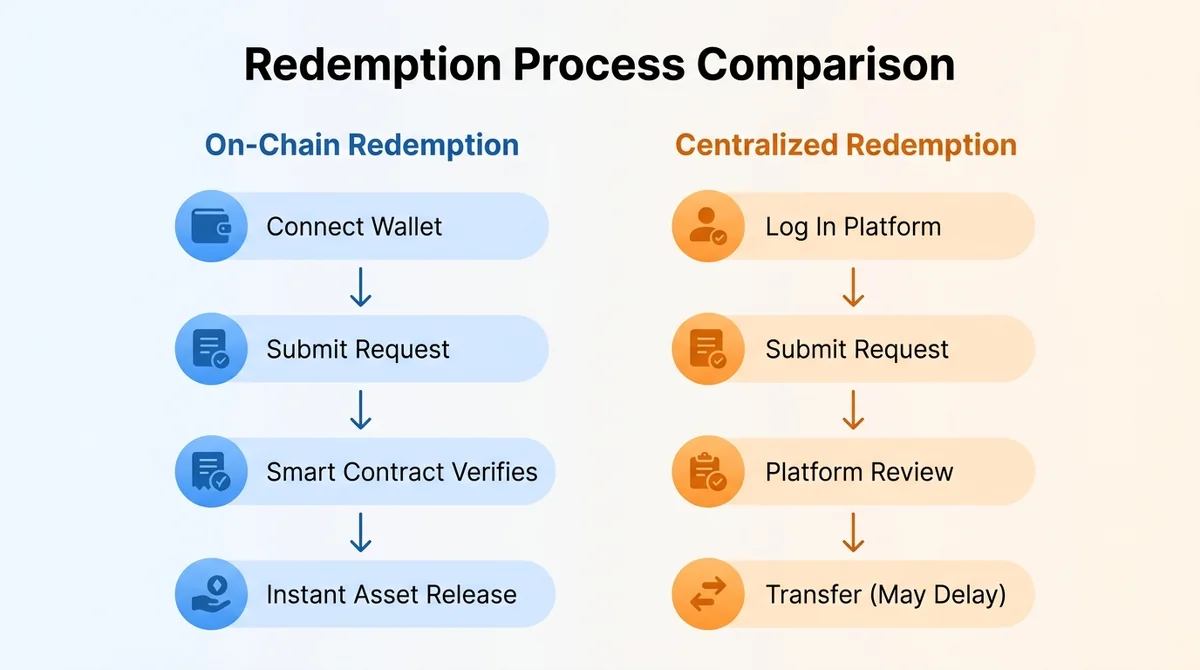
On-chain redemption involves users directly interacting with smart contracts through their wallets. After submitting a redemption request, the contract automatically verifies and releases assets, with funds arriving instantly and no third-party review required. Centralized redemption requires users to initiate a request within the platform account, and the platform performs manual or system review before executing the transfer, which may cause delays.
#How Does Asset Custody Differ?
During on-chain redemption, RToken remains in the user's own wallet, with private keys controlled by the user, and the platform or protocol cannot freeze or misappropriate assets. On centralized platforms, users' RToken is typically stored in wallets or accounts controlled by the platform, which has actual control. Users face risks of misappropriation, exit scams, or regulatory freezes.
#How Do Fee Structures Differ?
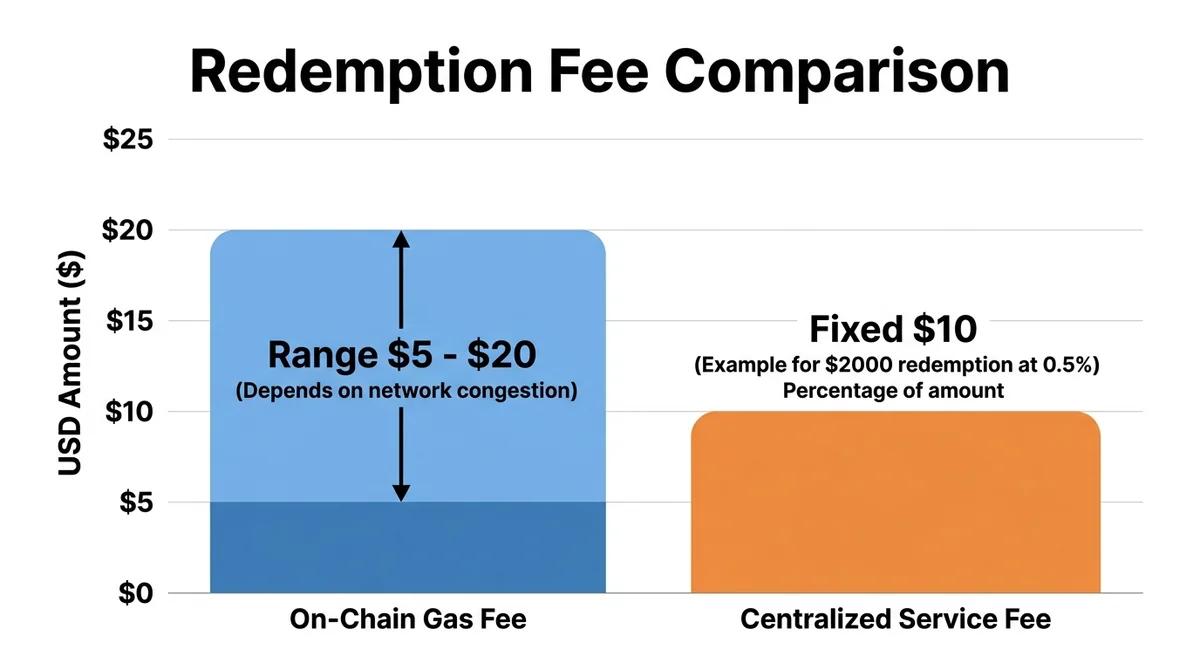
The main cost of on-chain redemption is the blockchain network gas fee, which depends on network congestion and contract complexity, and is not directly proportional to the redemption amount. Centralized platforms may charge a fixed service fee or a percentage of the redemption amount, and some platforms may also charge hidden fees through exchange rate spreads.
#What Are the Advantages and Risks of On-Chain Protocol Redemption?
#Advantages: How Are Decentralization and Transparency Reflected?
On-chain redemption requires no trust in any third party, and redemption records are publicly verifiable on the blockchain. Users hold private keys and have full control over assets, with no risk of platform refusing redemption or restricting withdrawals.
#Risks: How to Deal with Smart Contract Vulnerabilities and Gas Fee Volatility?
Smart contracts may have code vulnerabilities that could lead to asset loss if exploited. Users need some on-chain operational skills, such as managing private keys and setting gas fees. Gas fees may spike during network congestion, increasing redemption costs.
#What Are the Advantages and Risks of Centralized Platform Redemption?
#Advantages: How Are Convenience and Fiat On-Ramps Reflected?
Centralized platforms usually offer user-friendly interfaces and simple operations, suitable for beginners. Some platforms support direct conversion to fiat, eliminating on-chain exchange steps. Platforms may provide customer support to help resolve redemption issues.
#Risks: How to Guard Against Platform Exit Scams and Asset Freezes?
Platforms may misappropriate user assets or simply exit scam; there have been many exchange collapse incidents in history. Regulatory or compliance issues may cause redemption delays or account freezes, and users must rely on the platform's creditworthiness and compliance status.
#How Do Redemption Fees Compare? On-Chain Gas Fees vs Centralized Service Fees
#How Are On-Chain Gas Fees Calculated?
Gas fee = gas used × gas price. Gas used is determined by contract complexity, and redemption operations typically consume a fixed range of gas. Gas price is determined by network supply and demand, rising during congestion and falling during idle times. Users can set gas price themselves to control confirmation speed.
#What Fees Do Centralized Platforms Typically Charge?
Centralized platforms may charge a fixed service fee (e.g., 1-5 USDT per transaction), a percentage of the redemption amount (e.g., 0.1%-0.5%), or hidden fees through bid-ask spreads. Some platforms waive fees for specific users or large redemptions.
#Which Method Has Lower Overall Cost?
For large redemptions, on-chain gas fees are relatively fixed and proportionally low, potentially more cost-effective. For small redemptions, centralized fixed service fees may be lower than on-chain gas fees. However, platform hidden costs and risks should be considered comprehensively.
#Who Should Choose On-Chain Redemption and Who Should Choose Centralized Platform Redemption?
#How Should Users Who Prioritize Security and Decentralization Choose?
If you are familiar with wallet operations, value asset control and censorship resistance, on-chain redemption is a more suitable choice. You need to bear the risks of private key custody fee and gas fee volatility yourself.
#How Should Beginners or Users Needing Fiat On-Ramps Choose?
If you are a beginner unfamiliar with on-chain operations, or need to quickly convert RToken to fiat, centralized platform redemption may be more convenient. But you should choose a reputable and compliant platform and be aware of platform risks.
#How Do Strategies Differ for Large vs Small Redemptions?
For large redemptions, on-chain is recommended to reduce counterparty risk and avoid platform limits or freezes. For small redemptions, centralized platforms may be considered to save gas fees and simplify operations.
#Frequently Asked Questions
Question: Do I need to pay gas fees for on-chain redemption? Answer: Yes, on-chain redemption requires paying blockchain network gas fees, which depend on network congestion and contract complexity.
Question: Can centralized platform redemption be frozen? Answer: Possibly. Platforms may freeze accounts or delay redemptions due to regulatory, compliance, or risk control reasons. Users should pay attention to platform terms and historical records.
Question: Which redemption method is safer? Answer: On-chain redemption is safer in terms of asset control, but users need to manage private keys themselves; centralized redemption has platform risk but lower operational barriers. Security depends on the user's capabilities and risk preference.
Question: When are gas fees lowest? Answer: Gas fees are usually lower during network idle periods (such as weekends or off-peak hours). Users can use gas tracking tools to choose appropriate times.
Question: Does centralized platform redemption require KYC? Answer: Most centralized platforms require KYC verification before redemption, depending on platform policies and local regulations.
This content is compiled from public data and does not constitute investment or account opening advice. Data as of 2026-10-09, actual conditions may change. Please refer to RToken official documentation or relevant platform announcements for the latest information.
FAQ
Do I need to pay gas fees for on-chain redemption?
Yes, on-chain redemption requires paying blockchain network gas fees, which depend on network congestion and contract complexity.
Can centralized platform redemption be frozen?
Possibly. Platforms may freeze accounts or delay redemptions due to regulatory, compliance, or risk control reasons. Users should pay attention to platform terms and historical records.
Which redemption method is safer?
On-chain redemption is safer in terms of asset control, but users need to manage private keys themselves; centralized redemption has platform risk but lower operational barriers. Security depends on the user's capabilities and risk preference.
When are gas fees lowest?
Gas fees are usually lower during network idle periods (such as weekends or off-peak hours). Users can use gas tracking tools to choose appropriate times.
Does centralized platform redemption require KYC?
Most centralized platforms require KYC verification before redemption, depending on platform policies and local regulations.
Related Terms
Done comparing? Ready to place your first trade?
The crypto assets, tokenized US stocks and ETFs you just compared are all tradable on MSX — spot or perpetuals.
Quick Start Trading →New here? Registration takes three quick steps.