Tokenized Stock Contracts vs Tokenized Stock Perpetuals: Differences in Settlement, Dividends, and Leverage Funding Costs
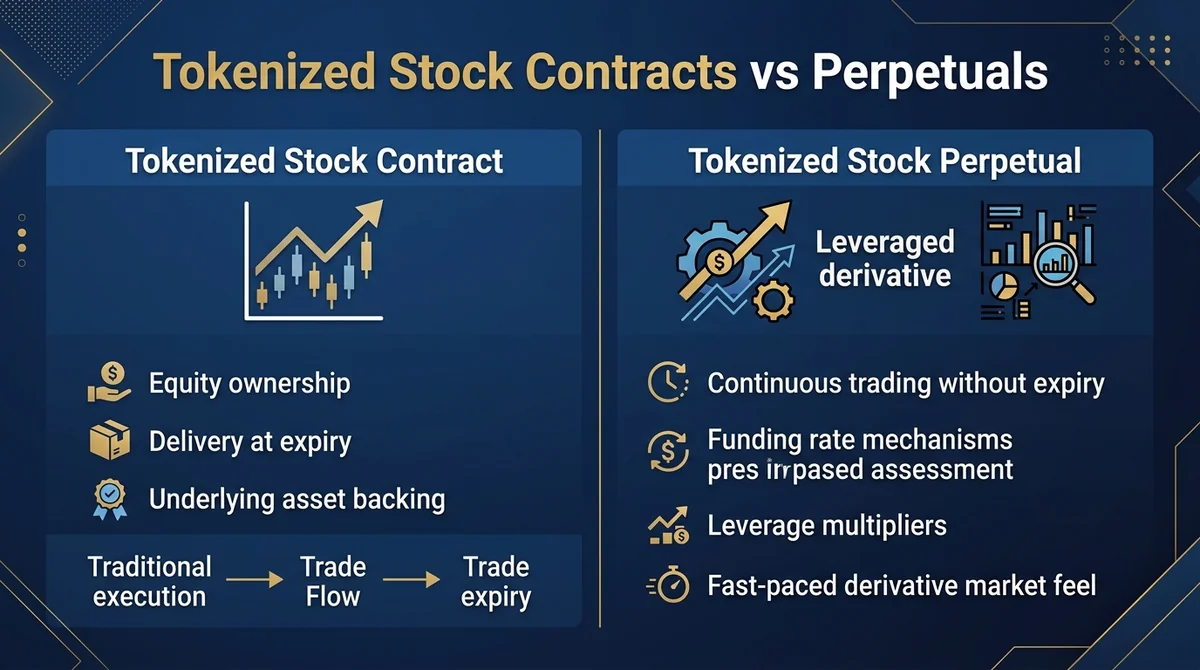
Tokenized stock contracts offer spot-like price exposure with possible dividends; tokenized stock perpetuals are derivatives anchored by funding rates.
Conclusion: Tokenized stock contracts are close-to-spot price exposure, may map dividends, and usually have no or low leverage; tokenized stock perpetuals are leveraged derivatives with no expiry, anchored to spot via funding rates, and do not involve dividends. Choose contracts for long-term price tracking, perpetuals for short-term leveraged trading. Neither carries shareholder rights, and specific mechanisms vary by platform.
#Comparison Table
| Dimension | Tokenized Stock Contract | Tokenized Stock Perpetual |
|---|---|---|
| Asset nature | Price exposure, not real equity | Price exposure derivative, not real equity |
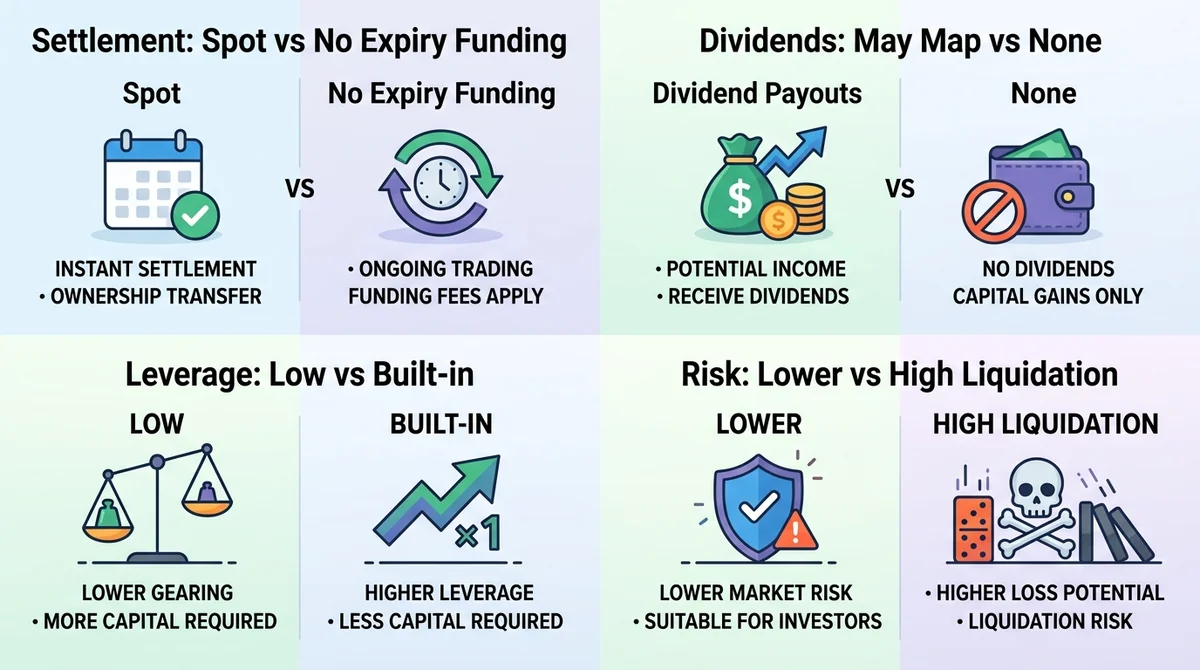
| Settlement mechanism | Typically spot settlement | No expiry, periodic funding fee settlement |
| Dividend handling | May map dividends (price adjustment or extra distribution), subject to platform confirmation | No dividend involvement |
| Leverage | Usually no or low leverage | Built-in leverage, amplifies gains/losses |
| Holding cost | Mainly spread/fees | Fees + ongoing funding rate costs |
| Price anchoring | Directly tracks underlying spot price | Anchored to spot via funding rate |
| Liquidation risk | Lower (unless platform risk) | High, adverse price moves may trigger forced liquidation |
| Liquidity risk | Depends on platform and market depth | Depends on platform and market depth, possibly lower |
| Shareholder rights | None | None |
| Suitable scenarios | Long-term tracking, unwilling to bear funding costs | Short-term long/short, leverage efficiency |
#Dimension Details
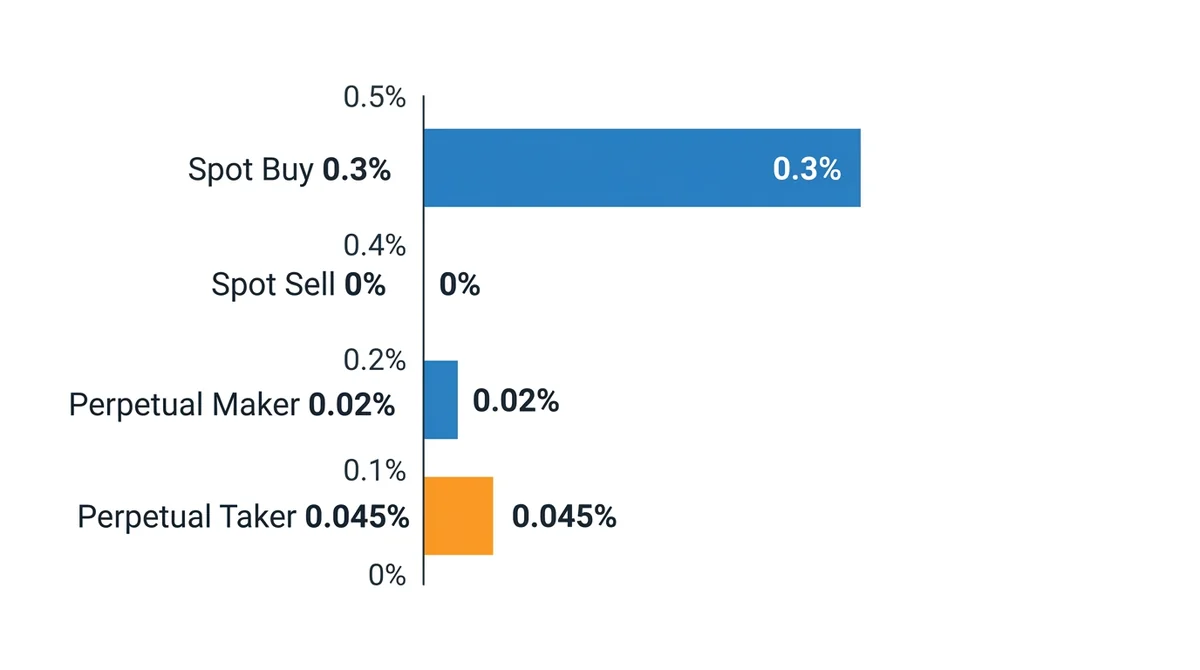
Settlement mechanism: Tokenized stock contracts are typically settled on a spot basis; users gain price exposure to the underlying stock. Tokenized stock perpetuals have no expiry and use periodic settlement of funding fees to keep the contract price anchored to US stock spot prices. Some platforms like MSX have launched US stock tokenized spot and perpetuals, with spot buy orders at 0.3% and sell orders free, and perpetual contract maker fee 0.02% and taker fee 0.045%; these rates are examples only and not representative of the entire market.
Dividend handling: Tokenized stock contracts may map dividends, commonly via token price adjustment or extra token distribution, but the specific mechanism varies by platform. Public sources do not confirm that all platforms map dividends; when data is not disclosed, check the product documentation. Perpetual contracts do not involve dividends; holding returns come only from price changes and funding rate payments/receipts.
Leverage funding costs: Perpetual contracts come with built-in leverage; the funding rate is the anchoring cost periodically settled between longs and shorts. Longs or shorts pay or receive funding fees depending on market direction. When holding long-term and on the wrong side, funding fees can significantly erode profits; specific rates are market-determined, and platforms may publish calculation methods, but no specific figures are currently available.
Price anchoring: Contracts directly track the underlying spot price; perpetuals use the perpetual futures funding rate settlement schedule to keep the contract price fluctuating around the spot price—the greater the deviation, the greater the funding rate pressure.
Risk characteristics: Contracts usually have no or low leverage, so liquidation risk is lower, but platform and liquidity risks remain. Perpetual leverage amplifies gains and losses; adverse price moves may trigger forced liquidation or liquidation, after which the entire margin may be lost. Liquidity risk depends on platform depth and market conditions; both perpetuals and spot carry counterparty risk.
#Scenario Recommendations
Users suited to tokenized stock contracts: those who want long-term tracking of US stock prices, are unwilling to bear funding rate and liquidation risks, and may care about dividend mapping.
Users suited to tokenized stock perpetuals: short-term traders seeking long/short flexibility and leverage efficiency, able to bear funding costs and liquidation risks.
Buying US stocks directly vs US stock tokenization: Buying US stocks directly carries real shareholder rights but is limited by market access and trading hours; US stock tokenization offers more flexible price exposure, potentially longer trading hours than traditional US markets subject to each platform's rules, and is only price exposure without voting rights or other shareholder rights.
For verification, check the relevant official product documentation.
#FAQ
Q1: Can tokenized stock contracts receive real dividends? No guarantee. Some platforms may map dividends, but users still hold price exposure, not real shareholder rights; specifics are subject to product terms.
Q2: How much profit can perpetual funding fees eat up? The specific rate is market-determined; this report has no fixed figure. When holding long-term on the wrong side, continuously paying funding fees can significantly erode profits.
Q3: Do tokenized stock contracts have liquidation risk? Usually no or low leverage means direct liquidation risk is low, but platform exit scams, liquidity drying up, and smart contract vulnerabilities still exist.
Q4: Which is better, buying US stocks directly or tokenized stock contracts? Buying US stocks directly gives real shareholder rights (voting, dividends, etc.) but is limited by market access; tokenized stock contracts provide more flexible price exposure without shareholder rights. The choice depends on whether you want rights or just price exposure.
Q5: Why don't perpetual contracts have an expiry date? Perpetual contracts roll continuously via the perpetual futures funding rate settlement schedule, with no fixed settlement date; longs and shorts periodically settle funding fees, so no expiry delivery is needed. Unverified details should be checked against specific platform rules.
FAQ
Can tokenized stock contracts receive real dividends?
No guarantee. Some platforms may map dividends, but users still hold price exposure, not real shareholder rights; specifics are subject to product terms.
How much profit can perpetual funding fees eat up?
The specific rate is market-determined; this report has no fixed figure. When holding long-term on the wrong side, continuously paying funding fees can significantly erode profits.
Do tokenized stock contracts have liquidation risk?
Usually no or low leverage means direct liquidation risk is low, but platform exit scams, liquidity drying up, and smart contract vulnerabilities still exist.
Which is better, buying US stocks directly or tokenized stock contracts?
Buying US stocks directly gives real shareholder rights (voting, dividends, etc.) but is limited by market access; tokenized stock contracts provide more flexible price exposure without shareholder rights. The choice depends on whether you want rights or just price exposure.
Why don't perpetual contracts have an expiry date?
Perpetual contracts roll continuously via the perpetual futures funding rate settlement schedule, with no fixed settlement date; longs and shorts periodically settle funding fees, so no expiry delivery is needed. Unverified details should be checked against specific platform rules.
Related Terms
Done comparing? Ready to place your first trade?
The crypto assets, tokenized US stocks and ETFs you just compared are all tradable on MSX — spot or perpetuals.
Quick Start Trading →New here? Registration takes three quick steps.