Tokenized US Stocks vs Real US Stocks: Shorting, Leverage, and Margin Trading Mechanisms Compared 2026
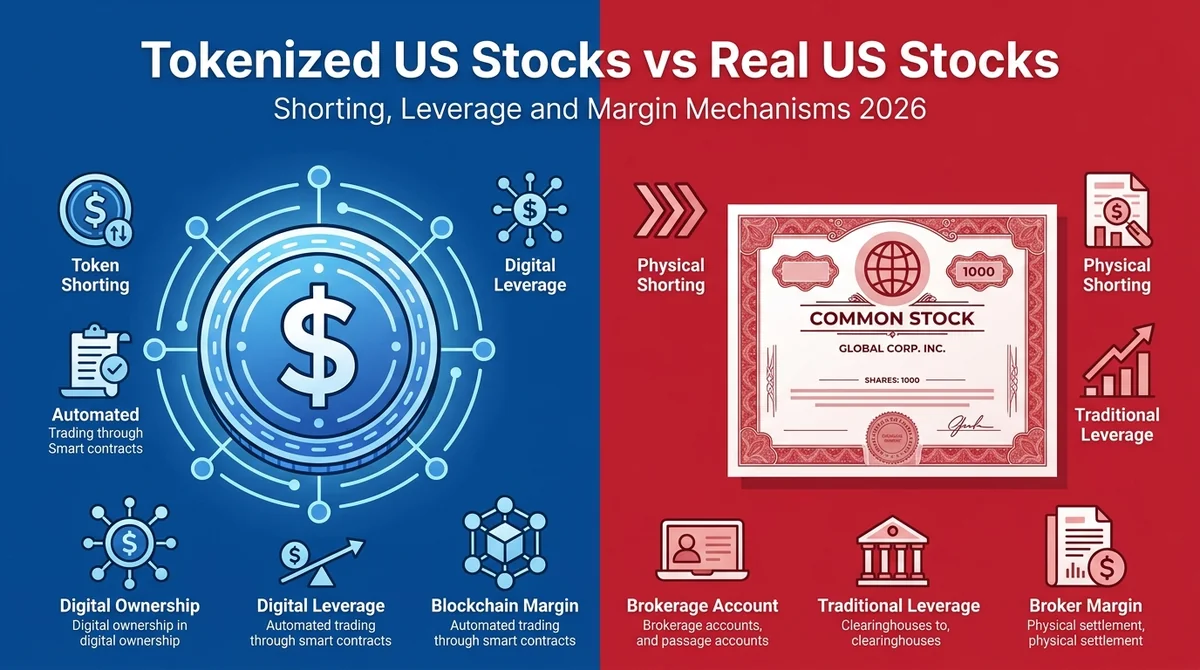
This article compares tokenized vs real US stocks in ownership, shorting, leverage, margin, trading hours, and risk to help investors choose the right tool.
Conclusion: In most cases, real US stocks remain the safer choice for investors who value asset security, shareholder rights, and mature short-selling mechanisms; if you prioritize low entry barriers, extended trading hours, and on-chain flexibility, tokenized US stocks can be considered, but you must accept higher counterparty risk and regulatory uncertainty.
#What Are the Core Differences Between Tokenized US Stocks and Real US Stocks?
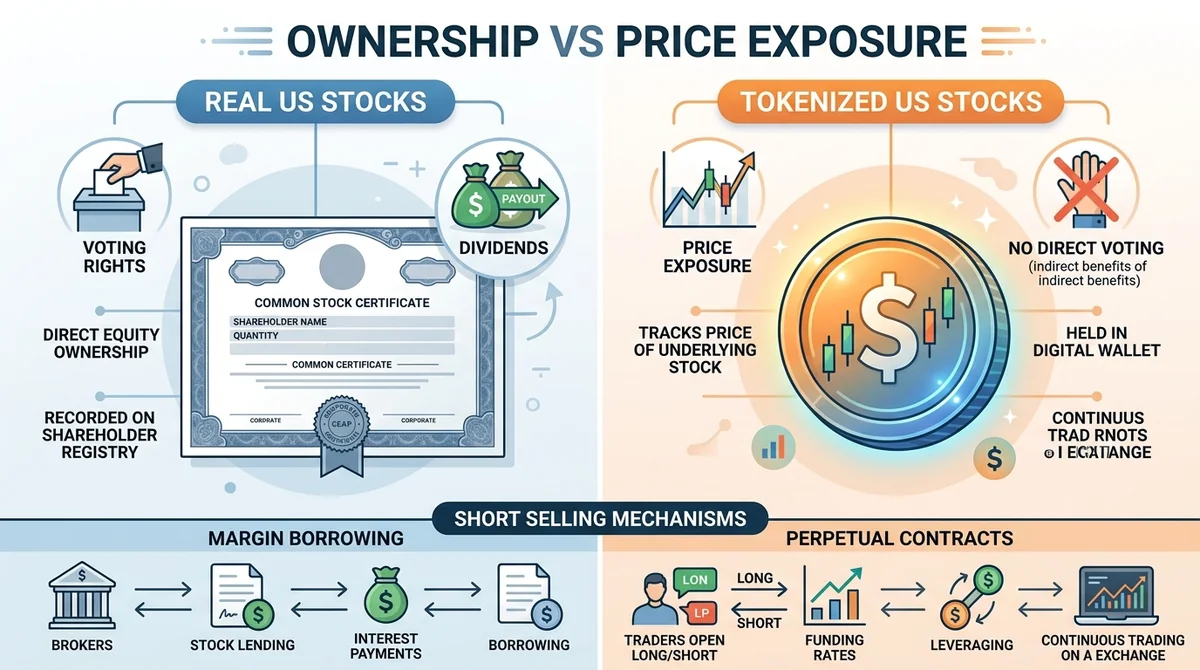
Do You Hold Equity or Just Price Exposure?: Tokenized US stocks are typically on-chain tokens that only track the price of real US stocks and do not represent actual stock ownership; real US stocks represent actual equity, and shareholders are legally entitled to voting rights, dividends, and other rights.
How Do Tokenized Stocks Track Real US Stock Prices?: Tokenized stocks are typically pegged to the underlying stock price by the issuer through collateralization or synthetic assets. Their prices follow real US stock prices, but the peg mechanism relies on the issuer's credit and carries depegging risk. Some platforms claim to use over-collateralization or synthetic assets, but the specific peg mechanism and reserve transparency vary.
Ownership vs. Price Exposure: Real US stock holders own a portion of company ownership; tokenized stock holders only have price exposure and do not have shareholder status.
Peg Mechanism and Issuer Credit: The peg of tokenized stocks depends on the issuer's reserves and redemption capability. If the issuer defaults, the token value may deviate from the underlying asset.
Compliance and Regulatory Differences: Real US stocks are strictly regulated by securities regulators, while the compliance status of tokenized stocks remains unclear in many jurisdictions.
#How Does Short Selling Differ Between the Two?
How Are Real US Stocks Shorted via Margin Lending?: Shorting real US stocks typically requires borrowing shares from a broker and selling them, paying margin loan interest, and may be limited by available securities lending supply. Short selling can also be done by buying put options.
What Tools Are Typically Used to Short Tokenized Stocks?: Common methods for shorting tokenized stocks include perpetual contracts or synthetic assets, which do not require borrowing real shares, allow direct directional trades, but involve counterparty risk and funding rate costs.
Margin Lending Short Selling Process: The process for shorting real US stocks is mature but has higher entry barriers, requiring a margin account and securities lending eligibility.
Shorting via Perpetual Contracts and Synthetic Assets: Shorting tokenized stocks is often done on-chain or on centralized platforms through perpetual contracts, allowing instant short positions, but funding rates may erode returns over time.
Differences in Shorting Barriers and Costs: Shorting tokenized stocks generally has lower entry barriers and allows small positions; shorting real US stocks has account and eligibility requirements, and costs vary by broker and underlying asset (specific fee data not publicly disclosed). Entry barriers vary by platform and asset and are not absolute.
#How Do Leverage and Margin Trading Rules Differ?
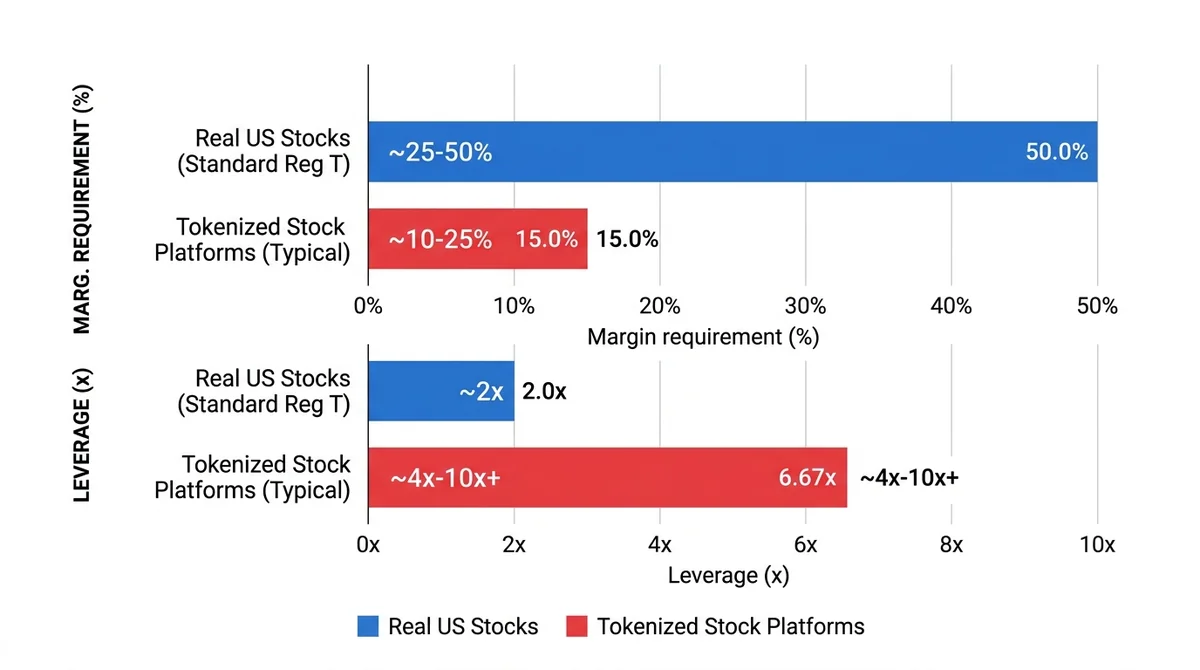
What Are the Regulatory Rules for Real US Stock Margin Accounts?: Margin trading for real US stocks is subject to regulatory constraints, typically with initial margin and maintenance margin requirements, limited leverage multiples, and specific rules determined by regulators and brokers.
How Does Leverage Work for Tokenized Stocks?: Some tokenized stock platforms advertise high leverage multiples, but rules vary significantly across platforms, and there is a risk that platforms may unilaterally adjust rules.
Initial Margin and Maintenance Margin Requirements: Real US stocks set initial margin and maintenance margin thresholds according to regulatory requirements; falling below the maintenance margin triggers margin calls or forced liquidation. Margin rules for tokenized stock platforms may be opaque and frequently adjusted.
Leverage Multiplier Limits: Real US stocks typically have lower leverage due to regulatory restrictions, with specific multiples determined by brokers and regulatory rules; tokenized stock platforms may offer higher multiples, but specific multiplier data is not publicly disclosed and varies widely.
Forced Liquidation and Clearing Mechanisms: Forced liquidation rules for real US stocks are transparent and executed by exchanges and brokers; forced liquidation for tokenized stocks is triggered more frequently, may cause slippage losses due to insufficient liquidity, and rule transparency varies by platform.
#Who Should Choose Tokenized Stocks, and Who Should Choose Real US Stocks?
In Which Scenarios Are Tokenized Stocks More Advantageous?: Tokenized stocks are suitable for traders seeking low entry barriers, 7x24 trading hours, and on-chain flexibility, allowing quick position opening and closing and supporting small participation. However, note that liquidity outside peak trading hours may be extremely poor.
In Which Scenarios Are Real US Stocks a Safer Choice?: Real US stocks are suitable for investors who value asset security, regulatory protection, and mature short-selling mechanisms. Holding real equity provides shareholder rights and regulatory safeguards.
Trading Barriers and Account Requirements: Real US stocks typically require a brokerage account and completion of KYC; tokenized stock platforms have lower barriers, but requirements vary by platform.
Trading Hours and Liquidity: Tokenized stocks typically support 7x24 trading, and liquidity depends
FAQ
代币化股票代表真实股票所有权吗?
不代表,代币化股票只是价格敞口,持有者不享有股东权利。
代币化股票做空和真实美股做空哪个门槛低?
代币化股票做空门槛通常更低,无需真实借券,但需注意资金费率和对手方风险。
真实美股保证金账户的杠杆是多少?
受监管约束,具体倍数以券商和监管规则为准,数据未公开。
代币化股票会被清算吗?
如果作为杠杆仓位,价格波动可能触发强平清算;极端情况下也可能脱钩。
如何选择?
根据交易需求与风险承受能力决定,长期持有选真实美股,短线灵活选代币化股票。
Related Terms
Done comparing? Ready to place your first trade?
The crypto assets, tokenized US stocks and ETFs you just compared are all tradable on MSX — spot or perpetuals.
Quick Start Trading →New here? Registration takes three quick steps.