ETH
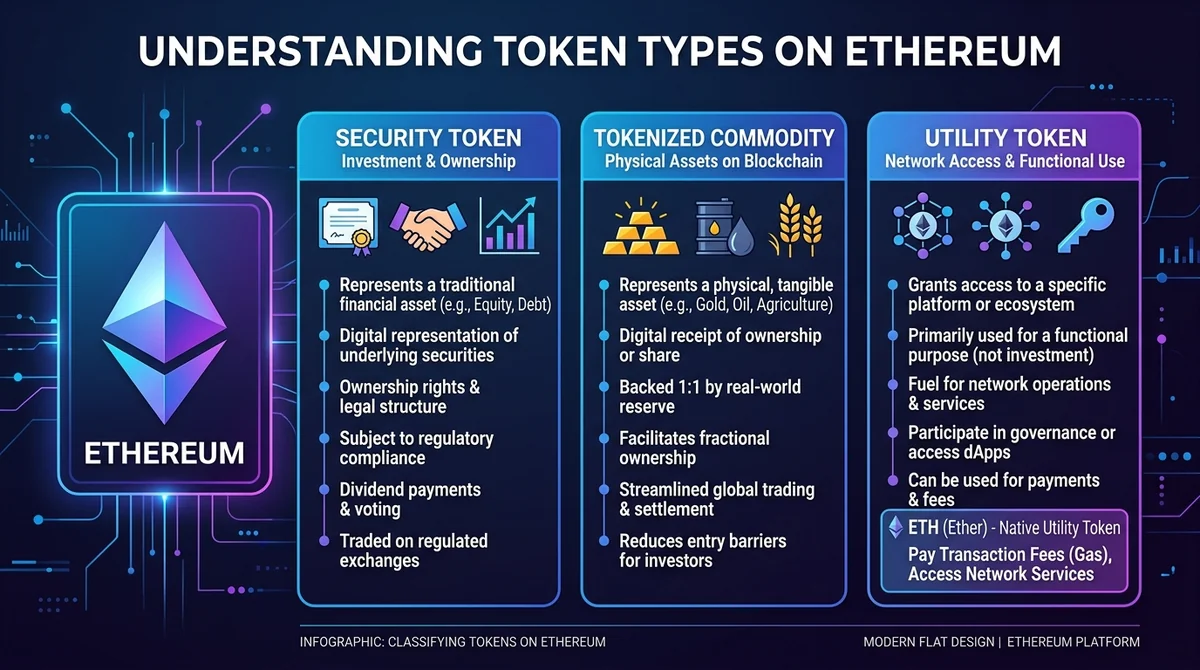
Analyzing why ETH is neither a security token nor a tokenized commodity, and clarifying its asset nature and regulatory classification differences.
ETH is neither a security token nor a tokenized commodity; its asset nature is generally defined as a utility token or digital asset, but classifications vary across jurisdictions.
#What are security tokens and tokenized commodities?
Legal definition of security tokens: Security tokens are digital representations of securities, typically representing equity, debt, or other security rights. Their issuance and trading must comply with securities regulations.
How tokenized commodities are anchored: Tokenized commodities are backed by physical commodities, such as gold or crude oil. Each token corresponds to a certain amount of the physical commodity and requires physical reserves and compliant custody fee arrangements.
Both require compliant issuance and custody, but the underlying asset nature differs: the former represents financial rights, while the latter represents ownership of physical commodities.
#Why is ETH not a security token?
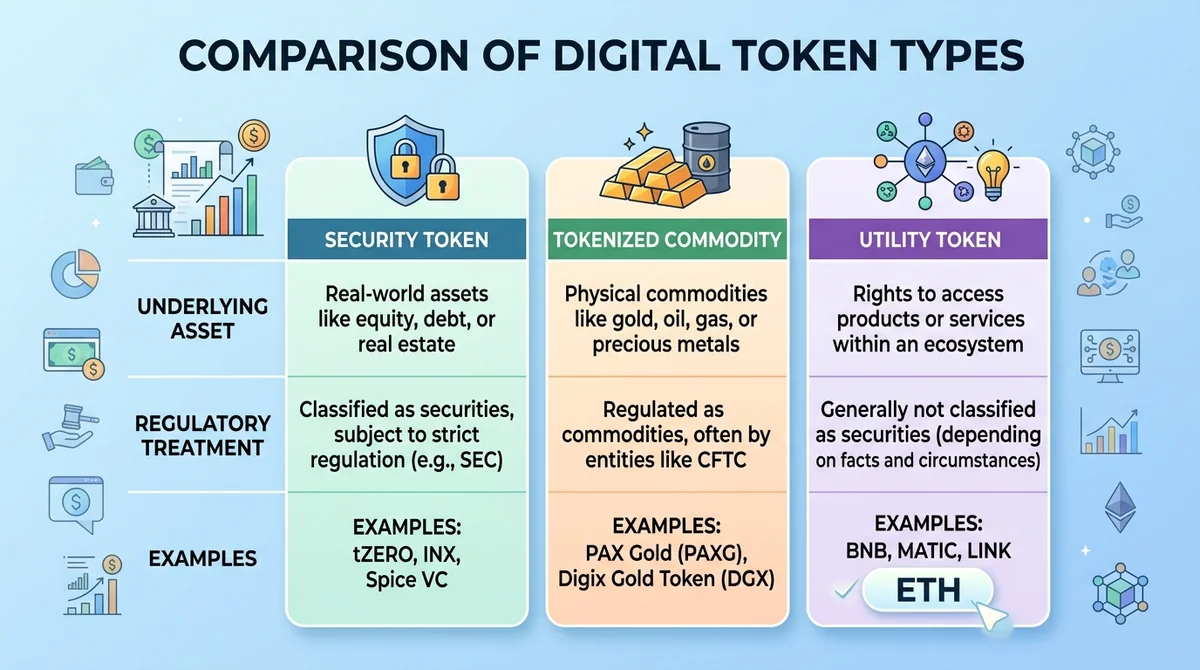
How ETH's issuance differs from securities: ETH did not raise funds through a securities offering, and there is no issuer promising returns. The Ethereum network is decentralized, with no expectation of profit from third-party efforts.
Regulatory recognition: The U.S. Securities and Exchange Commission (SEC) and other regulators have not classified ETH as a security. ETH does not meet the Howey Test criteria of "investment in a common enterprise with an expectation of profit from the efforts of others."
Therefore, ETH lacks the core characteristics of a security token.
#Why is ETH not a tokenized commodity?
Is ETH anchored to a physical commodity? ETH is not anchored to any physical commodity and has no corresponding physical reserves. Tokenized commodities must be anchored to physical assets, while ETH's value does not derive from physical commodities.
ETH's value source: ETH's value comes from the utility of the Ethereum network and market consensus, such as paying gas fees and participating in staking, which differs from the industrial or consumer uses of commodities.
Therefore, ETH does not belong to the category of tokenized commodities.
#How is ETH's asset nature defined?
Utility token and asset attributes: ETH is primarily used to pay gas fees on the Ethereum network, exhibiting utility token characteristics. At the same time, ETH can also serve as a store of value or medium of exchange, and some countries treat it as a commodity or property.
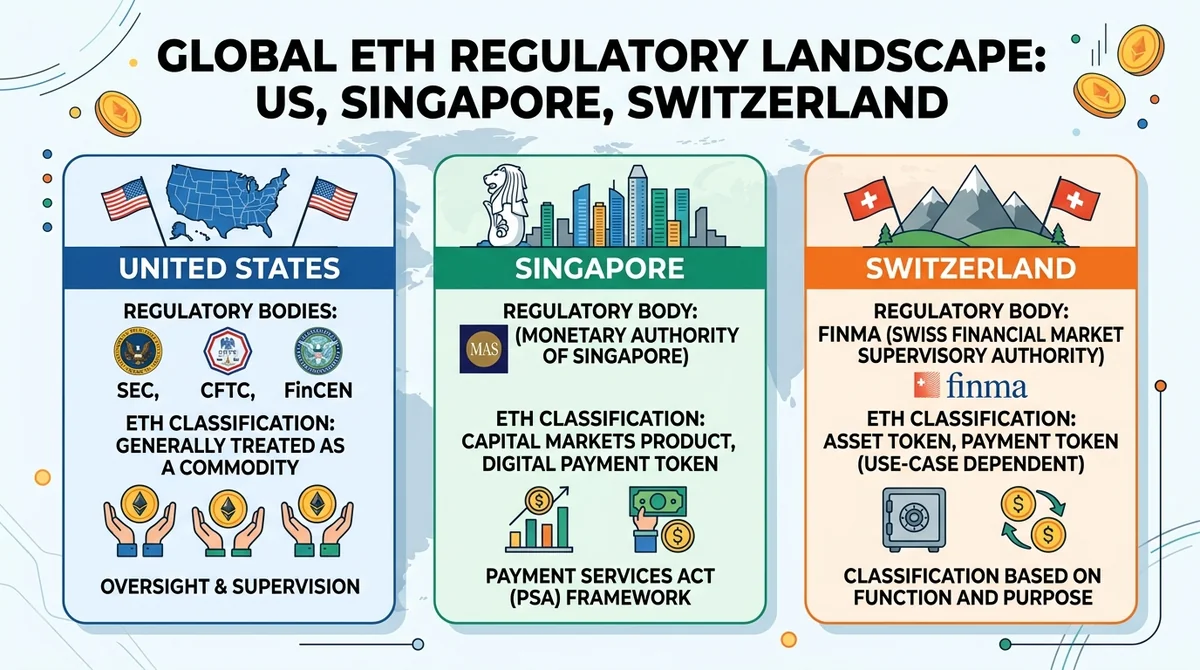
Classification differences across jurisdictions: The U.S. Commodity Futures Trading Commission (CFTC) has stated that ETH is a commodity; Singapore, Switzerland, and other countries treat it as a digital asset or utility token. Classification differences affect tax and compliance requirements.
Overall, ETH is generally defined as a utility token or digital asset, but the specific classification depends on the jurisdiction.
#Who is it suitable for / not suitable for
Suitable for: Investors and practitioners who need to understand ETH's asset attributes for compliance assessment, tax planning, or asset allocation.
Not suitable for: Users seeking investment targets in security tokens or tokenized commodities, as ETH does not possess these attributes.
#FAQ
Will ETH be classified as a security? Currently, major regulators have not classified ETH as a security, but regulatory attitudes may change and require ongoing attention.
What is the difference between ETH and tokenized commodities? Tokenized commodities are anchored to physical gold, while ETH is not anchored to any physical asset; its value comes from network utility.
Is ETH a commodity? The U.S. CFTC has stated that ETH is a commodity, but other jurisdictions may have different classifications.
What does ETH's asset classification affect? It affects tax treatment, compliance requirements, and the licensing scope of trading platforms.
Is ETH a utility token? Yes, ETH is primarily used to pay gas fees and has utility token functions.
This content is based on publicly available data and does not constitute investment or open account advice. Data as of 2026-10-07; actual conditions may change. For more information, refer to official sources.
FAQ
Will ETH be classified as a security?
Currently, major regulators have not classified ETH as a security, but regulatory attitudes may change and require ongoing attention.
What is the difference between ETH and tokenized commodities?
Tokenized commodities are anchored to physical gold, while ETH is not anchored to any physical asset; its value comes from network utility.
Is ETH a commodity?
The U.S. CFTC has stated that ETH is a commodity, but other jurisdictions may have different classifications.
What does ETH's asset classification affect?
It affects tax treatment, compliance requirements, and the licensing scope of trading platforms.
Is ETH a utility token?
Yes, ETH is primarily used to pay gas fees and has utility token functions.
Related Terms
Read the review? Ready to try a small position?
The crypto assets and tokenized US stocks/ETFs covered here are available on MSX — spot and perpetuals.
Quick Start Trading →New here? Registration takes three quick steps.