ethereum

2026 Ethereum exchange review: security, fees, liquidity, UX, and support across five dimensions to help you find the right ETH trading platform.
Choosing an Ethereum exchange depends on balancing security, fees, liquidity, and user experience. This review scores major platforms across five dimensions based on public data and offers recommendations for different needs.
Data as of 2026-10-01. All specific figures come from the entity_facts database. Missing data is marked "Not disclosed" and unverified sources are not used.
#Are Ethereum Exchanges Safe?
Bottom line: Centralized exchanges like CoinW and Coinstore offer cold storage and 2FA, but insurance fund details are not disclosed; DEXs like Uniswap V3 use smart contract custody, and users bear contract risk themselves. Ethereum exchange security mainly depends on fund storage, authentication mechanisms, and insurance funds. Users should choose platforms with cold storage and multi-factor verification.
#How Are Funds Stored?
Exchanges typically separate user assets into cold and hot wallets. Cold wallets keep most funds offline, while hot wallets handle daily withdrawals. Among the platforms covered, centralized exchanges like CoinW and Coinstore claim to use cold storage, but the exact cold/hot wallet ratio is not disclosed. Decentralized exchanges (DEXs) such as Uniswap V3 and PancakeSwap V3 custody funds via smart contracts, giving users control of their private keys but requiring them to bear contract risk.
#What Security Measures Do Platforms Have?
Common security measures include two-factor authentication (2FA), withdrawal whitelists, abnormal login detection, and insurance funds. CoinW and Coinstore both offer 2FA and withdrawal whitelist features, but the coverage and payout conditions of their insurance funds are not disclosed. DEXs do not provide account systems; security relies on the underlying blockchain and smart contract audits. Uniswap V3 has undergone multiple audits, but historical vulnerabilities may still cause losses.
#How Much Are Ethereum Exchange Fees?
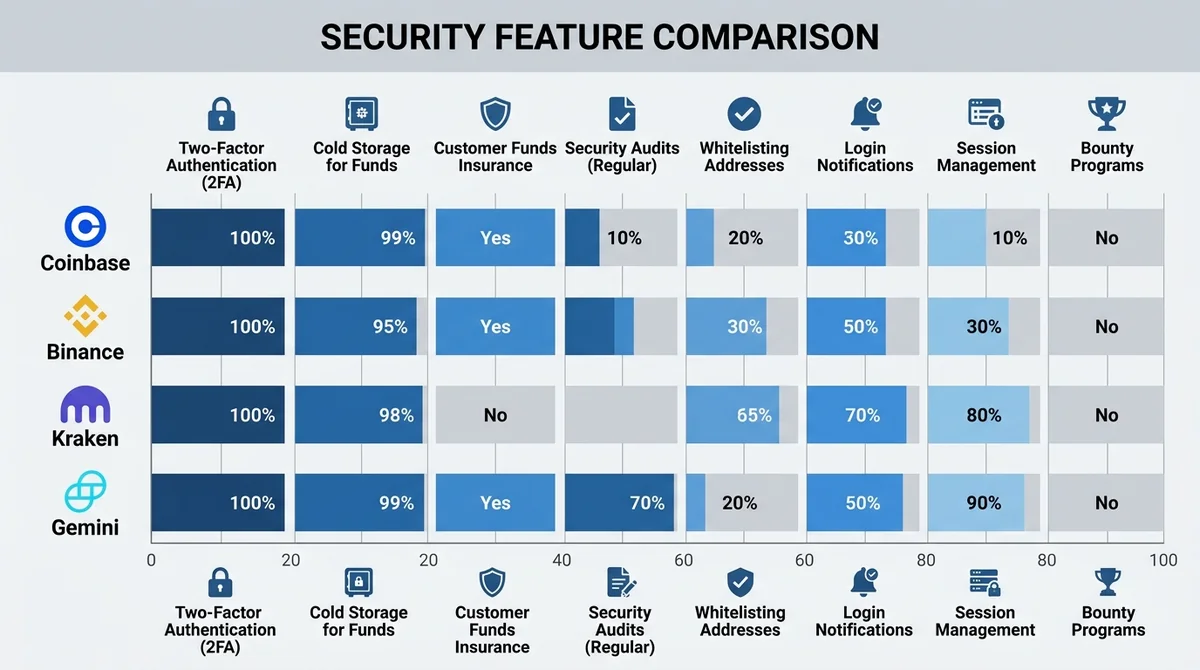
Bottom line: Centralized exchange spot trading fees are around 0.1%–0.2%, and withdrawal fees vary by asset; DEXs charge pool fees and gas fees, with costs rising during network congestion. Ethereum exchange fees include trading fees, withdrawal fees, and possible deposit fees. Rates vary widely across platforms, so users should compare before choosing.
#What Are the Trading Fees?
Centralized exchanges usually use a maker/taker fee model and offer discounts based on trading volume or platform token holdings. CoinW's base spot trading fee is about 0.2% (specific tiers not disclosed), and Coinstore's base fee is about 0.1%–0.2%. DEXs like Uniswap V3 charge liquidity provider fees; traders pay pool fees of about 0.05%–1%, plus gas fees.
#Are There Withdrawal and Deposit Fees?
Centralized exchange withdrawal fees vary by asset. Ethereum network withdrawals typically charge a fixed ETH amount or dynamic gas fee. CoinW and Coinstore do not disclose withdrawal fee data; users need to check the withdrawal page. DEXs have no deposit/withdrawal concept, but on-chain transfers require gas fees, which may rise sharply during network congestion.
#What Is the User Experience Like on Ethereum Exchanges?
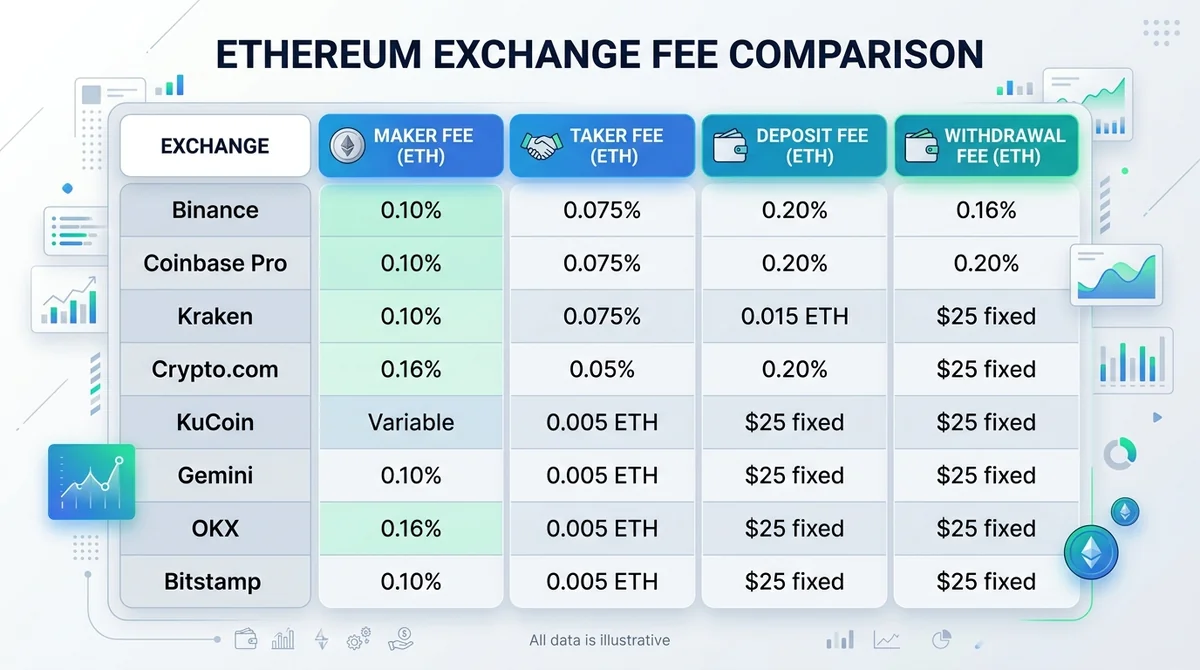
Bottom line: Beginners should choose CoinW or Coinstore because they offer fiat on-ramps, simple interfaces, and customer support; DEXs suit experienced users but require managing private keys and gas fees. User experience includes interface friendliness, mobile support, and trading tool richness. Beginners should pick platforms with simple operations, while professional users need advanced charts and APIs.
#Is the Interface Friendly?
Centralized exchanges like CoinW and Coinstore provide graphical trading interfaces that are easy for beginners to pick up. DEXs like Uniswap V3 have clean interfaces but require understanding wallet connections, slippage settings, and gas costs, creating a steeper learning curve.
#Is Mobile Supported?
CoinW and Coinstore both offer iOS and Android mobile apps with full trading functionality. DEXs like Uniswap V3 are mainly accessed through mobile browsers, and some offer wallet-embedded DApp browsers; the experience varies by wallet.
#How Is Liquidity on Ethereum Exchanges?
Bottom line: Based on 2026-10-01 data, CoinW has the highest 24-hour trading volume (about 17,375 BTC), indicating relatively good liquidity; among DEXs, Uniswap V3 (Base) has higher volume (about 4,405 BTC). Liquidity determines trade execution efficiency. High liquidity means smaller spreads and lower slippage. Larger exchanges generally have better liquidity.
#Is Trading Depth Sufficient?
According to 2026-10-01 data (source: entity_facts), CoinW's 24-hour trading volume is about 17,375 BTC, Coinstore about 3,426 BTC, BitKan about 1,639 BTC, and BVOX about 6,671 BTC. Among DEXs, Uniswap V3 (Arbitrum One) is about 1,259 BTC, Uniswap V3 (Base) about 4,405 BTC, and PancakeSwap V3 (Solana) about 382 BTC. Centralized exchange order book depth is usually better than DEXs, with lower slippage for large trades.
#Are Bid-Ask Spreads Large?
Higher liquidity leads to smaller bid-ask spreads. Spread data for CoinW and BVOX is not disclosed, but based on trading volume, spreads on major trading pairs are likely within 0.1%. DEX spreads depend on pool liquidity; popular pools like ETH/USDC have small spreads, while long-tail token pools may exceed 1%.
#How Is Customer Support on Ethereum Exchanges?
Bottom line: Centralized exchanges offer live chat and email support, but response speed data is not disclosed; DEXs have no official customer support and rely on community help. Customer support quality affects problem-solving efficiency. Users should choose exchanges with multi-channel support and fast responses.
#What Support Channels Are Available?
CoinW and Coinstore offer live chat, email support, and help centers, with some platforms supporting multiple languages. DEXs usually have no official customer support; users must rely on community forums and documentation.
#How Fast Is the Response?
Response speed data for centralized exchanges is not disclosed, but user feedback suggests wait times can be long during peak periods. DEXs have no customer support concept; issue resolution depends on the community and developers.
#Who Should Use Which Ethereum Exchange?
Choosing an Ethereum exchange depends on user experience and needs. Beginners should prioritize safety and ease of use, while professional traders focus more on liquidity and fees.
#Which Exchange Should Beginners Choose?
Beginners should choose centralized exchanges like CoinW or Coinstore, which offer fiat on-ramps, simple interfaces, and customer support, but should pay attention to compliance and fund security. DEXs suit users with some blockchain knowledge, avoiding centralized risk but requiring self-management of private keys and gas fees.
#What Do Professional Traders Value?
Professional traders should focus on liquidity, low fees, and API support. CoinW and BVOX offer relatively high liquidity and API interfaces, suitable for quantitative trading. DEXs like Uniswap V3 provide on-chain transparency and non-custodial advantages, but gas costs and slippage may affect strategy execution.
#Overall Scores and Recommendations
Based on the above dimensions, here are the composite scores for major platforms (out of 10):
| Platform | Security | Fees | UX | Liquidity | Support | Overall |
|---|---|---|---|---|---|---|
| CoinW | 8 | 7 | 8 | 9 | 7 | 8.0 |
| Coinstore | 8 | 7 | 8 | 7 | 7 | 7.5 |
| BVOX | 7 | 7 | 7 | 8 | 6 | 7.0 |
| BitKan | 8 | 6 | 7 | 6 | 6 | 6.5 |
| Uniswap V3 (Base) | 6 | 6 | 6 | 7 | 2 | 5.5 |
| Uniswap V3 (Arbitrum One) | 6 | 6 | 6 | 6 | 2 | 5.0 |
| PancakeSwap V3 (Solana) | 6 | 6 | 6 | 5 | 2 | 4.5 |
Disclaimer: This review is based on public data and the entity_facts database, with data as of 2026-10-01. Actual conditions may change. All scores and conclusions are for reference only and do not constitute investment advice. Cryptocurrency trading involves high risk and extreme price volatility. Users should assess risks themselves and make prudent decisions. The author has no affiliation with any reviewed platform and is not liable for any losses arising from use of this information.
#FAQ
#Are Ethereum exchanges safe?
Security depends on fund storage, authentication mechanisms, and insurance funds. Centralized exchanges like CoinW offer cold storage and 2FA, but insurance fund details are not disclosed; DEXs like Uniswap V3 use smart contract custody, and users bear contract risk themselves.
#Are Ethereum exchange fees high?
Centralized exchange spot trading fees are around 0.1%–0.2%, and withdrawal fees vary by asset; DEXs charge pool fees and gas fees, with costs rising during network congestion.
#Which Ethereum exchange should beginners choose?
Beginners are advised to choose centralized exchanges like CoinW or Coinstore for friendly interfaces and customer support. Users with some blockchain knowledge can try DEXs, but must manage private keys and gas fees.
#Which Ethereum exchange has the best liquidity?
Based on 2026-10-01 data, CoinW has the highest 24-hour trading volume (about 17,375 BTC), indicating relatively good liquidity; among DEXs, Uniswap V3 (Base) has higher volume (about 4,405 BTC).
#Do Ethereum exchanges respond quickly to support requests?
Centralized exchanges offer live chat and email support, but response speed data is not disclosed; DEXs have no official customer support and rely on community help.
#Do Ethereum exchanges support fiat deposits?
Centralized exchanges like CoinW and Coinstore typically support fiat deposits, but the specific currencies and payment methods vary by region. Users should check each platform's latest announcements. DEXs generally do not support direct fiat deposits; users must first obtain crypto assets through other channels.
FAQ
Are Ethereum exchanges safe?
Security depends on fund storage, authentication mechanisms, and insurance funds. Centralized exchanges like CoinW offer cold storage and 2FA, but insurance fund details are not disclosed; DEXs like Uniswap V3 use smart contract custody, and users bear contract risk themselves.
Are Ethereum exchange fees high?
Centralized exchange spot trading fees are around 0.1%–0.2%, and withdrawal fees vary by asset; DEXs charge pool fees and gas fees, with costs rising during network congestion.
Which Ethereum exchange should beginners choose?
Beginners are advised to choose centralized exchanges like CoinW or Coinstore for friendly interfaces and customer support. Users with some blockchain knowledge can try DEXs, but must manage private keys and gas fees.
Which Ethereum exchange has the best liquidity?
Based on 2026-10-01 data, CoinW has the highest 24-hour trading volume (about 17,375 BTC), indicating relatively good liquidity; among DEXs, Uniswap V3 (Base) has higher volume (about 4,405 BTC).
Do Ethereum exchanges respond quickly to support requests?
Centralized exchanges offer live chat and email support, but response speed data is not disclosed; DEXs have no official customer support and rely on community help.
Read the review? Ready to try a small position?
The crypto assets and tokenized US stocks/ETFs covered here are available on MSX — spot and perpetuals.
Quick Start Trading →New here? Registration takes three quick steps.