Nasdaq 100
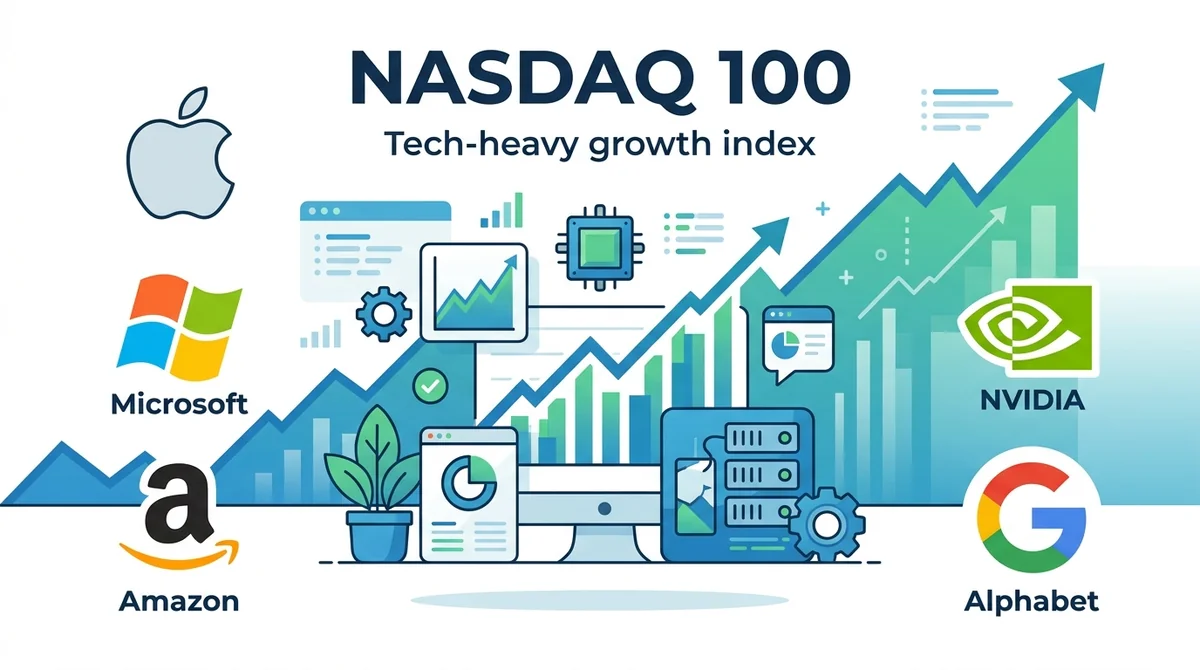
Nasdaq 100 scores 8.5/10. Suitable for long-term growth investors who can handle high volatility. Analyzes constituents, history, ways to invest, risks. Data as of 2026-08-21.
Overall Score: 8.5/10. The Nasdaq 100 suits investors seeking long-term growth and able to withstand high volatility, but is not suitable for short-term funds or the risk-averse.
#What Is the Nasdaq 100? Which Companies Does It Include?
The Nasdaq 100 is a market-cap-weighted index tracking the 100 largest non-financial companies on the Nasdaq exchange, with an extremely high technology sector weight. The index methodology is based on market-cap weighting and periodically adjusts constituents to reflect market changes. The top ten holdings typically include tech giants such as Apple, Microsoft, Amazon, Nvidia, and Google parent Alphabet, with the exact list varying with market capitalization. In terms of sector distribution, technology accounts for over 50%, followed by consumer discretionary and healthcare, but financial companies are excluded.
#How Has the Nasdaq 100 Performed Historically?
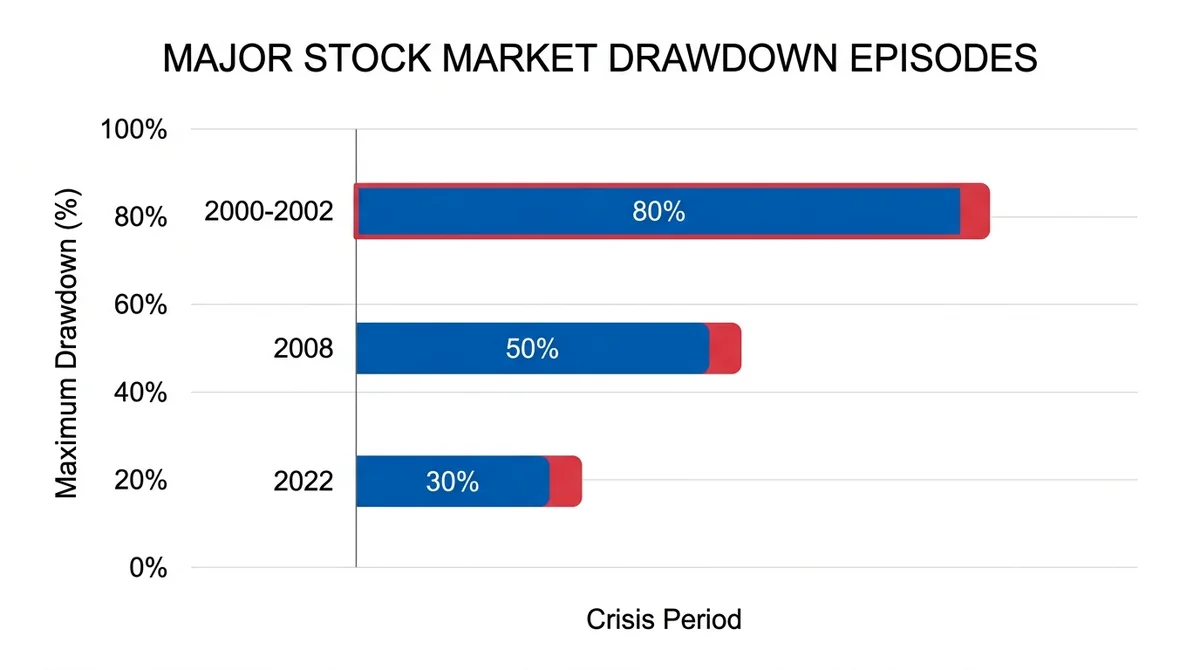
The Nasdaq 100 has delivered high long-term annualized returns, but its tech concentration leads to volatility and drawdowns significantly greater than the S&P 500. For example, during the dot-com bust in 2000 and the 2022 rate cut cycle, the index experienced maximum drawdowns exceeding 30%. Compared with the S&P 500, the Nasdaq 100 tends to gain more in bull markets but fall deeper in bear markets.
#What Are the Ways to Invest in the Nasdaq 100?
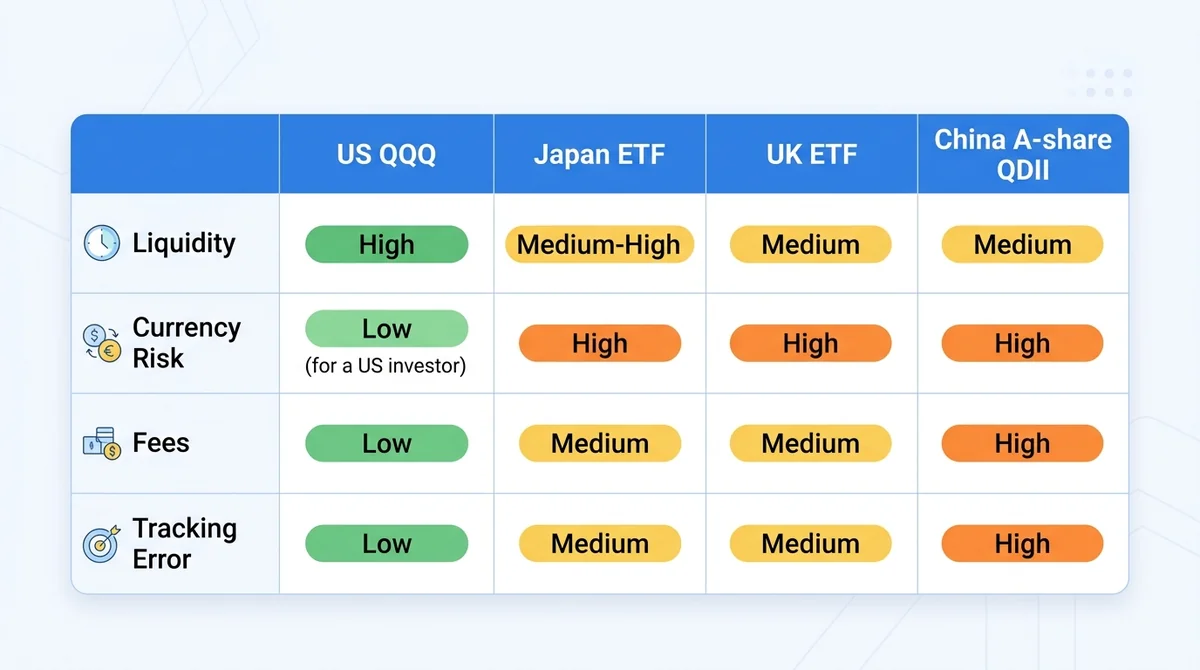
US-listed QQQ is the most liquid option and suits most investors; China A-share QDII involves quota and currency risks and suits investors who cannot directly buy US stocks.
Investors can gain indirect exposure to the Nasdaq 100 through various channels:
- US market: ETFs such as QQQ, with good liquidity and low tracking error.
- Japanese market: ETFs denominated in local currency, but currency and liquidity need to be considered.
- UK market: Similar to the Japanese market, with locally denominated ETFs.
- China A-share market: QDII funds or feeder funds, with currency risk and quota restrictions.
These channels differ in liquidity, currency exposure, and fees; investors should choose based on their own circumstances.
| Investment Channel | Liquidity | Currency Risk | Fees | Tracking Error |
|---|---|---|---|---|
| US QQQ | High | Low (USD assets) | Low | Small |
| Japan ETF | Medium | High | Medium | Medium |
| UK ETF | Medium | High | Medium | Medium |
| China A-share QDII | Low (quota limits) | High | Medium | Medium |
#What Are the Risks of the Nasdaq 100?
Key risks include:
- Tech concentration risk: High technology sector weight leads to larger declines during sector downturns.
- High valuation risk: Valuations have long been higher than traditional sectors, potentially facing mean-reversion pressure.
- Currency risk: Non-USD investors face exchange rate fluctuations that may erode returns.
#Who Is the Nasdaq 100 Suitable For?
It suits investors seeking long-term growth and able to withstand volatility; dollar-cost averaging can smooth volatility. It is not suitable for short-term funds or the risk-averse.
#Core Attributes in Detail
- Fees: Data not disclosed.
- Valuation: Data not disclosed.
- Liquidity: Data not disclosed.
- Equity attributes: The index itself does not confer shareholder rights, but when investing via ETFs, investors hold fund shares and indirectly enjoy dividends and voting rights of constituent stocks (depending on fund structure).
#Risk History
The Nasdaq 100 has experienced several significant drawdowns historically: during the dot-com bust from 2000 to 2002, the maximum drawdown exceeded 80%; during the 2008 financial crisis, the drawdown was about 50%; in 2022, due to rate hikes and tech valuation compression, the drawdown exceeded 30%.
#Suitable For / Not Suitable For
Suitable for: Long-term investors, dollar-cost averaging investors, growth-oriented investors who can handle high volatility.
Not suitable for: Short-term traders, risk-averse investors, investors needing stable cash flow.
#FAQ
Q: Does the Nasdaq 100 include financial stocks? A: No. The index specifically excludes financial companies and focuses on non-financial sectors.
Q: Which is more volatile, the Nasdaq 100 or the S&P 500? A: The Nasdaq 100 is more volatile because of its high technology weight and greater sector concentration.
Q: Is there currency risk when investing in the Nasdaq 100? A: For non-USD investors, currency risk exists. For example, when Chinese investors invest through QDII funds, RMB appreciation reduces actual returns.
Q: Is the Nasdaq 100 suitable for dollar-cost averaging? A: Yes. Dollar-cost averaging can smooth the timing risk caused by high volatility and is suitable for long-term accumulation.
Q: Where can I find valuation data for the Nasdaq 100? A: You can check metrics such as P/E ratio and price to book through official index providers or major financial websites; this article does not provide specific values.
Q: What are the fees for the Nasdaq 100? A: Data not disclosed, so specific fees cannot be provided. Fees vary significantly across different investment channels; investors should review specific product documents.
Q: How is the liquidity of the Nasdaq 100? A: Data not disclosed, so it cannot be evaluated. US-listed ETFs (such as QQQ) generally have good liquidity, but specific figures require real-time market data.
This content is compiled from public data and does not constitute investment or open account advice. Data as of 2026-08-21; actual conditions may change. For more official information, visit the Nasdaq official website or relevant fund company pages.
FAQ
Does the Nasdaq 100 include financial stocks?
No. The index specifically excludes financial companies and focuses on non-financial sectors.
Which is more volatile, the Nasdaq 100 or the S&P 500?
The Nasdaq 100 is more volatile because of its high technology weight and greater sector concentration.
Is there currency risk when investing in the Nasdaq 100?
For non-USD investors, currency risk exists. For example, when Chinese investors invest through QDII funds, RMB appreciation reduces actual returns.
Is the Nasdaq 100 suitable for dollar-cost averaging?
Yes. Dollar-cost averaging can smooth the timing risk caused by high volatility and is suitable for long-term accumulation.
Where can I find valuation data for the Nasdaq 100?
You can check metrics such as P/E ratio and price to book through official index providers or major financial websites; this article does not provide specific values.
Related Terms
Read the review? Ready to try a small position?
The crypto assets and tokenized US stocks/ETFs covered here are available on MSX — spot and perpetuals.
Quick Start Trading →New here? Registration takes three quick steps.