NVIDIA
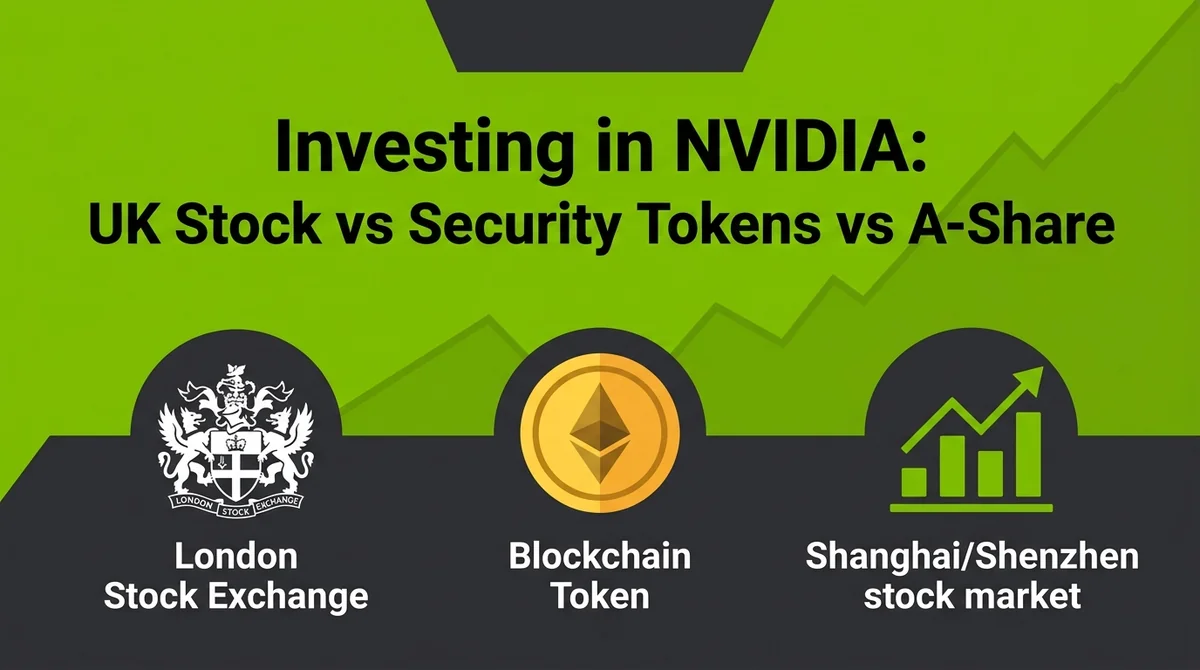
MSX Compare reviews NVIDIA UK stock, security tokens, tokenized commodities, and A-share indirect channels, analyzing liquidity, regulation and risks.
Overall, traditional securities channels (UK stock, A-share indirect) are more stable in terms of regulation and liquidity, while tokenized products offer high flexibility but carry prominent technical risks.
#What are the characteristics of investing in NVIDIA UK stock?
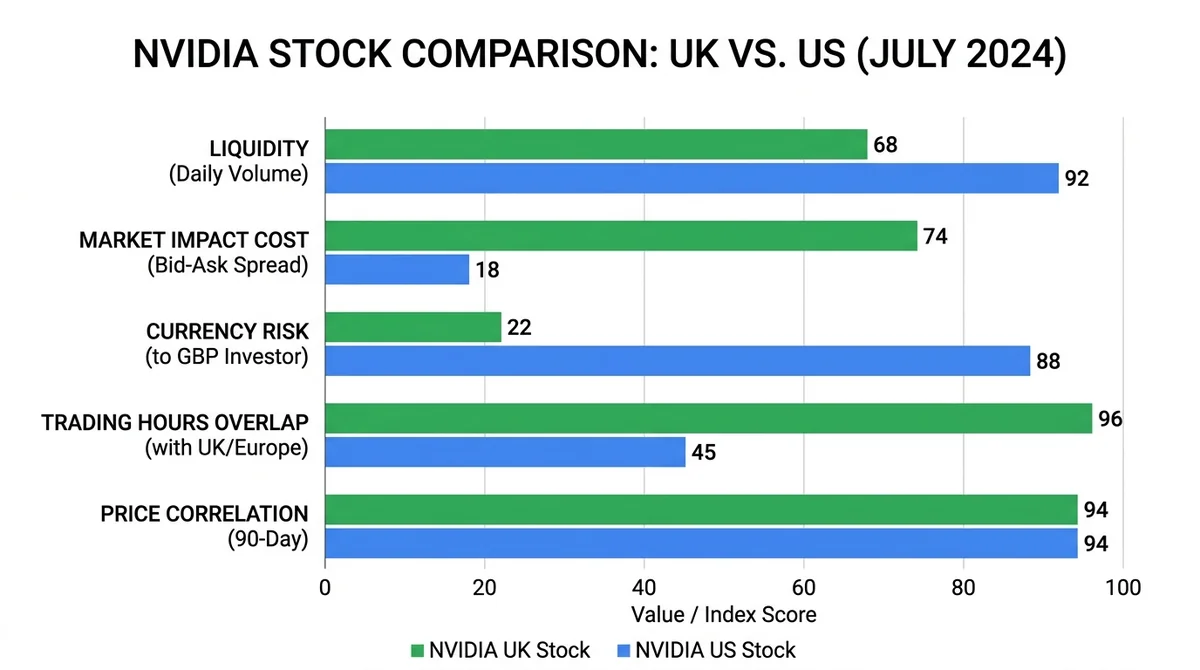
UK stock is NVIDIA's listed stock on the London Stock Exchange. Its price is highly correlated with the US stock, but is affected by exchange rates and time zone differences.
#How do UK stock and US stock NVIDIA prices move together?
UK stock prices generally follow the US NVDA trend, but fluctuations in the GBP/USD exchange rate can amplify or reduce returns.
#What are the trading hours and liquidity of UK stock?
London trading hours partially overlap with US hours. Liquidity may be lower than US stock, and large orders may incur higher market impact costs.
#What is an NVIDIA security token?
A security token is a digital asset representing ownership or economic rights to NVIDIA stock. It is regulated by securities laws and can theoretically be traded 24/7.
#How does a security token represent NVIDIA stock?
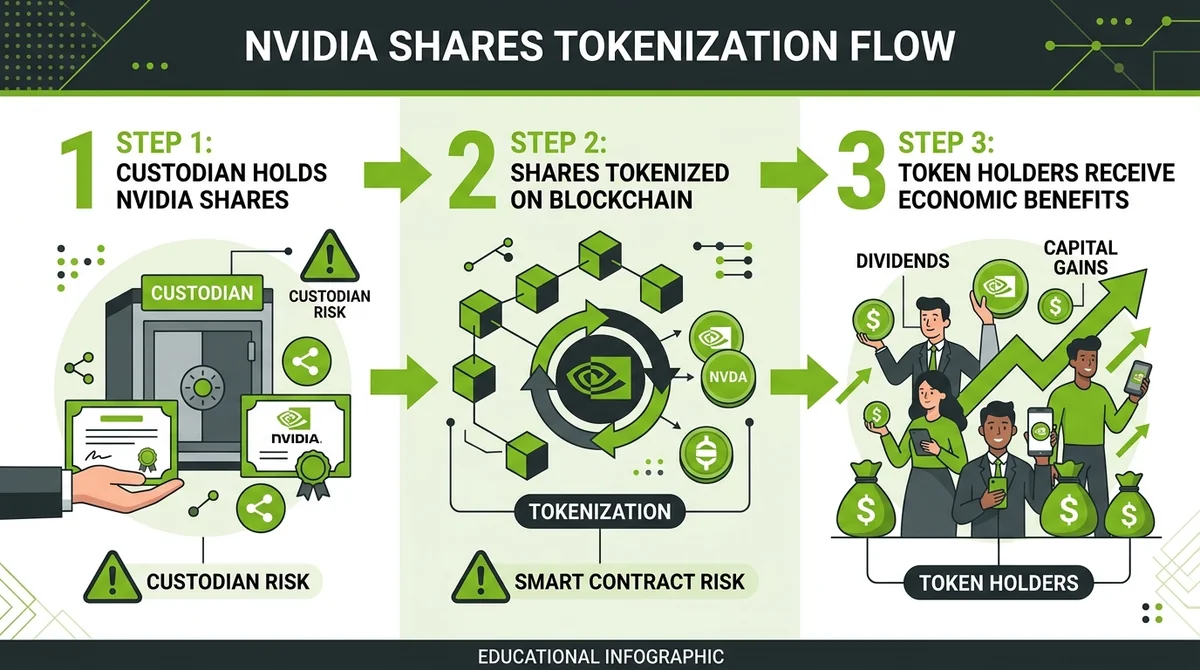
The token is backed by underlying stock held by a custodian. Shares are recorded on-chain, and holders receive economic benefits but may not have voting rights.
#What are the regulatory and risk aspects of security tokens?
They are subject to securities law, but smart contract vulnerabilities, custodian risk, and insufficient secondary market liquidity are major concerns.
#How do NVIDIA tokenized commodities work?
Tokenized commodities combine NVIDIA stock or related assets with commodities to provide price exposure without owning actual stock. Regulation may be lacking.
#How are tokenized commodities related to NVIDIA?
Such products may use NVIDIA stock as collateral or as an index component, but their structures are complex and transparency is low.
#What are the pros and cons of tokenized commodities?
Pros include fractionalization and global trading; cons include lack of regulation, high counterparty risk, and potential price deviation from the underlying.
#What are the investment channels for NVIDIA in China's A-share market?
NVIDIA is not listed on the A-share market, but indirect exposure can be obtained through QDII funds, Stock Connect, etc.
#Is NVIDIA stock available on the A-share market?
No direct listing exists. Investors can only hold indirectly through funds or connect mechanisms.
#How to gain NVIDIA exposure through the A-share market?
QDII funds hold US stock portfolios. Stock Connect allows trading of NVDA-related products listed in Hong Kong, but there are exchange rate and premium risks.
#How to choose among NVIDIA investment channels?
For long-term holding, choose UK stock or A-share indirect channels. For short-term trading and those familiar with digital assets, tokenized products may be considered.
#Which channel should I choose for long-term holding?
UK stock and QDII funds suit traditional investors, with low holding costs and clear regulation.
#How do short-term trading and risk tolerance affect the choice?
High-risk-tolerance investors may try security tokens, but must accept smart contract and liquidity risks.
#What are the risks of investing in NVIDIA?
Main risks include stock price volatility, exchange rates, regulatory changes, and tokenization technology risks.
#What about market volatility risk?
NVIDIA stock price is affected by the AI industry cycle, with volatility significantly higher than the broader market.
#What are the channel-specific risks?
UK stock has exchange rate risk; A-share indirect has premium and quota limits; tokenization has custody and smart contract risks.
#Overall score and suitable audience
Overall score 7.5/10. Suitable for investors who already have a US stock account and want to diversify channels. Not suitable for conservative users unfamiliar with digital assets.
Pros:
- UK stock provides compliant exposure in traditional markets with acceptable liquidity.
- Security tokens theoretically support 24/7 trading, improving capital efficiency.
- A-share indirect channels offer convenience for domestic investors.
Cons:
- Tokenized commodities lack regulation and carry higher risk.
- Security token liquidity may be insufficient, making exits difficult.
- Exchange rates and premiums may erode returns.
Key attributes in detail:
- Fees: Data for each channel is not disclosed and needs to be verified independently.
- Valuation: NVIDIA P/E ratio data is not disclosed.
- Liquidity: UK stock liquidity is lower than US stock; tokenized product liquidity is uncertain.
- Rights: UK stock and security tokens may receive dividends; tokenized commodities usually have no shareholder rights.
Risk history: Tokenized products have experienced smart contract attacks and custodian bankruptcies; caution is required.
Who is it for / not for: Suitable for: investors with US stock trading experience who want to try new channels. Not suitable for: risk-averse users and those unfamiliar with digital assets.
#FAQ
Q: Are NVIDIA UK stock and US stock prices exactly the same? A: Not exactly. They are affected by exchange rates and trading sessions, and there may be slight price differences.
Q: Can security tokens pay dividends like stocks? A: It depends on the specific design. Some tokens distribute dividends via smart contracts, but this needs verification.
Q: Are there quota limits for buying NVIDIA funds through A-shares? A: QDII funds have foreign exchange quota limits and may suspend subscriptions.
Q: Are tokenized commodities regulated? A: Most regions lack clear regulation, and the risk is relatively high.
Q: Which channel has the lowest cost? A: Data is not disclosed. It is recommended to compare fees and exchange rate costs across channels.
This content is based on publicly available data and does not constitute investment or account opening advice. Data is as of 2026-01-27 and may change. For the latest information, please refer to official sources.
FAQ
Are NVIDIA UK stock and US stock prices exactly the same?
Not exactly. They are affected by exchange rates and trading sessions, and there may be slight price differences.
Can security tokens pay dividends like stocks?
It depends on the specific design. Some tokens distribute dividends via smart contracts, but this needs verification.
Are there quota limits for buying NVIDIA funds through A-shares?
QDII funds have foreign exchange quota limits and may suspend subscriptions.
Are tokenized commodities regulated?
Most regions lack clear regulation, and the risk is relatively high.
Which channel has the lowest cost?
Data is not disclosed. It is recommended to compare fees and exchange rate costs across channels.
Related Terms
Read the review? Ready to try a small position?
The crypto assets and tokenized US stocks/ETFs covered here are available on MSX — spot and perpetuals.
Quick Start Trading →New here? Registration takes three quick steps.