PAXG
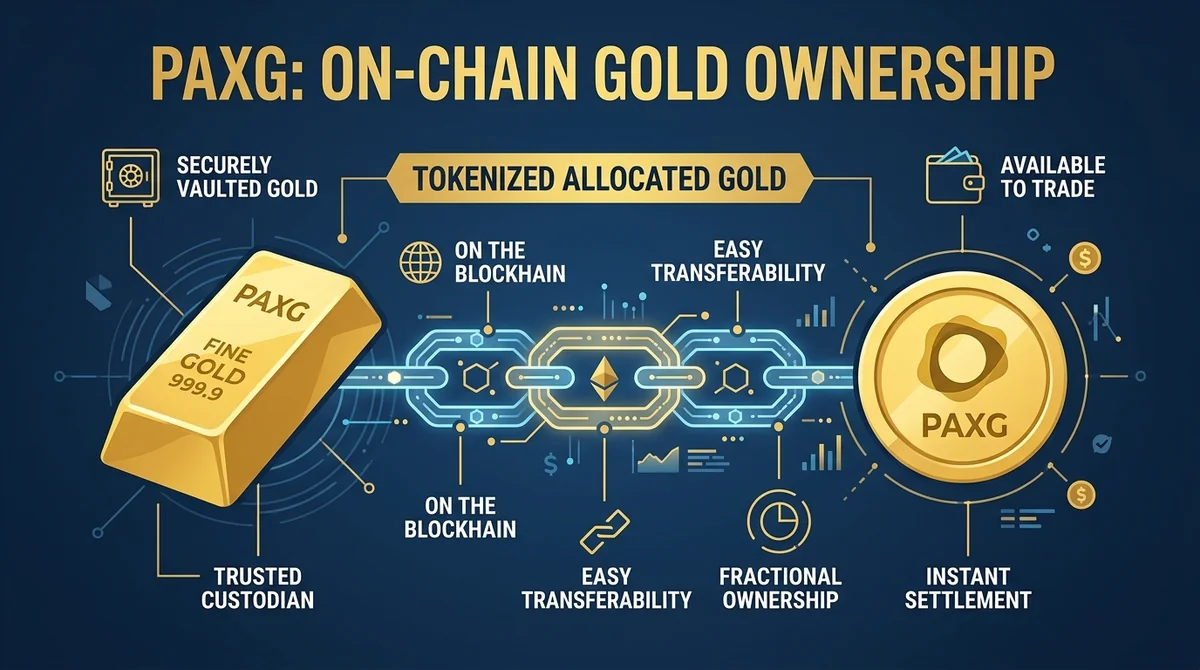
PAXG is a 1:1 gold-backed token by Paxos. 2026 review covers holding & redemption, fees, suitability, and counterparty risk based on public data.
PAXG is positioned as an on-chain gold exposure tool, suitable for users who trust Paxos custody and want low-barrier gold holding; not suitable for investors seeking physical delivery or zero counterparty risk.
#What is PAXG? How does it differ from physical gold and gold ETFs?
PAXG is issued by Paxos, with each token corresponding to one troy ounce of London Good Delivery gold bar stored in a professional vault. It is an on-chain tokenized asset, differing from physical gold and gold ETFs in holding method, regulation, and redemption.
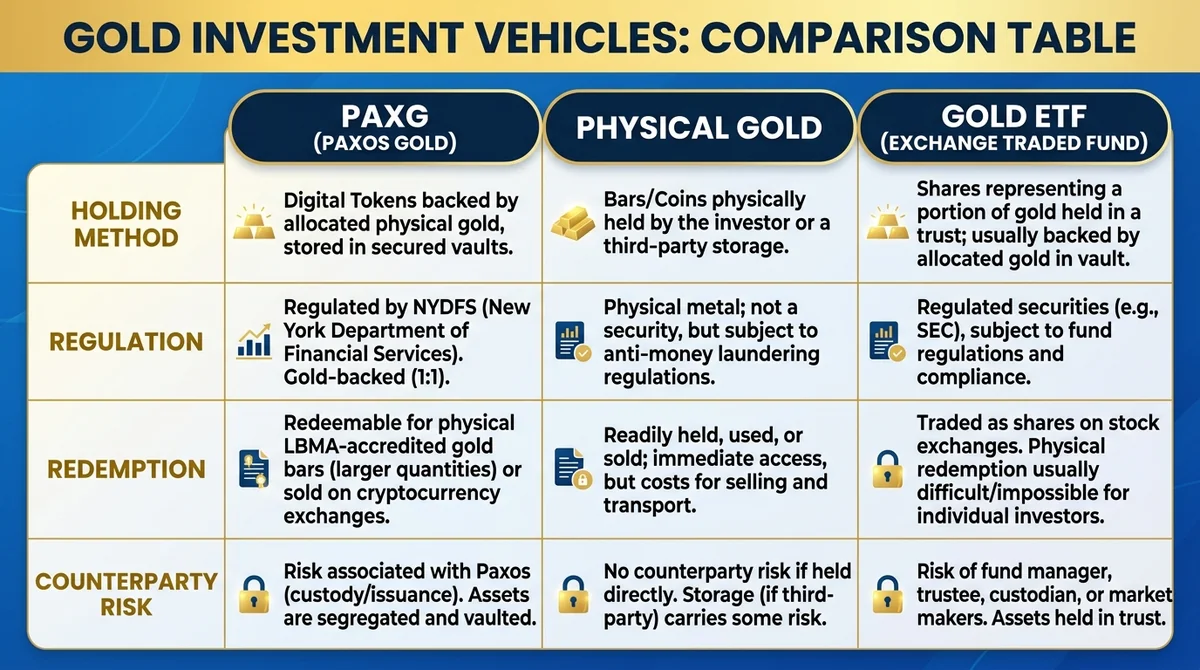
Conclusion: PAXG is suitable for users who trust Paxos custody and want low-barrier on-chain gold holding; not suitable for investors seeking physical delivery or zero counterparty risk. Its core difference: PAXG is an on-chain token directly representing physical gold ownership, while gold ETFs are securities-regulated fund shares.
#What asset backs PAXG?
PAXG is backed by London Good Delivery gold bars held by custodians partnered with Paxos. Holding the token represents a claim to the corresponding physical gold ownership.
#What is the core difference between PAXG and gold ETFs?
Gold ETFs are securities-regulated exchange-traded funds where investors hold fund shares; PAXG is an on-chain token directly representing physical gold ownership, with custodians being Paxos and its partners. The two differ in regulatory framework and holding instrument.
Conclusion: The essential difference between PAXG and gold ETFs lies in the holding instrument and regulatory framework: PAXG is an on-chain token directly representing physical gold ownership; gold ETFs are securities-regulated fund shares. This difference affects users' assessment of custodian and counterparty risk.
#What is the holding and redemption process for PAXG?
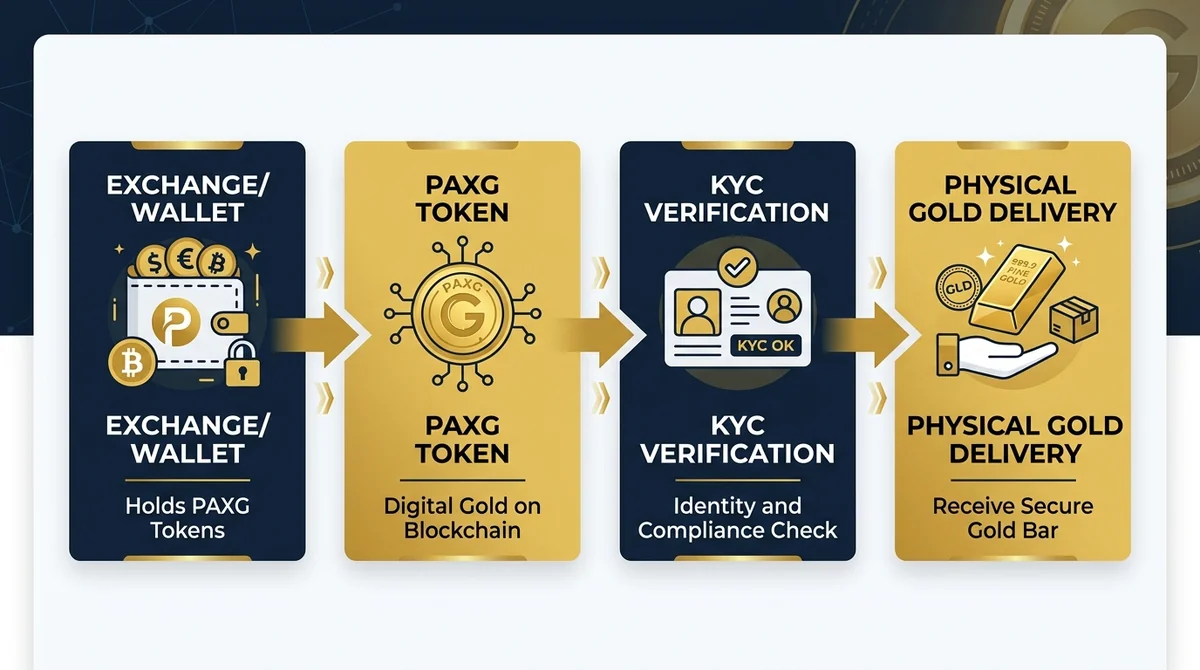
Users can purchase through exchanges or wallets that support PAXG. Physical redemption requires completing KYC with Paxos and meeting the minimum redemption amount, with associated fees incurred during the process.
#How to buy PAXG?
Purchase through exchanges or wallets that support PAXG; check Paxos' official list for specific channels.
#Can PAXG be redeemed for physical gold? What is the minimum redemption amount?
Yes, physical gold redemption is possible, but KYC completion and meeting the minimum redemption amount are required. Paxos has not publicly disclosed the specific minimum redemption amount; users need to confirm at the time of redemption.
#What fees does PAXG have? Is holding cost high?
PAXG fees mainly include on-chain transfer fees and logistics and insurance fees at redemption. Management fees are relatively low, but the cost of redeeming physical gold can be high.
#What is PAXG's management fee?
Paxos has not publicly disclosed the specific management fee for PAXG. According to its fee structure, on-chain transfers incur a small fee, and custody fee is included in gold bar storage.
#What additional fees arise from on-chain transfers and redemption?
On-chain transfers incur network fees; physical gold redemption may incur shipping, insurance, and handling fees, with specific amounts subject to Paxos' published rates.
#Who is PAXG suitable for? Who is it not suitable for?
PAXG is suitable for users who want on-chain gold exposure and trust Paxos custody; not suitable for investors who insist on physical holding or have concerns about centralized issuers.
#Is it suitable for those who want gold exposure but don't want to store physical gold?
Yes. PAXG eliminates the hassle of storing physical gold yourself, with custodians holding the gold bars.
#Is it suitable for those seeking full decentralization or zero counterparty risk?
No. PAXG depends on Paxos' custody and compliant operations, carrying centralized counterparty risk.
#What are the risks of holding PAXG?
PAXG's main risks include counterparty risk, regulatory uncertainty, and on-chain security risks. Users need to assess their own risk tolerance.
#What is counterparty risk?
Counterparty risk refers to the possibility that operational, compliance, or credit issues with Paxos or its custodians may affect token redemption and value.
#Can regulatory changes affect PAXG?
Yes. Regulatory policy changes may affect PAXG's redemption, trading, or compliance status. Specific impacts need to be observed through policy developments.
#Suitable for / Not suitable for
Suitable for: Users who want low-barrier gold holding, prefer on-chain assets, and trust Paxos custody.
Not suitable for: Investors who insist on physical delivery, have concerns about centralized issuers, or pursue fully decentralized assets.
#PAXG vs Physical Gold vs Gold ETF Comparison Table
| Dimension | PAXG | Physical Gold | Gold ETF |
|---|---|---|---|
| Holding form | On-chain token | Physical bars/coins | Fund shares |
| Custodian | Paxos and partners | Self-custody or third-party vault | Fund custodian |
| Regulatory framework | Tokenized asset (issuer regulated by NYDFS) | Commodity | Security |
| Minimum investment | Typically 0.01 PAXG | Higher (depends on bar specification) | One ETF share price |
| Physical redemption | Supported (requires KYC and minimum amount) | Direct holding | Typically not supported |
| Counterparty risk | Centralized (Paxos) | Low (self-custody) | Low (fund structure) |
#FAQ
How is PAXG's price pegged to gold? PAXG is issued by Paxos, with each token corresponding to one troy ounce of London Good Delivery gold bar. The price theoretically follows the spot gold price, but market supply and demand may cause premiums or discounts.
On which chains can PAXG be used? PAXG is primarily issued on mainstream public chains such as Ethereum. Specific chain support details should be checked in Paxos' official documentation.
Who is PAXG's custodian? The custodian is a professional vault partnered with Paxos; the specific name has not been publicly disclosed.
Is PAXG regulated? PAXG is issued by Paxos Trust Company, which is regulated by the New York State Department of Financial Services, but the token itself may have different regulatory status in different jurisdictions.
What is the minimum purchase unit for PAXG? The minimum purchase unit is typically 0.01 PAXG, but specific limits may vary by trading platform.
What is the essential difference between PAXG, physical gold, and gold ETFs? PAXG is an on-chain token directly representing physical gold ownership, with Paxos as the custodian; physical gold requires self-custody; gold ETFs are securities-regulated fund shares. The three differ in holding method, regulation, and redemption process.
This content is compiled from public data and does not constitute investment or open account advice. Data as of 2026-09-29 and may change. For more information, refer to Paxos official sources.
FAQ
How is PAXG's price pegged to gold?
PAXG is issued by Paxos, with each token corresponding to one troy ounce of London Good Delivery gold bar. The price theoretically follows the spot gold price, but market supply and demand may cause premiums or discounts.
On which chains can PAXG be used?
PAXG is primarily issued on mainstream public chains such as Ethereum. Specific chain support details should be checked in Paxos' official documentation.
Who is PAXG's custodian?
The custodian is a professional vault partnered with Paxos; the specific name has not been publicly disclosed.
Is PAXG regulated?
PAXG is issued by Paxos Trust Company, which is regulated by the New York State Department of Financial Services, but the token itself may have different regulatory status in different jurisdictions.
What is the minimum purchase unit for PAXG?
The minimum purchase unit is typically 0.01 PAXG, but specific limits may vary by trading platform.
Related Terms
Read the review? Ready to try a small position?
The crypto assets and tokenized US stocks/ETFs covered here are available on MSX — spot and perpetuals.
Quick Start Trading →New here? Registration takes three quick steps.