RWA Assets
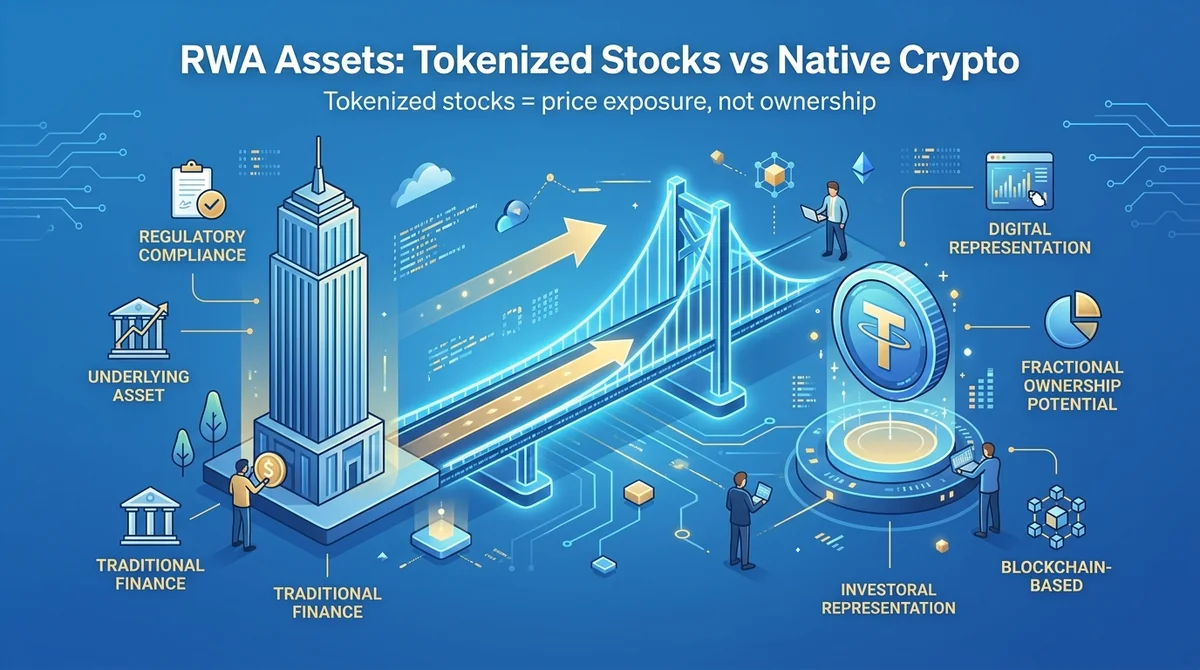
RWA assets tokenize real-world assets. Tokenized stocks are not real US stocks, and BTC, ETH are not RWA. Understand risks of tokenized stocks like NVIDIA, TSMC.
The core criteria for RWA assets are whether the underlying asset truly exists, whether the tokenization issuer is compliant, and whether investors can accept the separation of price exposure from ownership. The next step is to clarify whether you need stock price exposure or native crypto assets.
#What is RWA tokenization smart contract on-chain settlement feature? How do tokenized stocks like NVIDIA and TSMC differ from BTC and ETH?
RWA assets are tokenizations of real-world assets, including stocks, bonds, and commodities. Tokenized stocks represent price exposure, not actual equity, and are subject to issuer and regulatory risks. BTC and ETH are native crypto assets with no underlying real-world assets.
#What are the definition and common types of RWA assets?
RWA assets refer to real-world assets (such as stocks, bonds, commodities) converted into digital tokens via blockchain technology. Common types include tokenized stocks, tokenized bond, and tokenized commodities. Tokenized stocks typically track real stock prices, but holders do not have shareholder rights.
#What is the difference between tokenized stocks and real US stocks?
Tokenized stocks only provide price exposure; holders do not enjoy voting rights, dividends (unless specially designed by the issuer), or other shareholder rights. Holders of real US stocks own a portion of the company. The issuance and redemption of tokenized stocks depend on the issuer's creditworthiness and compliance.
#Why are BTC and ETH not RWA assets?
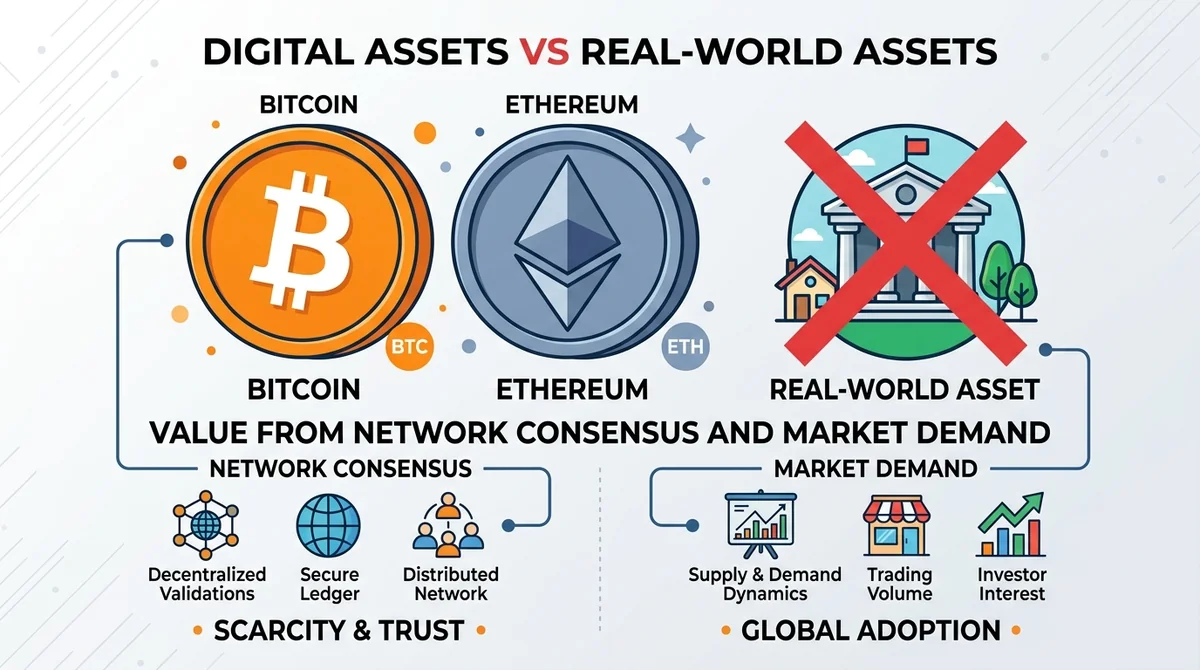
BTC and ETH are native crypto assets and are not anchored to any real-world asset. Their value comes from network consensus and market demand, not from underlying asset cash flows. Therefore, they are not RWA assets.
#What are the differences and risks of stock tokens such as NVIDIA, TSMC, NVDA, TSMC, TSM?
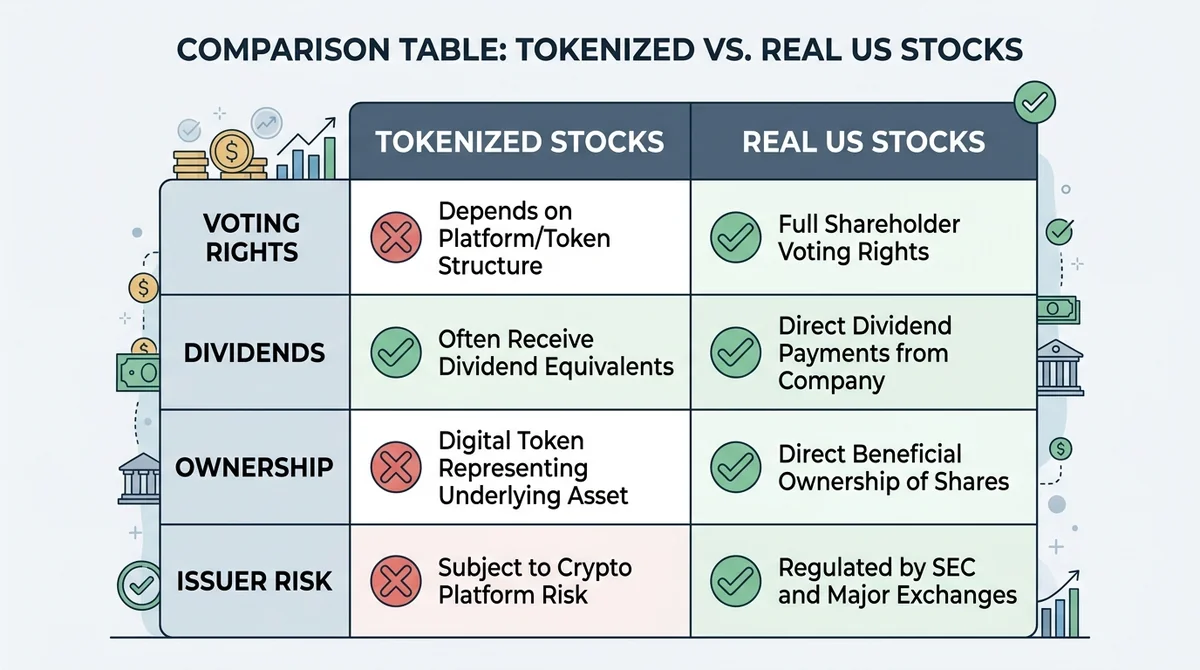
PLTR tokenized stock tracks real stock prices but carries issuer and liquidity risks, and codes like NVDA, TSMC, TSM in different markets must be distinguished.
#How do tokenized assets news for NVIDIA and TSMC work?
Tokenized assets news are typically issued by issuers on-chain as tokens representing specific stocks. Prices are linked to real stock prices through oracles or market makers. Users can buy and sell on exchanges that support the token.
#What do codes like NVDA, TSMC, TSM represent?
NVDA is NVIDIA's stock ticker on Nasdaq. TSM is TSMC's ADR ticker listed in the US. TSMC is TSMC's stock ticker on the Taiwan Stock Exchange. Codes in different markets may correspond to different trading rules and liquidity.
#What are the main risks of stock tokens?
Main risks include issuer credit risk (issuer may fail to redeem), liquidity risk (insufficient trading depth may cause slippage), and legal compliance risk (regulatory attitudes toward tokenized stocks vary across jurisdictions).
#How are crypto assets like COIN, CAKE, DODO related to RWA assets?
COIN as a Coinbase stock token belongs to RWA assets, while DeFi tokens like CAKE, DODO are different from RWA assets and carry higher risks.
#What is COIN? Is it related to RWA assets?
COIN is Coinbase's stock ticker on Nasdaq. If a tokenized COIN exists, it belongs to RWA assets because it tracks the real stock price. However, check whether the issuer is compliant.
#What are the roles of CAKE and DODO in DeFi?
CAKE is the platform token of PancakeSwap, and DODO is the platform token of DODO exchange. They belong to DeFi ecosystem tokens, with value derived from platform usage and governance, not anchored to real assets.
#How do the risks of these assets compare to RWA assets?
DeFi tokens are generally more volatile than tokenized stocks and may face smart contract risk and governance risk. Risks of tokenized stocks are more concentrated on issuer credit and compliance.
#How to choose RWA assets that suit you?
Choosing RWA assets requires considering risk appetite and investment goals, clarifying the underlying asset and compliance, and avoiding common misconceptions.
#What factors should be considered when investing in RWA assets?
Consider underlying asset quality, issuer reputation, liquidity, compliance, fees, etc. Be cautious about aspects where data is not disclosed.
#How do users with different risk appetites choose?
Conservative users can choose mainstream stock tokens (such as NVIDIA, TSMC), but must verify issuer qualifications. Aggressive users may consider DeFi tokens but must accept higher volatility.
#What are common misconceptions?
Common misconceptions include confusing tokenized stocks with real stocks, ignoring compliance risks, and focusing only on price without considering the underlying asset.
#FAQ
Q: Can tokenized stocks receive dividends? A: Depends on issuer design. Some tokenized stocks may distribute dividends via smart contracts, but most only provide price exposure. Where data is not disclosed, check issuer documentation.
Q: Where are RWA assets traded? A: Tokenized stocks are usually traded on cryptocurrency exchanges that support the asset. Verify compliance of specific platforms yourself.
Q: Are BTC and ETH RWA? A: No. BTC and ETH are native crypto assets with no underlying real-world assets.
Q: What are the risks of tokenized stocks? A: Include issuer credit risk, liquidity risk, legal compliance risk, etc.
This content is compiled from public data and does not constitute investment or open account advice. Data as of 2026-10-06, actual conditions may change. For the latest information, please refer to official sources.
FAQ
Can tokenized stocks receive dividends?
Depends on issuer design. Some tokenized stocks may distribute dividends via smart contracts, but most only provide price exposure. Where data is not disclosed, check issuer documentation.
Where are RWA assets traded?
Tokenized stocks are usually traded on cryptocurrency exchanges that support the asset. Verify compliance of specific platforms yourself.
Are BTC and ETH RWA?
No. BTC and ETH are native crypto assets with no underlying real-world assets.
What are the risks of tokenized stocks?
Include issuer credit risk, liquidity risk, legal compliance risk, etc.
Related Terms
Read the review? Ready to try a small position?
The crypto assets and tokenized US stocks/ETFs covered here are available on MSX — spot and perpetuals.
Quick Start Trading →New here? Registration takes three quick steps.