Are RWA Tokenized Assets Worth Allocating?
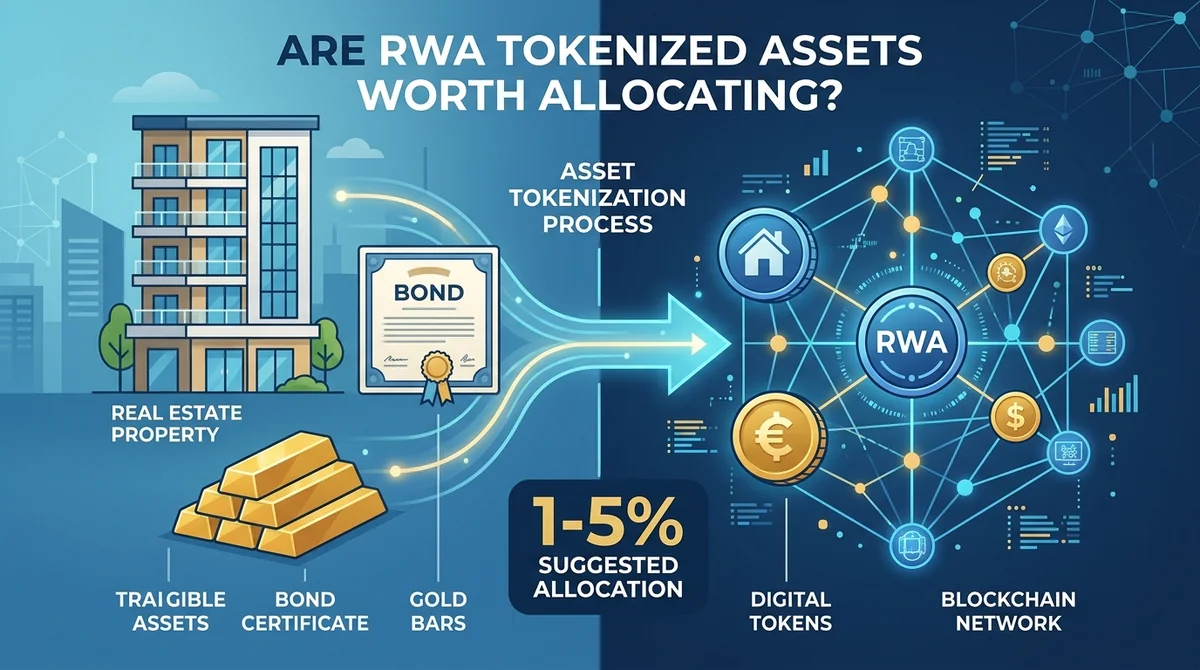
RWA tokenized assets map real estate, bonds, etc. to on-chain tokens. This article analyzes returns, risks, and suitable investors, with allocation advice based on public data.
Whether RWA tokenized assets are worth allocating depends on the investor's judgment of the underlying asset cash flow and tolerance for regulatory uncertainty. Currently, they are more suitable as a small alternative allocation.
#What Exactly Are RWA Tokenized Assets?
RWA (Real World Assets) tokenized assets are tokens on the blockchain that represent rights to real-world assets such as real estate, bonds, and commodities. Tokens can represent ownership or income rights of the asset, and blockchain technology brings divisibility and global accessibility.
#Which Real-World Assets Can Be Tokenized?
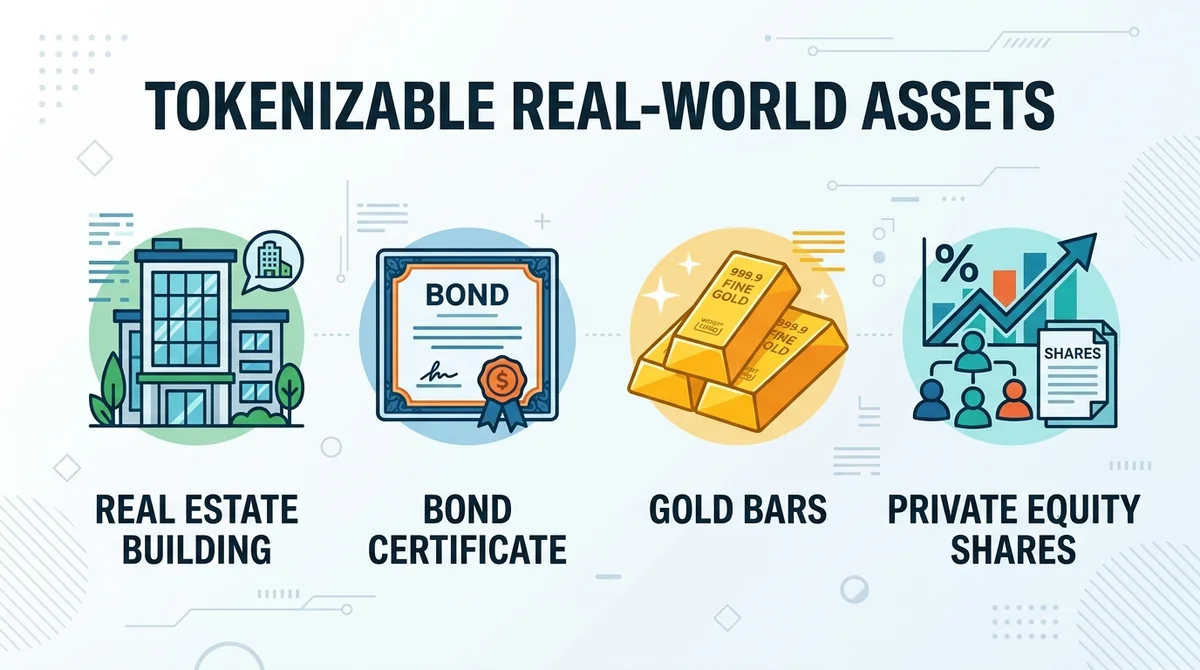
In theory, any asset with clear value and enforceable ownership can be tokenized. Common categories include:
- Real Estate: Partial ownership of commercial real estate or residential properties.
- Bonds: Income rights of government bonds and corporate bonds.
- Commodities: Standardized commodities such as gold and crude oil.
- Private Equity: Pre-IPO shares or fund units.
#How Does Tokenization Change Asset Holding?
Traditionally, assets like real estate or private equity have high entry barriers and poor liquidity. After tokenization, assets can be divided into small units, allowing investors to purchase as needed and trade on compliant secondary markets, thereby lowering investment thresholds and potentially improving liquidity.
#What Are the Potential Returns of Allocating RWA Tokenized Assets?
#What Are the Sources of Returns?
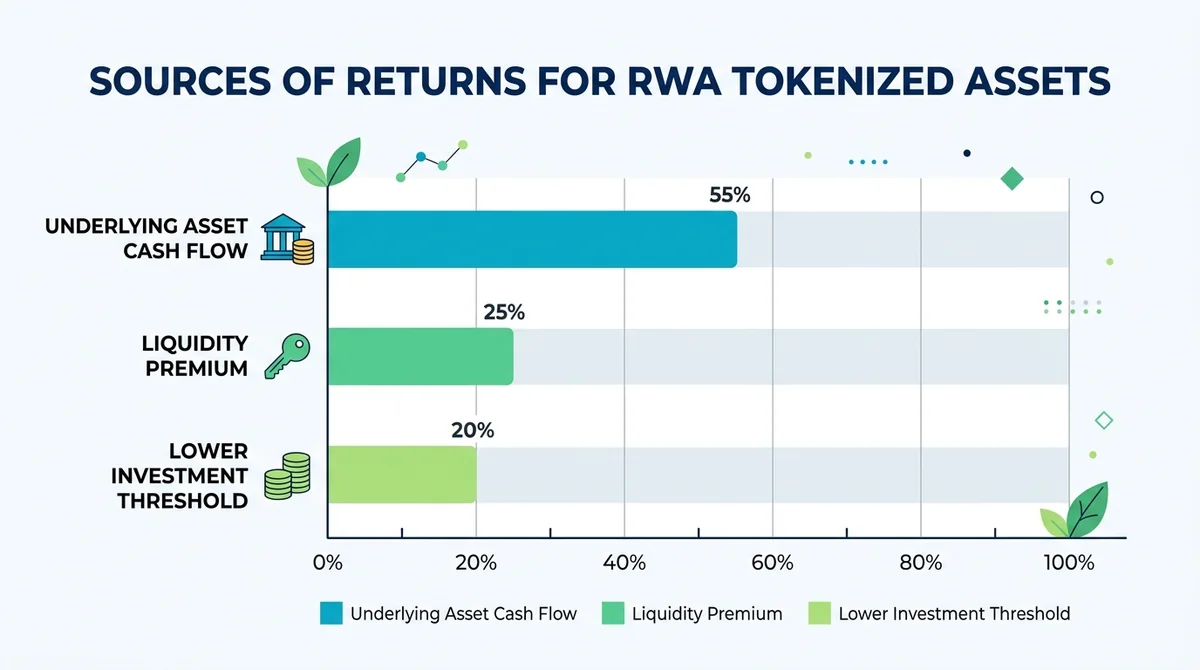
- Underlying Asset Cash Flow: Such as rent and bond interest, which are the basic sources of returns.
- Liquidity Premium: Tokenization may enable better price discovery for originally illiquid assets.
- Lower Investment Threshold: Small investors can participate in asset classes previously inaccessible.
#What Are the Advantages Compared to Traditional Assets?
Compared to traditional assets, tokenized assets offer divisibility, global accessibility, and potential liquidity improvements. However, these advantages depend on the quality of the underlying assets and platform compliance.
#What Are the Risks of RWA Tokenized Assets?
#How Does Regulatory Uncertainty Affect Investment?
Currently, most jurisdictions have unclear rules on the securities classification and trading of RWA tokens. Regulatory changes may lead to assets becoming untradeable, platform closures, or restrictions on investor eligibility.
#What Are the Custody and Compliance Risks?
- Custodian Risk: Assets may be held by third parties, with risks of misappropriation, technical failures, or bankruptcy.
- Underlying Asset Default Risk: Such as bond issuer default or declining real estate rental income.
- Smart Contract Risk: Tokenization relies on smart contracts, and code vulnerabilities may lead to asset loss.
#Who Is Suitable for Allocating RWA Tokenized Assets?
#How to Assess Risk Tolerance?
Suitable for investors seeking alternative asset exposure and able to tolerate compliance uncertainty. If investors cannot accept that assets may be illiquid for a long time or face regulatory changes, they are not suitable.
#What Proportion Should They Occupy in a Portfolio?
Since RWA tokenized assets are still in early stages, it is recommended to allocate only a small proportion (e.g., 1-5%) as a supplement to traditional assets.
#Scenario Diversion
- If you are an investor seeking stable cash flow, you may consider tokenized bond or real estate income rights, but verify the quality of underlying assets.
- If you can tolerate high volatility and regulatory risk, you may consider tokenized private equity or Pre-IPO assets.
- If you prefer low entry barriers and global accessibility, tokenized assets may offer opportunities unavailable in traditional markets.
- If you have strict compliance requirements, it is advisable to wait for a clear regulatory framework before participating.
- If you mainly allocate crypto assets, you can use RWA tokens as a tool to diversify risk, but note their correlation with the crypto market.
#Action Checklist
- Confirm the regulatory attitude towards RWA tokens in your jurisdiction.
- Research the quality of the underlying assets, cash flow sources, and custody arrangements of the target asset.
- Evaluate the issuing platform's compliance record and smart contract audit status.
- Determine your own risk tolerance and investment horizon.
- Start with a small allocation to avoid over-concentration.
- Regularly review asset performance and regulatory changes.
#FAQ
What is the difference between RWA tokenized assets and traditional securities?
Traditional securities have mature regulatory frameworks and clearing systems, while RWA tokenized assets rely on blockchain and smart contracts, and regulation remains unclear.
Can tokenized assets guarantee liquidity?
No. Liquidity depends on the depth and compliance of secondary markets, and many tokenized assets may lack counterparties for a long time.
How can investors ensure the underlying assets actually exist?
They need to rely on issuer disclosures, third-party audits, and custody reports, but information may be opaque.
Are RWA tokenized assets suitable for long-term holding?
If the underlying cash flow is stable and the platform is compliant, long-term holding is possible, but continuous attention to regulatory changes is needed.
How much capital is needed to allocate RWA tokenized assets?
The threshold varies by platform; some platforms allow small investments, but be aware of minimum investment amounts and fees.
This content is based on public data and does not constitute investment or open account advice. Data as of 2026-09-27, actual conditions may change. Please refer to relevant official sources for the latest information.
FAQ
What is the difference between RWA tokenized assets and traditional securities?
Traditional securities have mature regulatory frameworks and clearing systems, while RWA tokenized assets rely on blockchain and smart contracts, and regulation remains unclear.
Can tokenized assets guarantee liquidity?
No. Liquidity depends on the depth and compliance of secondary markets, and many tokenized assets may lack counterparties for a long time.
How can investors ensure the underlying assets actually exist?
They need to rely on issuer disclosures, third-party audits, and custody reports, but information may be opaque.
Are RWA tokenized assets suitable for long-term holding?
If the underlying cash flow is stable and the platform is compliant, long-term holding is possible, but continuous attention to regulatory changes is needed.
How much capital is needed to allocate RWA tokenized assets?
The threshold varies by platform; some platforms allow small investments, but be aware of minimum investment amounts and fees.
Read the review? Ready to try a small position?
The crypto assets and tokenized US stocks/ETFs covered here are available on MSX — spot and perpetuals.
Quick Start Trading →New here? Registration takes three quick steps.