Silver
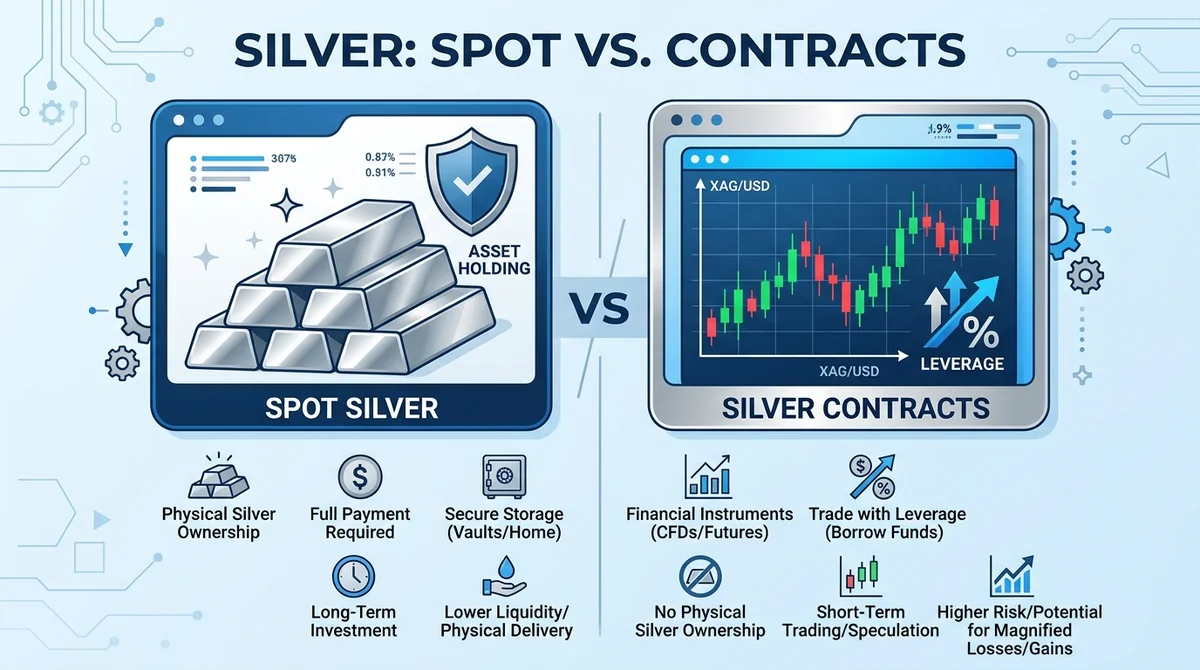
Silver is the asset, not the platform. We break down silver trading channels via five dimensions—venue compliance, holding method, cost structure, liquidity, risk control—and separate spot holding from futures trading.
Bottom line: Silver itself is a precious metals trading asset; a so-called "silver exchange" is usually just a type of platform that carries silver trading. The first step in choosing a channel is not picking a platform—it is confirming whether you want to hold silver as an asset (spot) or trade the price movement of silver (futures/contracts). The two have fundamentally different risk profiles.
#What is silver as an asset, and is it the same as a "silver exchange"?
No, they are not the same. Silver is the precious metals asset; a platform is the channel that carries the trade. Mixing the two leads to misaligned comparison dimensions—you may be comparing completely different things.
#Basic attributes of silver as a trading asset
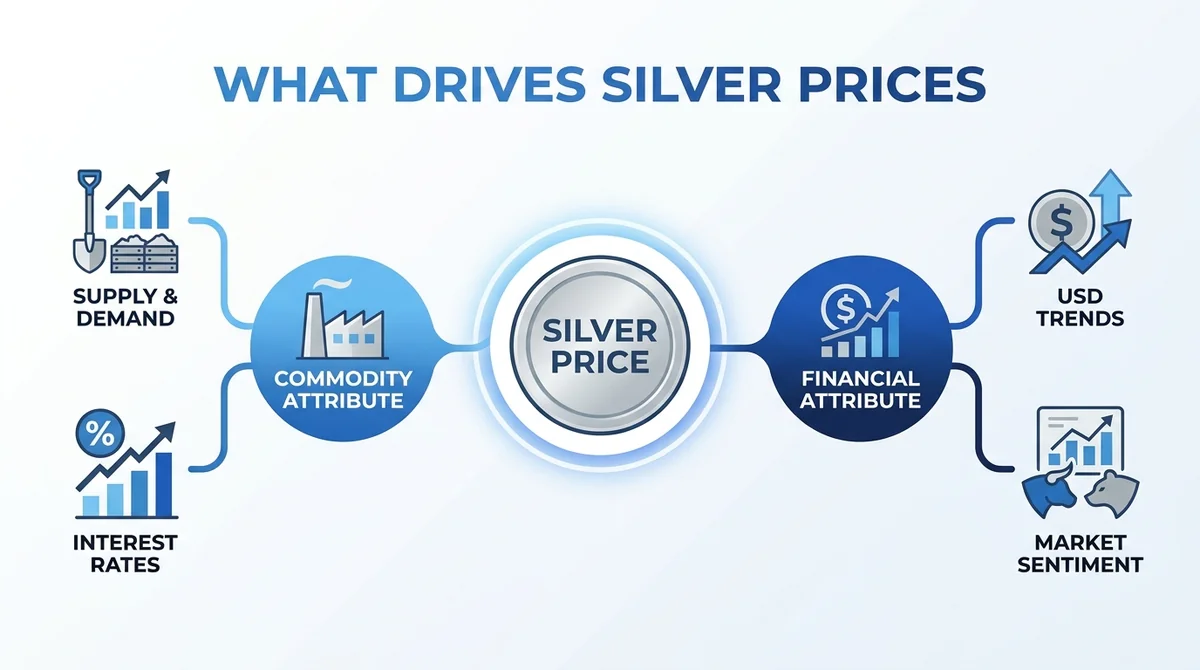
Silver is a precious metals asset, generally considered to have both commodity and financial attributes. Its price is influenced by multiple factors including supply and demand, the macroeconomic interest rate environment, USD trends, and market sentiment (the specific transmission mechanisms and weights are not quantified in the verifiable sources for this article). As an asset, silver itself is neither "good" nor "bad"—only a question of whether it matches your holding period and risk tolerance.
#Why "silver exchange" is often used loosely to refer to different platform types
Because the channel forms that carry silver trading vary widely: some offer physical or spot book-entry holding, some offer leveraged contract trading, and some are merely brokerage channels that match quotes. Users often use the same term to refer to all of them when searching, but their holding object, cost structure, and risk mechanism are not the same.
#How do spot silver and silver contracts differ in what you hold?
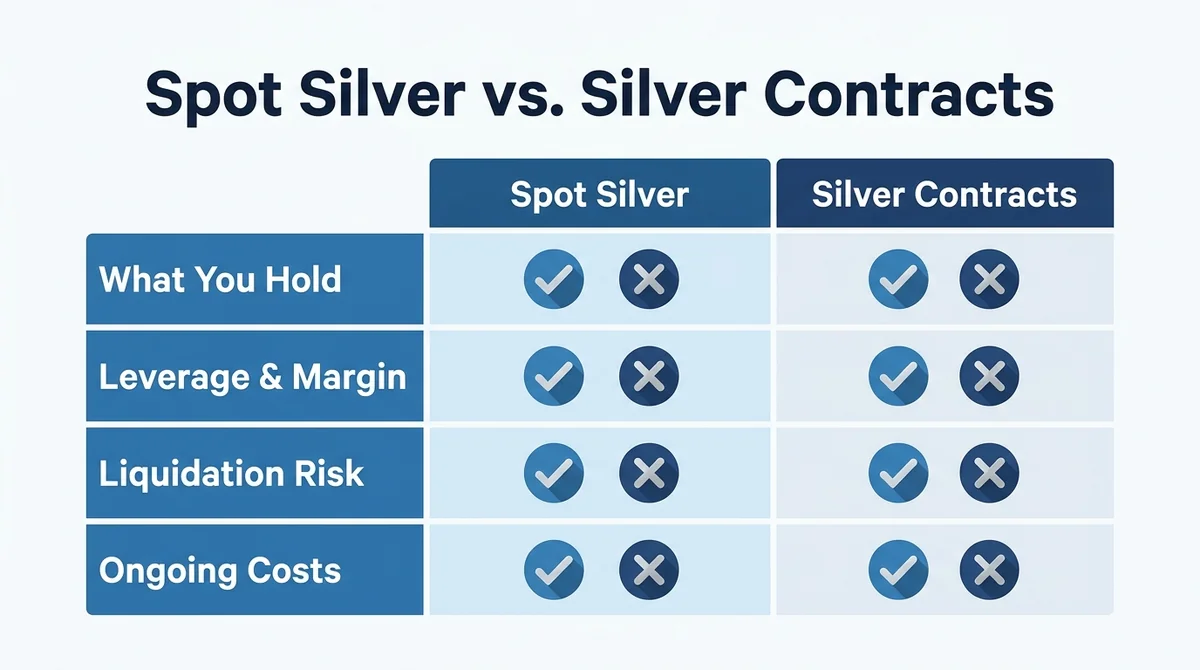
- Spot silver: You genuinely buy and sell, holding the asset itself (or a claim to a corresponding share). Price fluctuations show up as changes in the market value of your position, and forced liquidation is generally not involved.
- Silver contracts: You only trade the price movement, usually with perpetual futures leverage, with margin and liquidation mechanisms. Losses may exceed your initial outlay (depending on platform rules), and funding costs or overnight fees may accrue continuously.
Align on the concepts first before discussing platform selection—otherwise the comparison is meaningless.
#Which five dimensions should be used to evaluate a silver trading platform?
Silver trading channels can be evaluated on five dimensions: venue type and regulatory affiliation, holding method (spot or contract), cost structure, liquidity depth, and risk control mechanisms. Of these, holding method is the dimension that most affects the nature of the risk.
#How to judge venue type and regulatory affiliation
You need to confirm what type of entity the platform is, which jurisdiction regulates it, and how client funds are held in custody. If a platform does not disclose its regulatory affiliation or fund custody arrangements, that should be treated as a risk signal rather than "discretion." This section does not rate any specific third-party platform as better or worse; it only provides directions for verification.
#Holding method: spot or contract, and what's the difference?
This carries the highest weight of the five dimensions. Spot corresponds to asset exposure; contracts correspond to price exposure plus leveraged exposure. For the same asset and the same direction, the two can produce completely opposite results in extreme market conditions.
#What does the cost structure include?
Costs should be broken down into at least three parts:
- Trading costs: spreads, commissions (charged as a percentage of transaction value or per lot)
- Holding costs: overnight fees, how does perpetual futures funding rate work, account management fees
- Physical-related costs: delivery fees, storage fees, transport and insurance (only when physical delivery is involved)
Looking only at spreads easily underestimates total cost, especially for medium- to long-term holding scenarios.
#How do liquidity and spread depth affect execution?
Liquidity determines slippage and execution efficiency. A narrow quoted spread does not mean good depth—when volatility expands, channels with insufficient depth may show quote gaps and execution prices deviating from the limit price. Evaluation should focus on normal spreads and execution quality during volatile periods, not a single static number.
#Risk control mechanisms
This includes maximum perpetual futures leverage, liquidation trigger rules, margin call notification methods, and handling of abnormal market conditions (such as gaps and circuit breakers). These terms are usually written in the agreement details and need to be actively reviewed rather than relying on promotional pages.
Note: Data on specific platforms' prices, fees, and liquidity is not provided in verifiable data sources for this article and is uniformly marked as "data not disclosed," with no speculation.
#What are the main pros and cons of silver trading?
#Advantages
- Clear asset: Silver is a publicly quoted precious metals asset with relatively clear and verifiable pricing sources.
- Diverse participation channels: Spot, contracts, tokenized forms, and other formats cover different holding-period needs (available channels depend on your region and what platforms disclose).
- Broad trading hours coverage: Precious metals markets generally have quotes during major global trading sessions; specific hours are subject to platform disclosure.
#Main risk points
- Price volatility risk: Silver's volatility is typically higher than that of precious metals such as gold (specific volatility data is not provided in the verifiable sources for this article).
- Leveraged liquidation risk: Contract-type channels have mechanisms for forced liquidation when margin is insufficient, and losses may exceed expectations.
- Platform compliance differences: Regulatory affiliation, fund custody, and client asset segregation arrangements differ significantly across channels.
- Liquidity risk: When depth is insufficient, execution prices on large orders may deviate significantly from expectations.
#What does leveraged contract trading amplify?
Leverage typically amplifies three things at once: the magnitude of profit and loss, the probability of liquidation, and ongoing holding costs. The third is often overlooked—funding fees or overnight fees continuously erode principal during long holding periods, even if the price direction is judged correctly.
#Who is suited to trading silver, and who is not?
#What long-term allocation users should look at
Look at spot channels and total holding cost: including buy/sell spreads, custody or storage fees, and exit (delivery or sale) costs. The longer the holding period, the lower the share of one-time trading costs and the higher the share of ongoing costs.
#What short-term trading users should look at
Look at liquidity and spreads: normal spreads, execution quality during volatile periods, order execution speed, and available order types (limit, stop-loss, etc.). In short-term scenarios, costs erode returns faster than in long-term ones.
#Who should avoid leveraged silver products
- People who cannot bear the total loss of principal
- People who cannot monitor the market continuously and respond to margin calls in time
- People who are not yet clear on liquidation rules and how does perpetual futures funding rate work
- People who treat silver as a short-term cash flow tool rather than a risk exposure
#What risks and compliance matters must be confirmed before choosing a silver trading channel?
#How to verify platform regulation and fund safety
- Whether the platform discloses its regulatory entity and license number
- Whether client funds are segregated from the platform's own funds in custody
- Whether there are public third-party audits or proof of reserves
- Withdrawal process, settlement time, and historical congestion records
#Where to find leverage and liquidation rules
Review the user agreement, risk disclosure documents, and product terms, focusing on: maximum leverage multiple, maintenance margin ratio, liquidation execution method (market or limit), and handling rules during gap conditions. Promotional pages are usually incomplete.
#Which fee terms are easily overlooked?
- The basis for calculating overnight fees (notional value or margin)
- The perpetual futures funding rate settlement schedule frequency and direction
- Delivery thresholds and minimum delivery amounts
- Inactive account management fees
- Deposit/withdrawal fees and FX conversion spreads
#Action checklist
- Clarify whether you want to hold the asset or trade the price
- Verify the platform's regulatory affiliation and fund custody method
- Pull the full fee schedule and calculate the total cost of holding for one month
- Check actual execution quality during volatile periods
- Confirm liquidation rules and margin call notification mechanisms
- Test the full deposit and withdrawal process with a small amount
- Re-check the availability of such channels in your region
#FAQ
Q1: Are silver and a "silver exchange" the same concept?
No. Silver is a precious metals trading asset; an exchange or platform is the channel that carries the trade. Before comparing channels, you must first clarify whether you want spot holding or contract trading.
Q2: What is the biggest difference between spot silver and silver contracts?
Spot usually means holding the asset itself; a price decline shows up as a shrinking market value and generally does not involve liquidation. Contracts only trade price direction, usually with perpetual futures leverage, margin and liquidation mechanisms, and may continuously accrue funding fees or overnight costs.
Q3: Which is the most important dimension for evaluating a silver trading platform?
Holding method. It directly determines the nature of the risk—asset exposure or leveraged derivatives exposure. The other four dimensions (compliance, cost, liquidity, risk control) only become meaningful on that basis.
Q4: Is looking only at spreads enough for silver trading costs?
No. Total cost should include trading costs (spreads and commissions), holding costs (overnight fees or funding fees), and physical-related costs (delivery, storage). In medium- to long-term holding scenarios, ongoing costs often exceed one-time spreads.
Q5: How should people who cannot bear liquidation risk choose?
They should generally avoid leveraged silver contracts, turn to spot-type channels, and focus their evaluation on holding costs, exit methods, and the platform's regulatory affiliation.
#Disclaimer
This content is compiled from public information and does not constitute investment or open account advice. Data on specific platforms' fees, prices, and liquidity is not provided in verifiable data sources for this article and is uniformly marked as "data not disclosed," with no speculation. To learn the official terms of a specific channel, please refer to that platform's official sources.
FAQ
Are silver and a "silver exchange" the same concept?
No. Silver is a precious metals trading asset; an exchange or platform is the channel that carries the trade. Before comparing channels, you must first clarify whether you want spot holding or contract trading.
What is the biggest difference between spot silver and silver contracts?
Spot usually means holding the asset itself; a price decline shows up as a shrinking market value and generally does not involve liquidation. Contracts only trade price direction, usually with perpetual futures leverage, margin and liquidation mechanisms, and may continuously accrue funding fees or overnight costs.
Which is the most important dimension for evaluating a silver trading platform?
Holding method. It directly determines the nature of the risk—asset exposure or leveraged derivatives exposure. The other four dimensions (compliance, cost, liquidity, risk control) only become meaningful on that basis.
Is looking only at spreads enough for silver trading costs?
No. Total cost should include trading costs (spreads and commissions), holding costs (overnight fees or funding fees), and physical-related costs (delivery, storage). In medium- to long-term holding scenarios, ongoing costs often exceed one-time spreads.
How should people who cannot bear liquidation risk choose?
They should generally avoid leveraged silver contracts, turn to spot-type channels, and focus their evaluation on holding costs, exit methods, and the platform's regulatory affiliation.
Read the review? Ready to try a small position?
The crypto assets and tokenized US stocks/ETFs covered here are available on MSX — spot and perpetuals.
Quick Start Trading →New here? Registration takes three quick steps.