Which Stablecoin to Choose in Southeast Asia
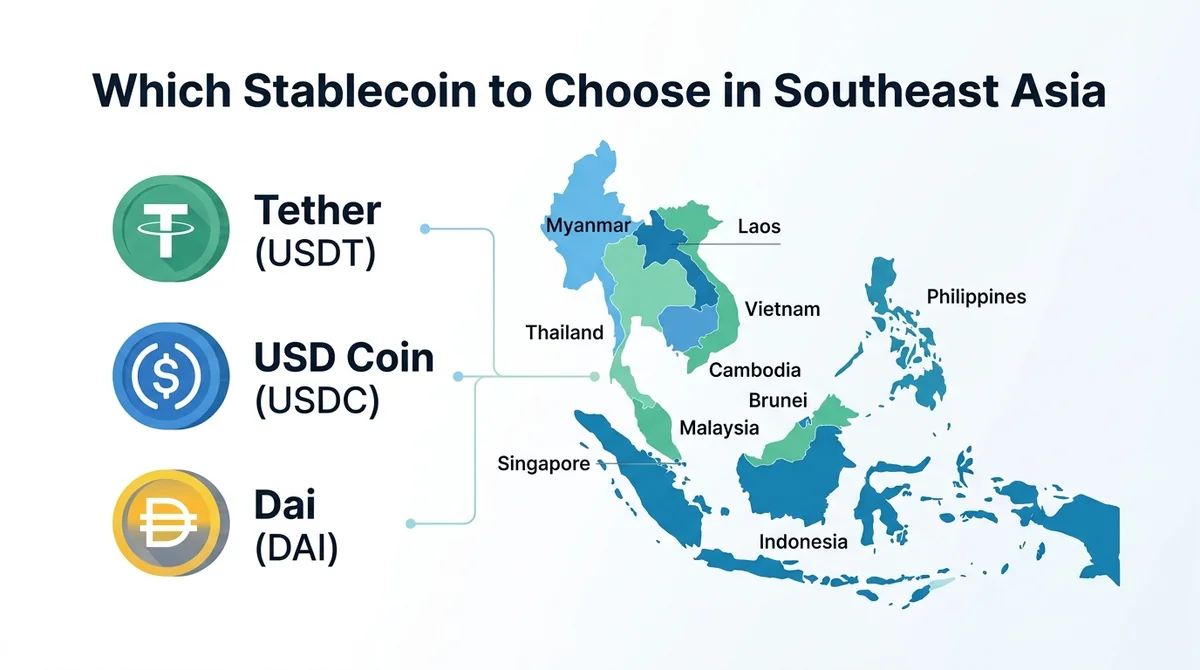
Which stablecoin in Southeast Asia? Compare USDT, USDC, DAI by liquidity, compliance, local support, with scenario-based advice and risk checklist.
There is no single answer to choosing a stablecoin in Southeast Asia: for daily payments and over-the-counter trading, prioritize USDT; for compliant institutions and cross-border settlement, prioritize USDC; for decentralized applications, prioritize DAI.
#What stablecoins are commonly used in Southeast Asia?
The stablecoins circulating in the Southeast Asian market are mainly USDT, USDC, and DAI. USDT dominates over-the-counter trading and daily payments in Southeast Asia, and is supported by almost all local exchanges and wallets; USDC is used more among compliant exchanges and institutions, with transparent reserves and regular audits; DAI is mainly used in DeFi protocols and decentralized applications, with limited local support.
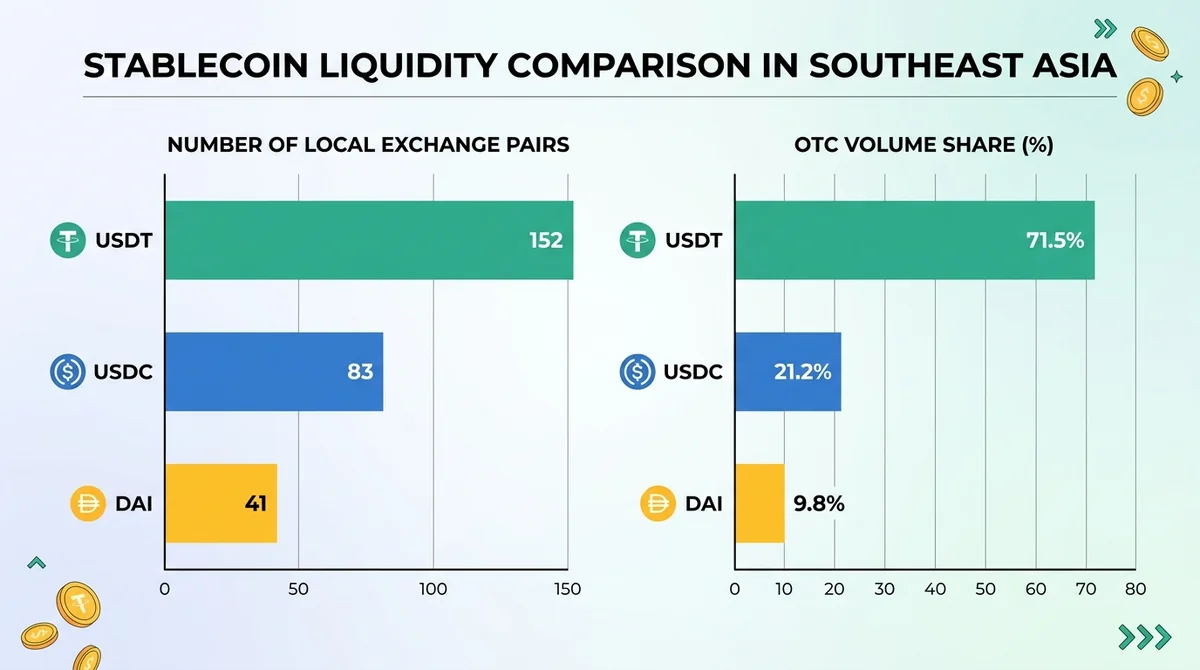
How popular is USDT in Southeast Asia? USDT is the most liquid stablecoin in Southeast Asia, widely accepted by OTC traders, and easy to exchange into local currencies. Most local exchanges have significantly deeper USDT trading pairs than other stablecoins, making it the first choice for small transfers and daily payments.
How is USDC accepted in Southeast Asia? USDC has high acceptance in compliant exchanges and cross-border payment scenarios. Its reserves are held by regulated financial institutions and regularly audited, giving it higher recognition in strictly regulated markets like Singapore, but it has fewer local partners than USDT.
What are the use cases of DAI in Southeast Asia? DAI is mainly used in DeFi protocols, lending, and decentralized trading. In Southeast Asia, DAI has limited local support and inconvenient fiat conversion, so users participate more through on-chain wallets than through local exchanges.
#What are the core differences between USDT, USDC, and DAI in Southeast Asia?
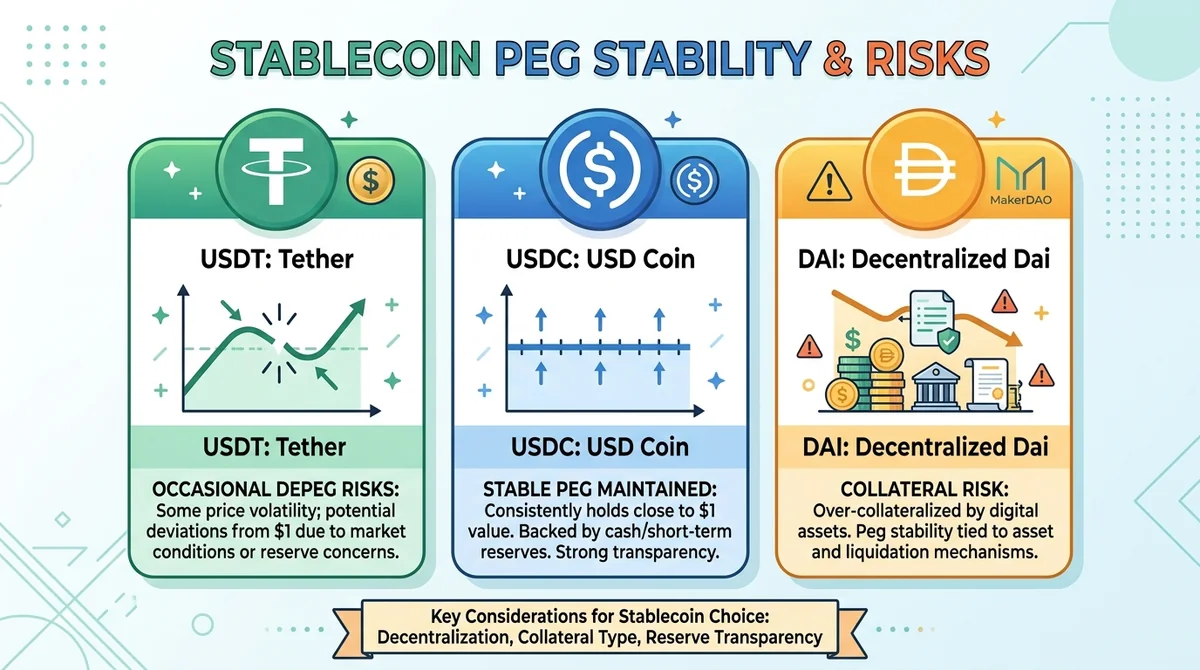
The core differences lie in three dimensions: peg stability, compliance and regulation, and local support.
How does peg stability differ? USDT occasionally depegs but recovers quickly, and historically briefly deviated from $1 due to reserve concerns; USDC has a stable peg, with reserves mainly in cash and short-term U.S. Treasuries; DAI relies on collateral, and may depeg when collateral prices fluctuate sharply.
What are the differences in compliance and regulatory attitudes? USDC is regulated in the U.S., and issuer Circle regularly discloses proof of reserves, with high recognition in places like Singapore; USDT has more regulatory disputes and insufficient transparency in reserve composition; DAI is decentralized but has ambiguous compliance, and does not rely on a single centralized institution.
What are the differences in local support (fiat on/off-ramps, partners)? USDT has many local partners, supports fiat on/off-ramps for multiple Southeast Asian currencies, and has an active OTC market; USDC mainly serves compliant channels, with relatively limited fiat channels; DAI has little local support and usually needs to be obtained through DEXs or on-chain protocols.
#In Southeast Asia, when should you choose USDT?
Is USDT suitable for daily small payments and transfers? Yes. USDT has the best liquidity, is supported by almost all exchanges and wallets, has fast transaction confirmations, and relatively stable fees.
What are the advantages of using USDT for over-the-counter trading? OTC traders generally accept USDT, making it easy to exchange into local currencies with narrow spreads. In markets like Indonesia, Vietnam, and the Philippines, USDT is the main quote currency for OTC trading.
#When should you choose USDC?
Why do institutional users prefer USDC? USDC has transparent reserves, regular audits, and is recognized by regulators, allowing institutional users to reduce compliance risk. In cross-border payments and settlements, USDC is easier to pass bank reviews.
Is USDC more reliable for scenarios with high compliance requirements? Yes. In compliant exchanges and cross-border payments, USDC is easier to pass reviews, and issuer Circle cooperates with many traditional financial institutions to provide fiat on/off-ramps.
#Is DAI worth using in Southeast Asia?
What practical benefits does DAI's decentralization offer users? DAI is not controlled by centralized institutions, is censorship-resistant, and allows users to self-custody assets, making it suitable for users who value decentralization.
What obstacles will you encounter when using DAI in Southeast Asia? Local support is limited, fiat conversion is inconvenient, and depegging may occur due to collateral volatility. Most local exchanges do not offer DAI fiat trading pairs, requiring operations through on-chain protocols.
#What risks should you watch out for when choosing a stablecoin?
What is reserve risk? USDT's reserve composition is opaque, posing trust risk; USDC's reserves are mainly cash and short-term U.S. Treasuries, with higher transparency; DAI relies on over-collateralization, and collateral price fluctuations may affect stability.
What impact can regulatory changes have? Countries are tightening stablecoin regulation, which may affect usage. For example, some countries may restrict payment use of non-local stablecoins, or require issuers to obtain licenses.
How can you prevent depegging risk? Any stablecoin may briefly depeg under extreme market conditions. It is recommended to diversify holdings across multiple stablecoins, avoid over-reliance on a single one, and monitor issuer reserve disclosures and on-chain data.
#FAQ
Q: For daily payments in Southeast Asia, should I choose USDT or USDC? A: Choose USDT, which has the best liquidity, broadest local support, and convenient OTC trading.
Q: Which stablecoin should institutions use for cross-border settlement? A: Prioritize USDC, which has strong compliance, transparent reserves, and easily passes bank reviews.
Q: Is DAI suitable for ordinary users? A: Ordinary users find it inconvenient due to limited local support; it is more suitable for DeFi users.
Q: Can stablecoins depeg? A: Yes, historically both USDT and DAI have briefly depegged, but usually recovered.
Q: How can I reduce stablecoin risk? A: Diversify holdings, monitor reserve disclosures, and avoid keeping funds idle in a single stablecoin for long periods.
This content is compiled from public data and does not constitute investment or account opening advice. Data as of 2026-09-14, and actual conditions may change. For the latest fees or supported regions, refer to the official sources of each stablecoin issuer.
FAQ
For daily payments in Southeast Asia, should I choose USDT or USDC?
Choose USDT, which has the best liquidity, broadest local support, and convenient OTC trading.
Which stablecoin should institutions use for cross-border settlement?
Prioritize USDC, which has strong compliance, transparent reserves, and easily passes bank reviews.
Is DAI suitable for ordinary users?
Ordinary users find it inconvenient due to limited local support; it is more suitable for DeFi users.
Can stablecoins depeg?
Yes, historically both USDT and DAI have briefly depegged, but usually recovered.
How can I reduce stablecoin risk?
Diversify holdings, monitor reserve disclosures, and avoid keeping funds idle in a single stablecoin for long periods.
Related Terms
Read the review? Ready to try a small position?
The crypto assets and tokenized US stocks/ETFs covered here are available on MSX — spot and perpetuals.
Quick Start Trading →New here? Registration takes three quick steps.