S&P 500
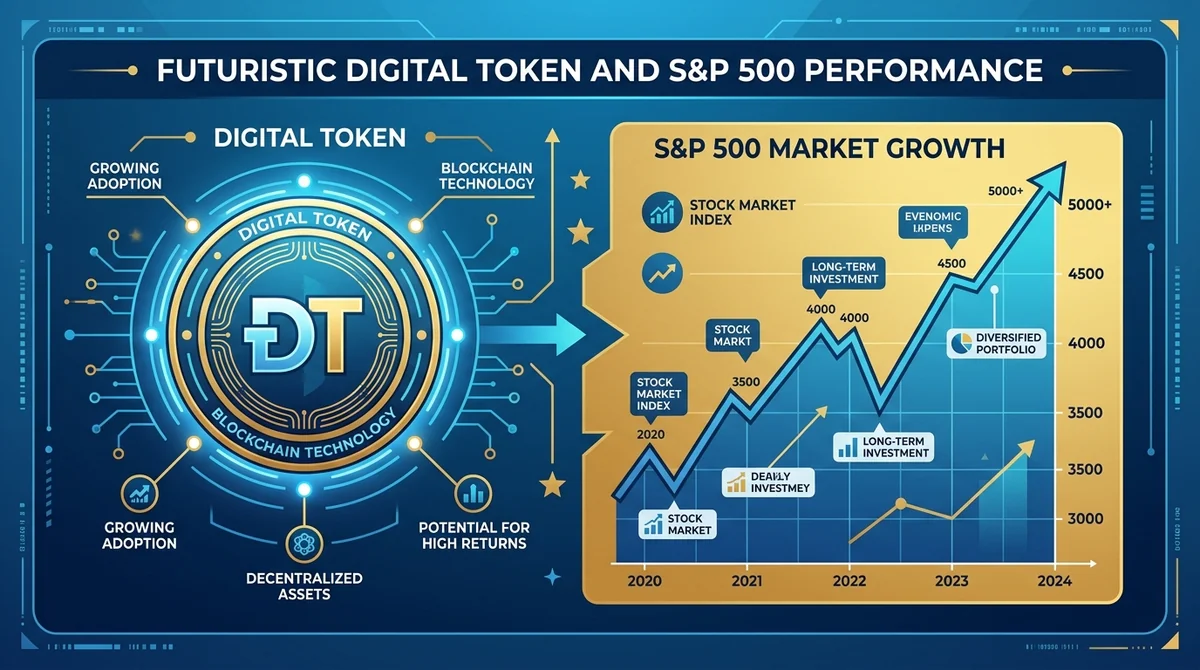
Tokenized S&P 500 tracks index price but not real US stocks, offering 24/7 trading and low entry. We review safety, fees, liquidity, and risks.
Conclusion: Tokenized S&P 500 is a digital asset that tracks the price of the S&P 500 index. It suits investors seeking low-cost, round-the-clock index exposure and who can accept the risks of non-real assets. If you insist on real stock ownership or have low risk tolerance, it is not suitable.
#What Is Tokenized S&P 500 and How Does It Work?
Tokenized S&P 500 is a digital asset issued on a blockchain, designed to track the price of the S&P 500 index. It provides price exposure, but investors do not own real shares of the index constituents.
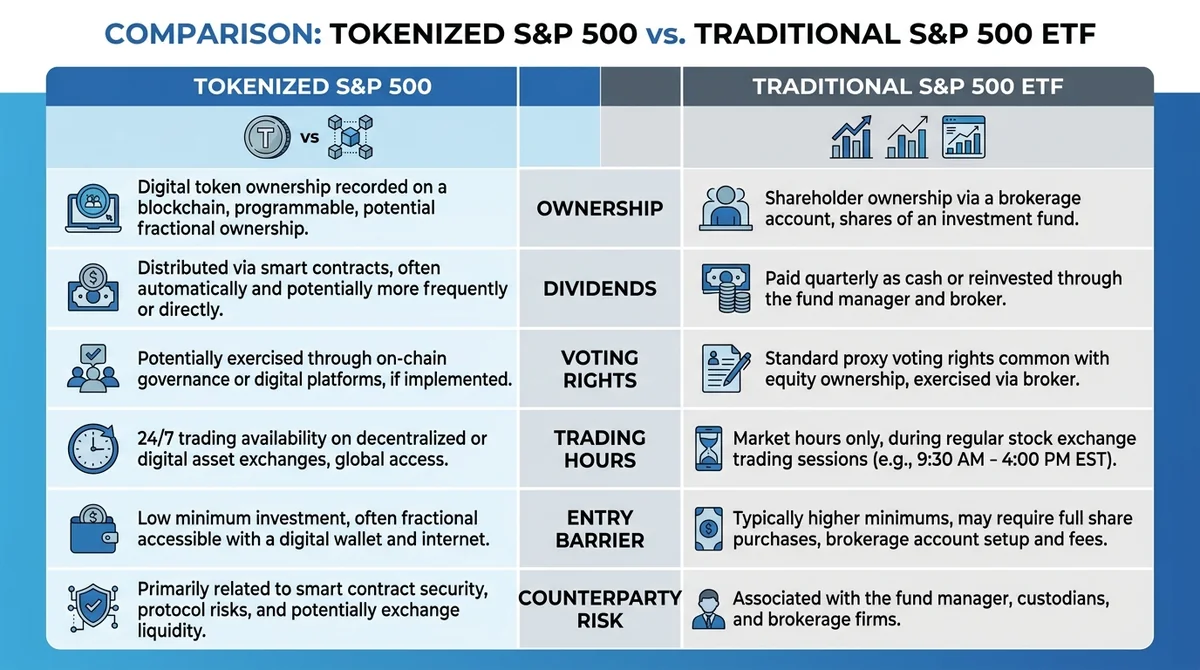
#What Is the Difference Between Tokenized S&P 500 and Traditional S&P 500 ETFs?
Traditional S&P 500 ETFs (such as SPY, VOO) represent actual ownership of a basket of stocks, with shareholder rights and dividends. Tokenized S&P 500 only reflects price movements, does not include corporate actions, dividends, or voting rights, and typically relies on the issuer's reserves or derivatives to maintain price anchoring.
#How Is the Price of Tokenized S&P 500 Anchored to the Real Index?
Price anchoring is usually achieved by the issuer through holding underlying assets, using derivatives, or algorithmic adjustments, but details vary by product. Relevant data is currently undisclosed, and investors should carefully verify the issuer's proof of reserves and audit reports.
#What Are the Pros and Cons of Tokenized S&P 500?
#What Are the Advantages of Tokenized S&P 500?
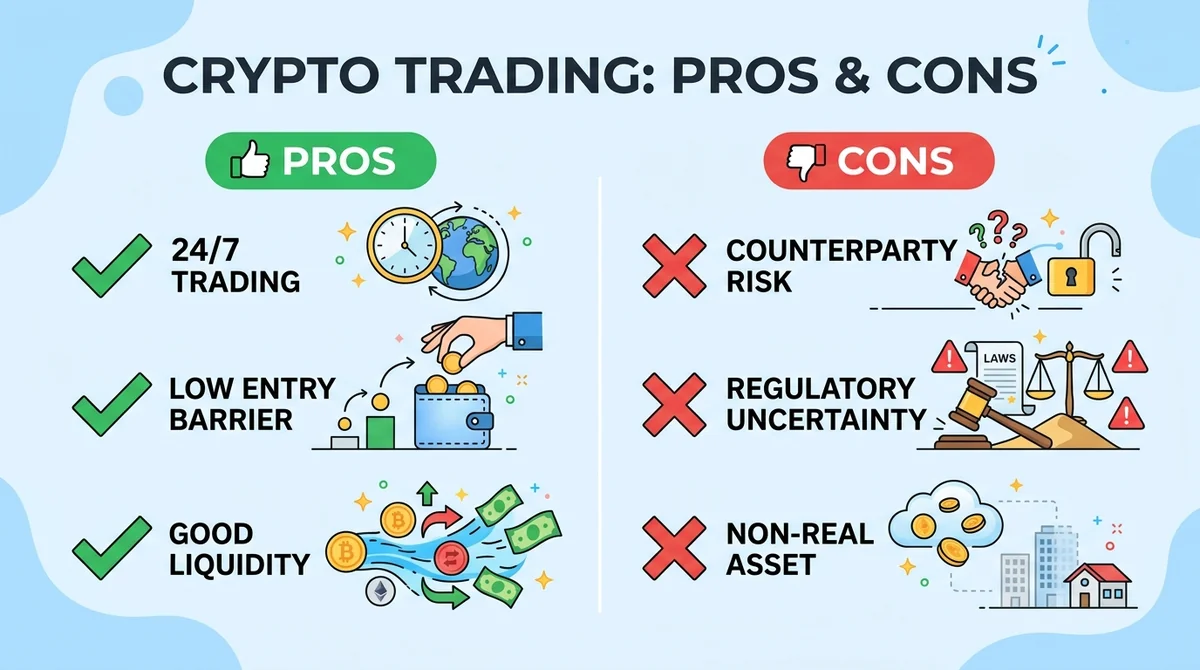
- Long trading hours: Can be traded 24/7, not limited by traditional stock market opening hours.
- Low entry barrier: Allows small investments without opening a traditional securities account.
- Good liquidity: Can be bought and sold quickly on supported exchanges.
#What Are the Risks of Tokenized S&P 500?
- Counterparty risk: Issuer default or bankruptcy may lead to asset loss.
- Regulatory uncertainty: Policy changes may affect asset legality, freezing, or delisting.
- Non-real asset: Does not own underlying stocks, cannot enjoy shareholder rights.
#Who Is Suitable for Investing in Tokenized S&P 500?
#Which Investors Are Suitable for Tokenized S&P 500?
- Investors who want low-cost diversification into the US large-cap index.
- Investors who can accept the risks of non-real assets and understand the differences from traditional ETFs.
- Users who need flexible trading hours or cannot directly purchase US stocks.
#Which Investors Are Not Suitable for Tokenized S&P 500?
- Investors who seek real asset ownership and shareholder rights.
- Investors with low risk tolerance who cannot accept counterparty or regulatory risks.
- Investors who want dividends or participation in corporate actions.
#What Are the Key Evaluation Dimensions for Tokenized S&P 500?
#How to Evaluate Safety?
Need to pay attention to smart contract risk, custody fee risk, and the transparency of the issuer's reserves. Relevant data is currently undisclosed, so a specific score cannot be given.
#What About Fees and Liquidity?
Trading fees and management fees vary by platform, and data is undisclosed. Liquidity depends on trading depth and bid-ask spread, and public data is also lacking.
#What About Regulatory Compliance?
Different jurisdictions have different attitudes towards tokenized stocks; some countries may treat them as securities, subject to strict regulation. Specific compliance status data is undisclosed.
#What Risks Should Be Noted When Investing in Tokenized S&P 500?
#How to Understand Counterparty Risk?
If the issuer goes bankrupt or defaults, investors may not be able to redeem assets and lose their entire investment.
#What Are the Regulatory Risks?
Regulatory changes may lead to tokens being deemed illegal securities, trading platforms being forced to delist them, and even assets being frozen.
#Market Risk
Although it tracks the index, the token price may deviate due to insufficient liquidity or market sentiment, causing additional volatility.
#FAQ
Is tokenized S&P 500 the same as holding real US stocks? No. It only provides price exposure, does not represent real stock ownership, and does not entitle you to dividends or voting rights.
Will the price of tokenized S&P 500 exactly match the index? It is usually kept close through anchoring mechanisms, but may deviate slightly due to liquidity, fees, or market sentiment.
Is investing in tokenized S&P 500 safe? There are counterparty risk, regulatory risk, and smart contract risk. Safety depends on the issuer's transparency and compliance, and public data is currently lacking.
Where can I trade tokenized S&P 500 products? For specific supported platforms, check the official information of each exchange. This content does not constitute open account advice; please refer to official sources.
#Disclaimer
This content is compiled based on public data and does not constitute investment or open account advice. Data as of 2026-10-07, actual situation may change.
FAQ
Is tokenized S&P 500 the same as holding real US stocks?
No. It only provides price exposure, does not represent real stock ownership, and does not entitle you to dividends or voting rights.
Will the price of tokenized S&P 500 exactly match the index?
It is usually kept close through anchoring mechanisms, but may deviate slightly due to liquidity, fees, or market sentiment.
Is investing in tokenized S&P 500 safe?
There are counterparty risk, regulatory risk, and smart contract risk. Safety depends on the issuer's transparency and compliance, and public data is currently lacking.
Where can I trade tokenized S&P 500 products?
For specific supported platforms, check the official information of each exchange. This content does not constitute open account advice; please refer to official sources.
Related Terms
Read the review? Ready to try a small position?
The crypto assets and tokenized US stocks/ETFs covered here are available on MSX — spot and perpetuals.
Quick Start Trading →New here? Registration takes three quick steps.