PLTR Tokenized Stock
PLTR tokenized stock offers 24/7 trading and fractional exposure via price pegging to US stocks, but lacks shareholder rights and carries counterparty and regulatory risks.
Verdict: PLTR tokenized stock scores 6.0/10 overall. It suits users familiar with crypto who want convenient exposure to US stock price movements; investors seeking shareholder rights and long-term stable returns should hold real US stocks directly.
#What Is PLTR Tokenized Stock? How Does It Differ from Real US Stocks?
PLTR tokenized stock is a crypto asset that pegs to the price of US stocks via smart contracts or centralized institutions. Holders only gain price exposure and do not enjoy shareholder rights such as dividends or voting that come with real stocks.
#How Does PLTR Tokenized Stock Peg to US Stock Prices?
Issuers typically collateralize real stocks or use oracle price feeds to maintain the price peg. Specific mechanisms vary by platform, but the core is to make the token price track the underlying stock's market price.
#Can Holders of PLTR Tokenized Stock Receive Dividends and Voting Rights?
No. PLTR tokenized stock holders are not company shareholders and do not receive dividends or voting rights. These rights remain with the actual holders of the collateralized stocks or the issuer.
#How Does PLTR Tokenized Stock Work?
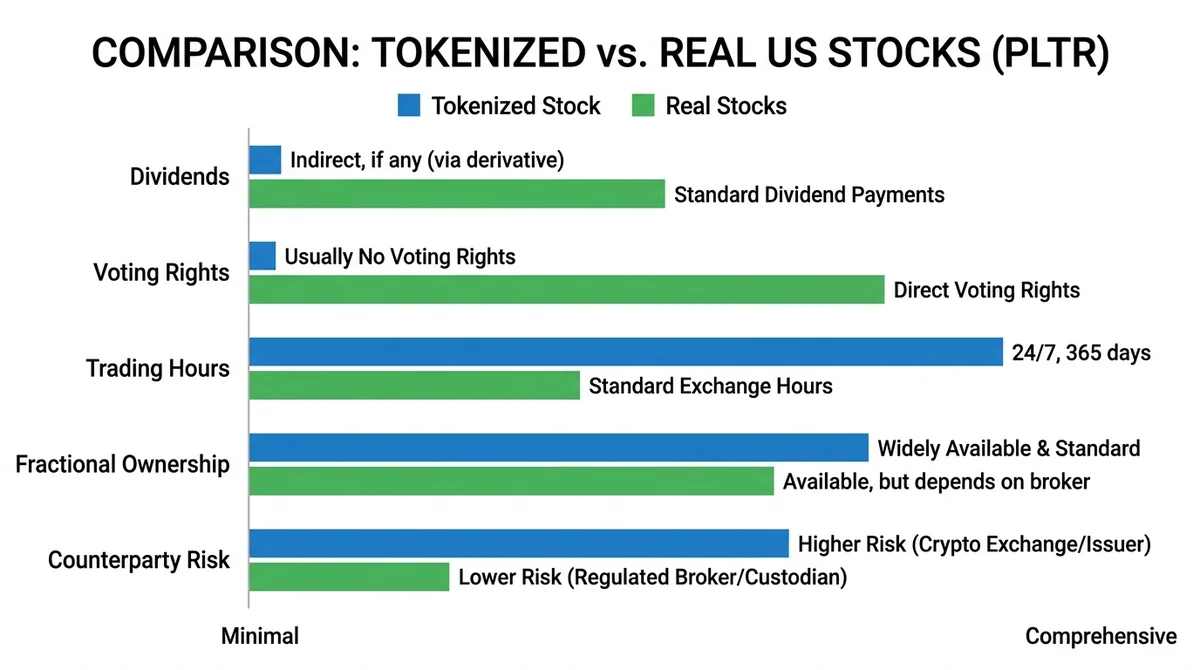
PLTR tokenized stock is usually maintained by issuers collateralizing real stocks or using oracle price feeds. Users can only trade on platforms that support the token, and liquidity may be limited.
#How Do Issuers Ensure the Token Price Follows the US Stock?
Issuers may use collateralized real stocks, algorithmic stabilization, or oracle quotes. If collateral is insufficient or the oracle fails, the token price may deviate from the underlying stock.
#How Do Users Buy, Sell, and Redeem PLTR Tokenized Stock?
Users need to register and complete KYC on an exchange or platform that supports the token, then buy and sell through platform trading pairs. Redemption usually requires applying to the issuer, and the process and timing depend on platform policies.
#What Are the Pros and Cons of PLTR Tokenized Stock?
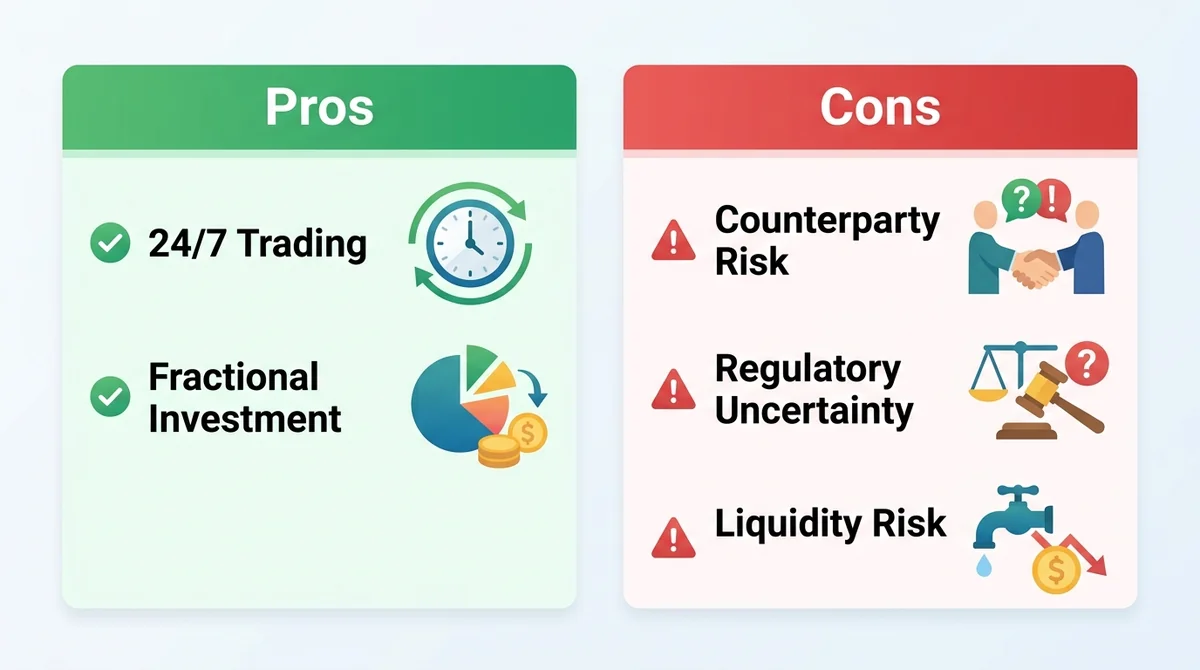
Pros:
- 24/7 Trading: Not restricted by traditional stock market hours; you can buy and sell anytime.
- Fractional Investment: Allows participation in price movements of high-priced US stocks (e.g., Nvidia, TSMC) with smaller amounts.
Cons:
- Counterparty Risk: Issuer default or bankruptcy could lead to token value going to zero.
- Regulatory Uncertainty: Many regulators have unclear stances on tokenized stock compliance, which may lead to delisting or legal risks.
- Liquidity Risk: Some tokens have low trading volume and wide bid-ask spreads, making quick execution difficult.
#Who Is PLTR Tokenized Stock Suitable For?
PLTR tokenized stock is more suitable for users familiar with crypto who want convenient exposure to US stock price movements. Traditional long-term investors may prefer holding real stocks directly to receive dividends and voting rights.
#Crypto Investors Wanting Exposure to US Stock Volatility
For users who already hold crypto assets and don't want to open a traditional brokerage account, PLTR tokenized stock offers a quick way to gain US stock exposure.
#Should Traditional Stock Investors Switch to PLTR Tokenized Stock?
No. Traditional investors typically value shareholder rights, corporate governance, and long-term returns. PLTR tokenized stock cannot provide these and adds unnecessary counterparty and regulatory risks.
#What Risks Should You Watch for When Investing in PLTR Tokenized Stock?
PLTR tokenized stock faces risks such as regulatory policy changes, issuer default, and technical failures. Investors need to fully understand and carefully assess these risks.
#How Does Regulatory Risk Affect PLTR Tokenized Stock?
If regulators classify tokenized stocks as securities, issuers may be forced to cease operations or delist tokens, leaving investors unable to trade or redeem.
#What If the Platform Runs Away or a Technical Failure Occurs?
If the issuer absconds or the smart contract is attacked, investors may lose their entire principal. There is currently no investor protection mechanism for tokenized stocks.
#5-Dimension Scoring
- Liquidity: 5/10. Most tokenized stocks have low trading volume and insufficient depth, with high slippage on large orders.
- Cost: 6/10. Trading fees may be lower than traditional brokers, but there are hidden costs such as premium/discount and redemption fees.
- Risk: 3/10. Counterparty, regulatory, and technical risks are all high, with no insurance or compensation mechanism.
- Return Profile: 7/10. 24/7 trading, supports long and short (on some platforms), but no dividend income.
- Accessibility: 5/10. Only a few platforms support it, subject to regional restrictions, and account opening and fiat on/off-ramp processes can be complex.
Overall Score: 6.0/10.
#3 Pros
- 24/7 Trading: Not restricted by traditional stock market hours; you can buy and sell anytime.
- Fractional Investment: Allows participation in price movements of high-priced US stocks with smaller amounts.
- Convenient Access: For users already holding crypto assets, no additional account opening is needed to gain US stock exposure.
#3 Cons
- No Shareholder Rights: No dividends or voting rights, limiting long-term holding value.
- Counterparty Risk: Issuer default may lead to total loss of principal.
- Regulatory Uncertainty: Policy changes may lead to token delisting or inability to trade.
#Core Attributes Explained
- Fees: Data not disclosed. Fees vary widely by platform; verify independently.
- Valuation: PLTR tokenized stock price theoretically pegs to the underlying stock, but may trade at a premium or discount due to liquidity or sentiment.
- Liquidity: Most tokens have low trading volume and wide bid-ask spreads.
- Rights Attributes: Price exposure only; no voting rights, dividends, or other shareholder rights.
#Risk History
As of now, no large-scale default events have occurred in the tokenized stock space, but some platforms have delisted tokens due to regulatory pressure (e.g., Binance once delisted stock tokens). Specific risk event data is not publicly available.
#Who It's For / Not For
Suitable for:
- Short-term traders familiar with crypto who want convenient exposure to US stock price movements.
- Users who want to invest in high-priced US stocks (e.g., Nvidia, TSMC) with smaller amounts.
Not suitable for:
- Long-term value investors seeking dividends and voting rights.
- Conservative investors with low risk tolerance who prioritize asset safety.
- Traditional stock investors unfamiliar with crypto and blockchain technology.
#FAQ
#What is the difference between PLTR tokenized stock and real US stocks?
PLTR tokenized stock only provides price exposure and does not confer shareholder rights; real US stocks represent company ownership and can provide dividends and voting rights.
#Can PLTR tokenized stock receive dividends?
No. Dividends go to the actual holders of the collateralized stocks or the issuer; token holders cannot receive them.
#On which platforms can PLTR tokenized stock be traded?
Currently, platforms supporting tokenized stocks are limited and may delist at any time due to regulatory reasons. Specific platforms need to be verified independently; data is not publicly available.
#Is investing in PLTR tokenized stock safe?
It carries high counterparty, regulatory, and technical risks, and lacks investor protection mechanisms, so safety is relatively low.
#Is PLTR tokenized stock suitable for long-term investment?
No. Long-term holding cannot receive dividends or voting rights, and faces risks of issuer default and regulatory changes.
This content is based on publicly available data and does not constitute investment or account opening advice. Data as of 2026-09-26; actual conditions may change. For the latest information, please refer to official sources.
FAQ
What is the difference between PLTR tokenized stock and real US stocks?
PLTR tokenized stock only provides price exposure and does not confer shareholder rights; real US stocks represent company ownership and can provide dividends and voting rights.
Can PLTR tokenized stock receive dividends?
No. Dividends go to the actual holders of the collateralized stocks or the issuer; token holders cannot receive them.
On which platforms can PLTR tokenized stock be traded?
Currently, platforms supporting tokenized stocks are limited and may delist at any time due to regulatory reasons. Specific platforms need to be verified independently; data is not publicly available.
Is investing in PLTR tokenized stock safe?
It carries high counterparty, regulatory, and technical risks, and lacks investor protection mechanisms, so safety is relatively low.
Is PLTR tokenized stock suitable for long-term investment?
No. Long-term holding cannot receive dividends or voting rights, and faces risks of issuer default and regulatory changes.
Related Terms
Read the review? Ready to try a small position?
The crypto assets and tokenized US stocks/ETFs covered here are available on MSX — spot and perpetuals.
Quick Start Trading →New here? Registration takes three quick steps.