US Market
The US market is the world's largest stock market. This review covers its size, regulation, tradable assets, key risks, and suitable investors.
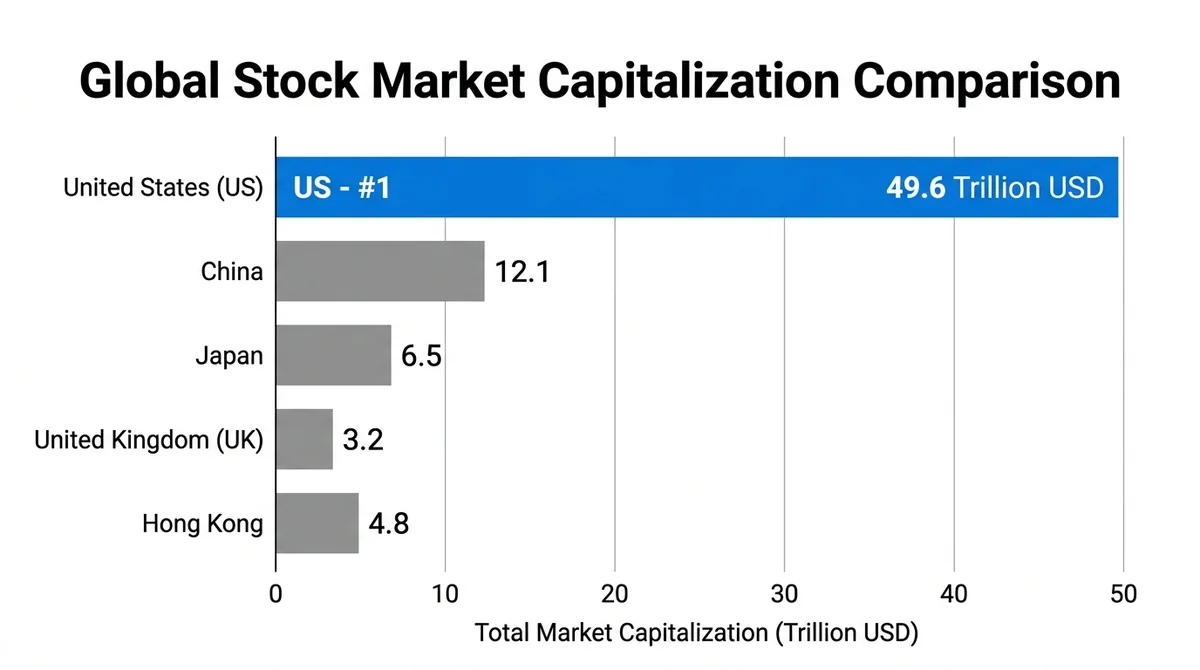
The US market is the world's largest and most liquid stock market, suitable for investors seeking long-term growth and global diversification, but it requires a certain level of risk tolerance. Based on total market capitalization data, the US market ranks first globally.
#What Are the Fundamentals of the US Market?
#What Is the Size and Status of the US Market?
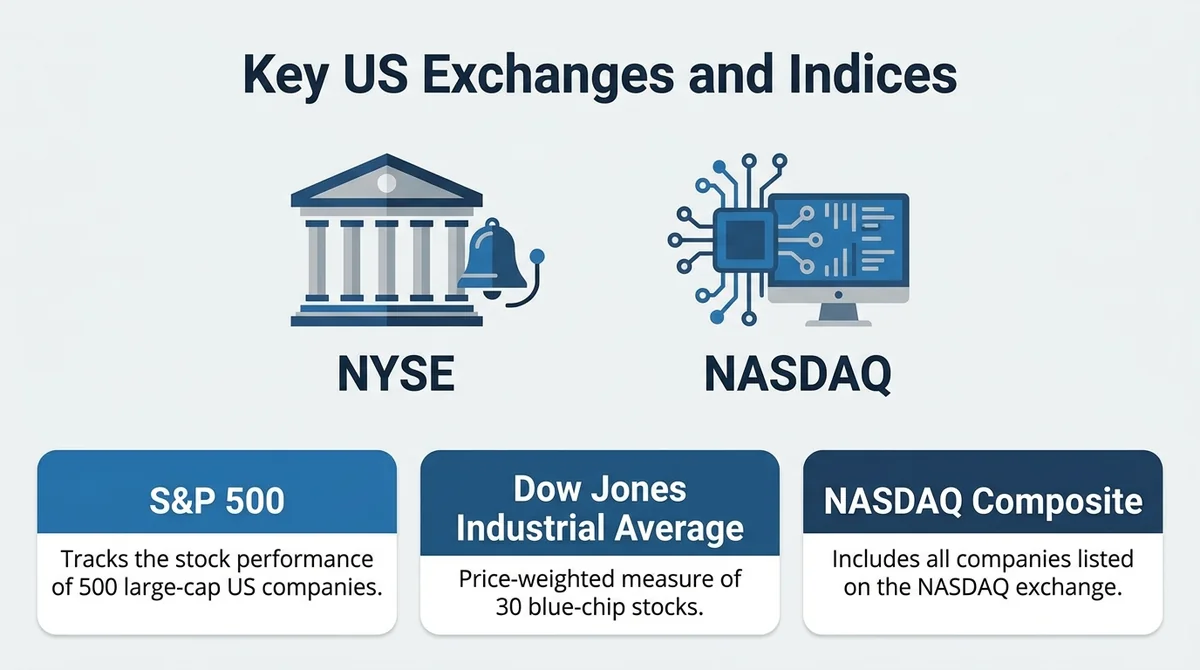
The total market capitalization of the US stock market has long ranked first globally, with the New York Stock Exchange (NYSE) and NASDAQ being the world's primary stock exchanges. The S&P 500, Dow Jones Industrial Average, and NASDAQ Composite are representative market indices, covering large-cap blue chips, tech growth, and various other styles. According to data from the World Federation of Exchanges, the US market ranks among the top globally in both total market capitalization and trading volume.
#What Are the Main Exchanges and Indices in the US Market?
The main exchanges include the New York Stock Exchange (NYSE) and NASDAQ. Core indices include the S&P 500, Dow Jones Industrial Average, and NASDAQ Composite. The constituents of these indices span different sectors and market capitalizations, providing investors with diversified market benchmarks.
#How Is the Regulatory Environment in the US Market?
#What Are the Regulatory Bodies for the US Market?
The Securities and Exchange Commission (SEC) is the primary regulator, responsible for overseeing securities markets, protecting investors, and maintaining fair and orderly markets. In addition, self-regulatory organizations such as the Financial Industry Regulatory Authority (FINRA) also participate in regulation.
#Are Investor Protection Mechanisms Robust?
The US market has stringent disclosure requirements; listed companies must file periodic financial reports and promptly disclose material events. Investor protection mechanisms are relatively robust, including limited coverage provided by the Securities Investor Protection Corporation (SIPC). However, regulatory rules are complex, enforcement is strict, and violations carry high costs.
#What Assets Can Be Traded in the US Market?
#What Are the Characteristics of Stocks, ETFs, Options, and Other Instruments?
The US market offers a wide range of tradable instruments, including common stocks, exchange-traded funds (ETFs), options, and futures. Stocks represent ownership in a company, ETFs provide exposure to a basket of assets, and options and futures are used for hedging or speculation.
#Are There Innovative Products Like Tokenized Stocks?
Some platforms offer tokenized stock products, but tokenized stocks are not real US stocks; they only represent price exposure and do not confer shareholder rights. Investors need to distinguish the legal differences between tokenized stocks and real US stocks.
#What Are the Main Risks of Investing in the US Market?
#How Do Exchange Rate Fluctuations Affect Returns?
For non-USD investors, fluctuations in the US dollar exchange rate affect investment returns measured in their home currency. A stronger dollar can enhance returns, while a weaker dollar can erode them.
#How Do Time Zone Differences and Trading Hours Affect Investors?
US market trading hours have limited overlap with Asian time zones, so investors may need to operate during non-standard hours or use limit orders to manage overnight risk.
#Who Is Suitable for Investing in the US Market?
#Long-Term Investors or Short-Term Traders?
The US market is suitable for long-term investors and those seeking global diversification, as its depth and breadth favor long-term holding. Short-term traders can also participate, but they should be aware of trading costs and time zone effects.
#How to Make Decisions Based on Your Own Situation?
Investors should decide whether to allocate to the US market based on their risk tolerance, investment horizon, and ability to manage currency risk. Investors who cannot tolerate currency and time zone risks may not be suitable for direct investment.
#Key Attributes Explained
- Market Size: The world's largest stock market, leading total market capitalization, high liquidity.
- Regulation: Strict SEC oversight, high disclosure requirements, relatively robust investor protection mechanisms.
- Tradable Instruments: Stocks, ETFs, options, futures, etc., a rich variety of instruments.
- Risks: Currency risk, time zone impact, market volatility risk.
#Suitable / Not Suitable For
Suitable for: Investors seeking long-term growth, global diversification, and able to tolerate currency and time zone risks.
Not suitable for: Investors who cannot tolerate currency fluctuations, find it difficult to adapt to time differences, or have low risk tolerance.
#US Market Key Attributes Quick Reference Table
| Attribute | Characteristics |
|---|---|
| Market Size | World's largest stock market, leading total market capitalization, high liquidity |
| Regulation | Strict SEC oversight, high disclosure requirements, relatively robust investor protection mechanisms |
| Tradable Instruments | Stocks, ETFs, options, futures, etc., a rich variety of instruments |
| Risks | Currency risk, time zone impact, market volatility risk |
| Suitable Investors | Those seeking long-term growth, global diversification, and able to tolerate currency and time zone risks |
#FAQ
#Is the US market the largest stock market in the world?
Yes, the total market capitalization of the US stock market has long ranked first globally, with the NYSE and NASDAQ being the world's primary exchanges.
#Do I need to open a US brokerage account to invest in the US market?
You can open an account through a US broker or an international broker that offers US stock trading, depending on your location and service provider.
#What is the difference between tokenized stocks and real US stocks?
Tokenized stocks only represent price exposure and do not confer shareholder rights; real US stocks represent company ownership and carry voting rights and dividends.
#Who regulates the US market?
The primary regulator is the Securities and Exchange Commission (SEC), along with self-regulatory organizations such as FINRA.
#What additional costs do non-US investors face when investing in the US market?
There may be currency conversion costs, cross-border transfer fees, and potential tax withholding, depending on the investor's home country and broker policies.
#Who is the US market suitable for?
The US market is suitable for investors seeking long-term growth and able to tolerate currency and time zone risks. Its core advantages are the world's largest liquidity and strict regulation, but non-USD investors need to hedge against currency fluctuations.
#What are the risks of investing in the US market?
The main risks include currency fluctuations, time zone impact, and market volatility. Non-USD investors should pay attention to currency risk, and investors in Asian time zones need to adapt to trading hour differences.
This content is compiled from publicly available data and does not constitute investment or account opening advice. Data as of 2026-09-19 and may change. Please refer to official sources such as the Securities and Exchange Commission (SEC) for the latest information.
View US market related investment tool comparisons on MSX Compare.
FAQ
Is the US market the largest stock market in the world?
Yes, the total market capitalization of the US stock market has long ranked first globally, with the NYSE and NASDAQ being the world's primary exchanges.
Do I need to open a US brokerage account to invest in the US market?
You can open an account through a US broker or an international broker that offers US stock trading, depending on your location and service provider.
What is the difference between tokenized stocks and real US stocks?
Tokenized stocks only represent price exposure and do not confer shareholder rights; real US stocks represent company ownership and carry voting rights and dividends.
Who regulates the US market?
The primary regulator is the Securities and Exchange Commission (SEC), along with self-regulatory organizations such as FINRA.
What additional costs do non-US investors face when investing in the US market?
There may be currency conversion costs, cross-border transfer fees, and potential tax withholding, depending on the investor's home country and broker policies.
Related Terms
Read the review? Ready to try a small position?
The crypto assets and tokenized US stocks/ETFs covered here are available on MSX — spot and perpetuals.
Quick Start Trading →New here? Registration takes three quick steps.