XAUT
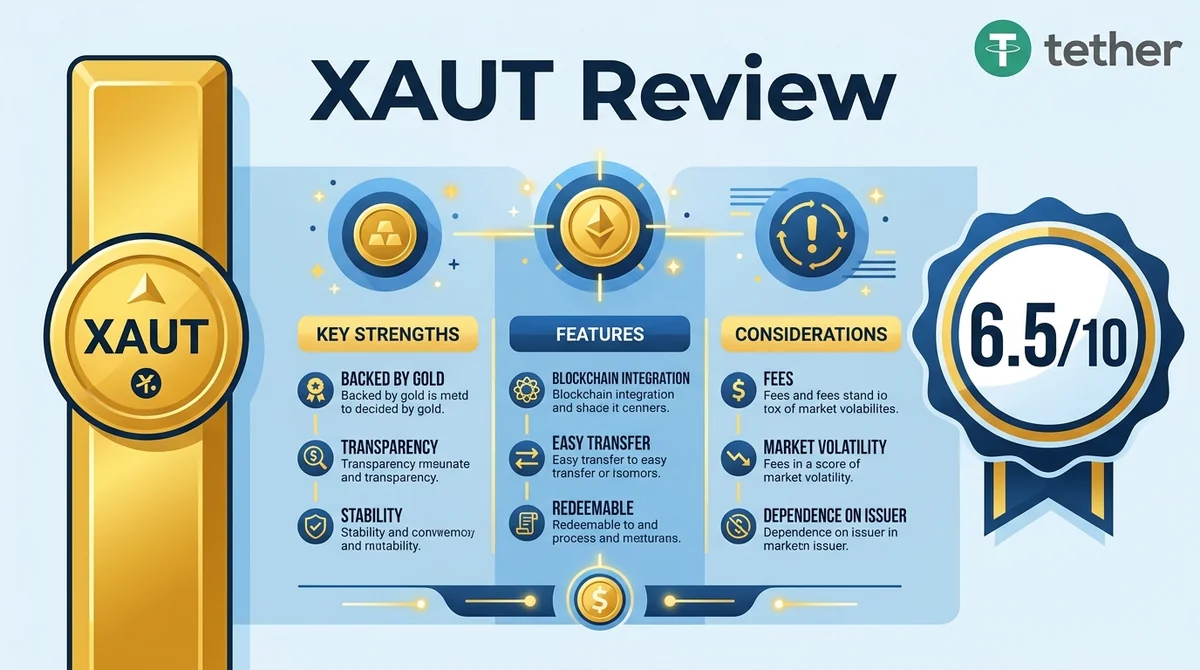
XAUT is Tether's tokenized commodities, 1 token = 1 troy oz of London Good Delivery gold. Explore custody, markets, fees, risks, and who should hold it.
Data as of 2026-10-09
Verdict: XAUT scores 6.5/10 overall. It suits crypto-native users who want gold exposure in their wallets, but not conservative investors seeking strict regulatory protection and physical redemption. Its core value is providing on-chain gold price exposure for crypto natives, but holders bear Tether's credit risk, and it lags traditional gold ETFs in investor protection and regulatory maturity.
#Core Attributes
Custody Mechanism: XAUT is issued by Tether, with gold reserves stored in Swiss vaults. Each XAUT token represents 1 troy ounce of London Good Delivery gold. Users can verify reserve attestations and audit reports on Tether's official website.
Trading Markets: XAUT supports Ethereum and Tron networks and is listed on exchanges like Bitfinex and OKX. Specific liquidity data is not publicly disclosed; users should check real-time order books and bid-ask spreads.
Fee Structure: Minting and redemption fees for XAUT are not publicly disclosed. On-chain transfer costs depend on the network: Ethereum gas fees are typically higher, while Tron network fees are lower.
Risk Factors: The main risk stems from Tether's solvency and compliance. If Tether faces credit issues, XAUT redemptions could be hindered. Additionally, the regulatory framework for tokenized commodities is still evolving, which may affect its long-term tradability.
#Who Should / Shouldn't Hold
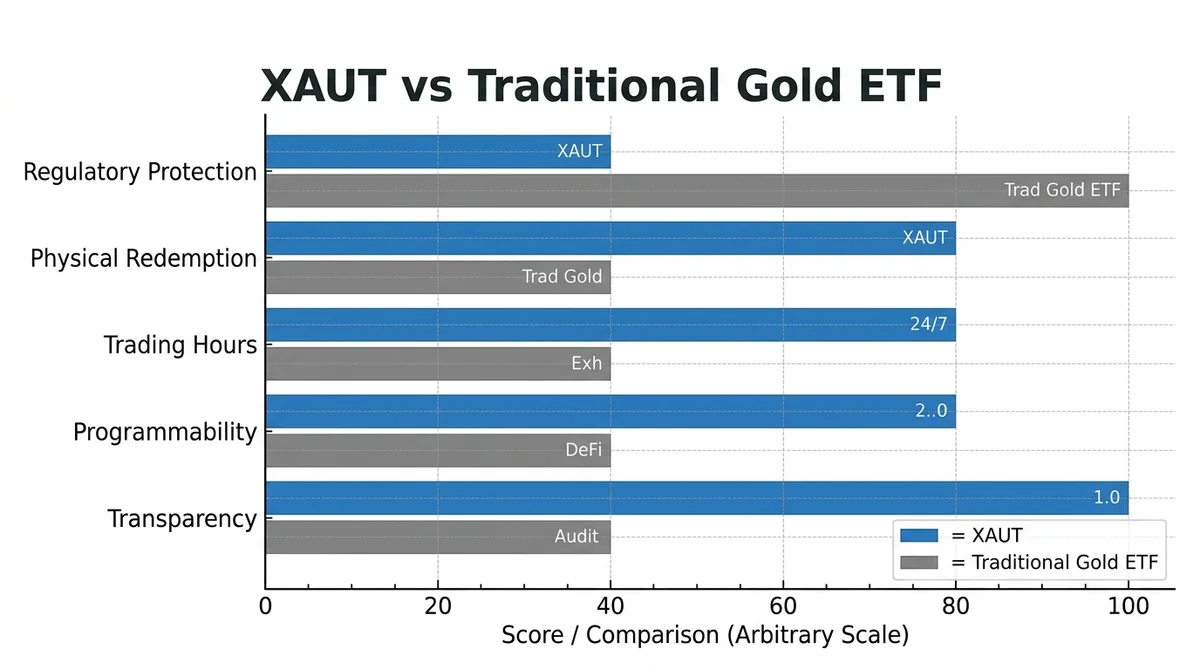
Who should hold:
- Crypto-native users who want gold price exposure held in their wallets.
- Users needing programmable on-chain gold assets (e.g., for DeFi protocols).
- Short-term traders wanting fast gold price trading without physical delivery.
Who shouldn't hold:
- Conservative investors seeking strict regulatory protection and physical redemption rights.
- Users sensitive to Tether's credit risk.
- Long-term holders unwilling to bear on-chain transfer costs and smart contract risks.
#XAUT vs. Traditional Gold ETFs
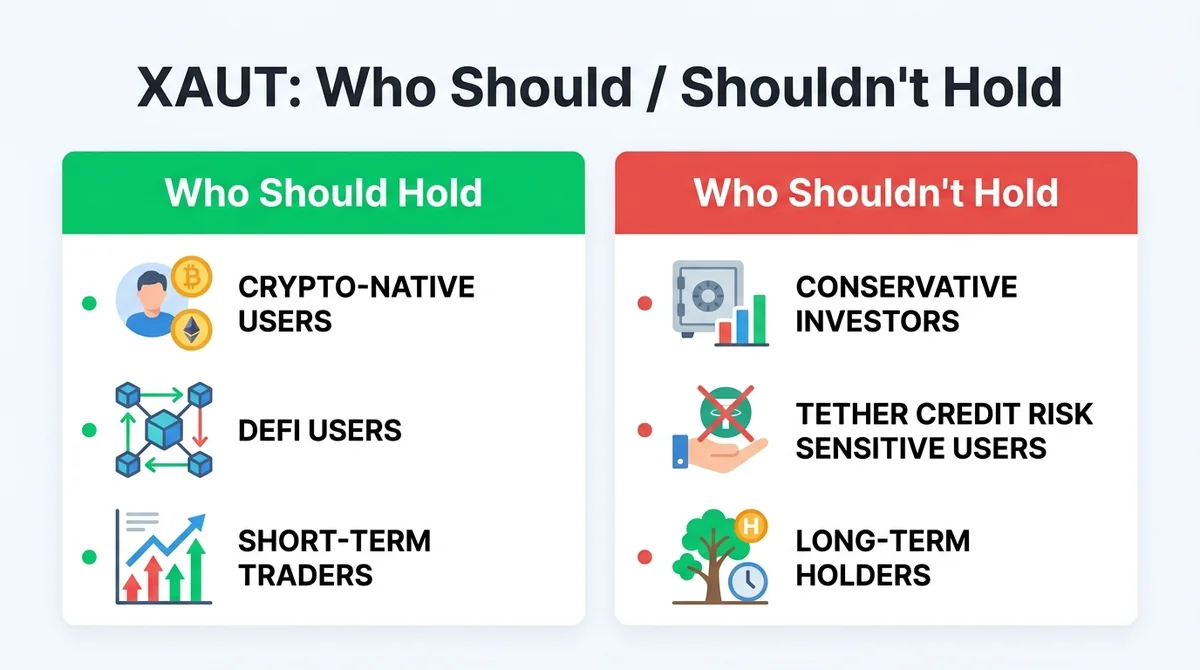
| Dimension | XAUT | Traditional Gold ETF |
|---|---|---|
| Regulatory Protection | Weaker, framework still evolving | Stronger, subject to strict securities regulation |
| Physical Redemption | Typically not supported | Some support physical redemption |
| Trading Hours | 24/7 | Limited to exchange trading hours |
| Programmability | Supports smart contracts and DeFi | Not supported |
| Transparency | Reserve attestations available, but audit independence and frequency disputed | Audits relatively standardized |
#Risk History
Tether has faced regulatory scrutiny over reserve transparency in the past, but XAUT has not experienced major security incidents since issuance. However, disputes remain over the independence and frequency of its reserve audits, and users should assess Tether's creditworthiness themselves.
#FAQ
1. How can XAUT's gold reserves be verified? Users can check XAUT's reserve attestations and audit reports on Tether's official website, but must judge the independence and frequency of audits themselves.
2. On which blockchains can XAUT be transferred? XAUT supports Ethereum and Tron networks. Users can choose the network with lower gas fees for transfers.
3. How much does it cost to mint and redeem XAUT? Minting and redemption fees are not publicly disclosed. Contact the issuer or exchange for specific fees.
4. How does XAUT differ from traditional gold ETFs? XAUT offers on-chain programmability and 24/7 trading, but lacks the regulatory protection and physical redemption mechanisms of traditional ETFs.
5. Is XAUT suitable for long-term holding? Long-term holding requires monitoring Tether's custody fee and regulatory changes, as well as ongoing on-chain transfer costs.
6. Which is better, XAUT or PAXG? Both are tokenized commodities, but issuers and reserve custody differ. XAUT is issued by Tether with reserves in Switzerland; PAXG is issued by Paxos and regulated by the New York State Department of Financial Services. Compare credit risk, regulation, and liquidity when choosing.
7. Is XAUT safe? XAUT's safety mainly depends on Tether's credit and smart contract risks. No major security incidents have occurred since issuance, but disputes over Tether's reserve transparency and audit independence require careful assessment.
#Disclaimer
This content is compiled from public data and does not constitute investment or open account advice. Data as of 2026-10-09; actual conditions may change. For more information, see Tether's official sources.
FAQ
How can XAUT's gold reserves be verified?
Users can check XAUT's reserve attestations and audit reports on Tether's official website, but must judge the independence and frequency of audits themselves.
On which blockchains can XAUT be transferred?
XAUT supports Ethereum and Tron networks. Users can choose the network with lower gas fees for transfers.
How much does it cost to mint and redeem XAUT?
Minting and redemption fees are not publicly disclosed. Contact the issuer or exchange for specific fees.
How does XAUT differ from traditional gold ETFs?
XAUT offers on-chain programmability and 24/7 trading, but lacks the regulatory protection and physical redemption mechanisms of traditional ETFs.
Is XAUT suitable for long-term holding?
Long-term holding requires monitoring Tether's custody fee and regulatory changes, as well as ongoing on-chain transfer costs.
Related Terms
Read the review? Ready to try a small position?
The crypto assets and tokenized US stocks/ETFs covered here are available on MSX — spot and perpetuals.
Quick Start Trading →New here? Registration takes three quick steps.