How to Redeem/Sell RToken: Protocol Redemption vs Secondary Market Sale (2026)
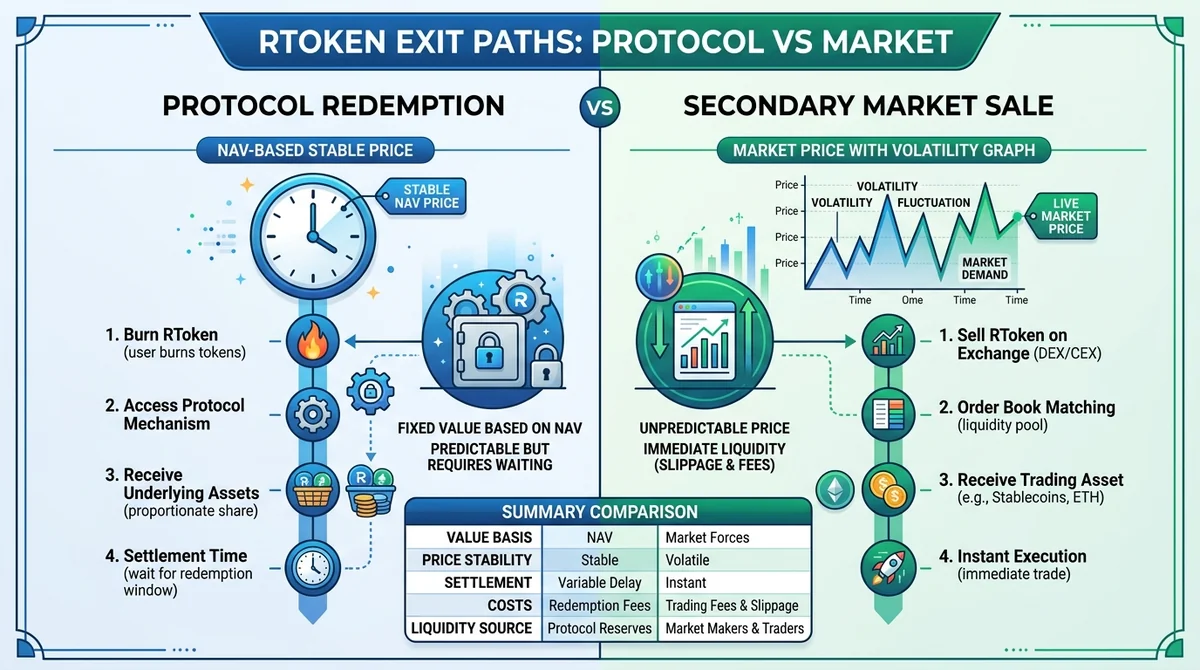
Protocol redemption pays at NAV, stable but may delay; secondary market sale executes at market price, fast but subject to volatility. Compare price, cost, risk, and process.
Protocol redemption and secondary market sale are two different exit paths: the former pays at net asset value (NAV), stable but may have delays or limits; the latter executes at market price, fast but subject to price volatility and slippage. The choice depends on your redemption amount, time requirements, and market conditions.
#What's the difference between protocol redemption and secondary market sale?
Protocol redemption pays at net asset value (NAV), providing price stability; secondary market sale executes at market price, subject to price fluctuations. Protocol redemption may have delays or limits, while secondary market sale offers high immediacy. Protocol redemption may involve on-chain transaction fees, while secondary market sale has trading fees and slippage.
#How is the redemption price determined?
The protocol redemption price is determined by the protocol's net asset value, typically equal to the NAV of the underlying asset portfolio, making it stable and predictable. The secondary market sale price is determined by order book matching and may be higher or lower than NAV, depending on market supply, demand, and liquidity.
#What are the differences in settlement time and process?
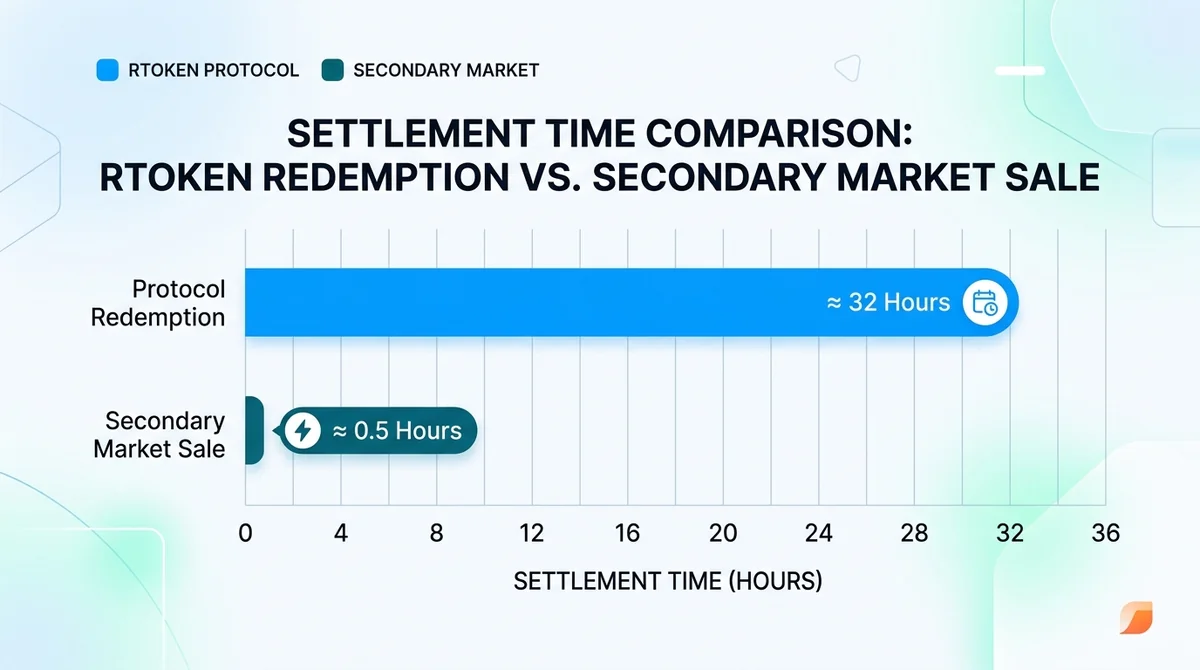
Protocol redemption usually requires waiting for protocol processing, which may involve delays, limits, or uncertain settlement times due to on-chain congestion. Secondary market sale provides funds immediately after order execution (or after withdrawal confirmation), and is faster when liquidity is good.
#What costs are involved in each method?
Protocol redemption may involve on-chain transaction fees (gas fees), but usually no trading fees; secondary market sale requires paying exchange trading fees, and may incur slippage costs due to insufficient liquidity. Specific fee rates are not publicly disclosed.
#When should you choose protocol redemption?
For large redemptions or during severe market volatility, protocol redemption provides certainty of NAV settlement, avoiding secondary market slippage and discounts.
#Which method is better for large redemptions?
For large redemptions, protocol redemption is preferred to avoid slippage caused by insufficient secondary market depth. Protocol redemption pays at NAV, reducing the impact of large sell-offs on market prices.
#How to protect principal during severe market volatility?
During market panic, protocol redemption can secure a stable NAV, reducing discount losses. Secondary market sale during panic may face insufficient depth and significant discounts.
Protocol redemption is suitable for long-term holders or users who do not need immediate liquidity.
#When should you choose secondary market sale?
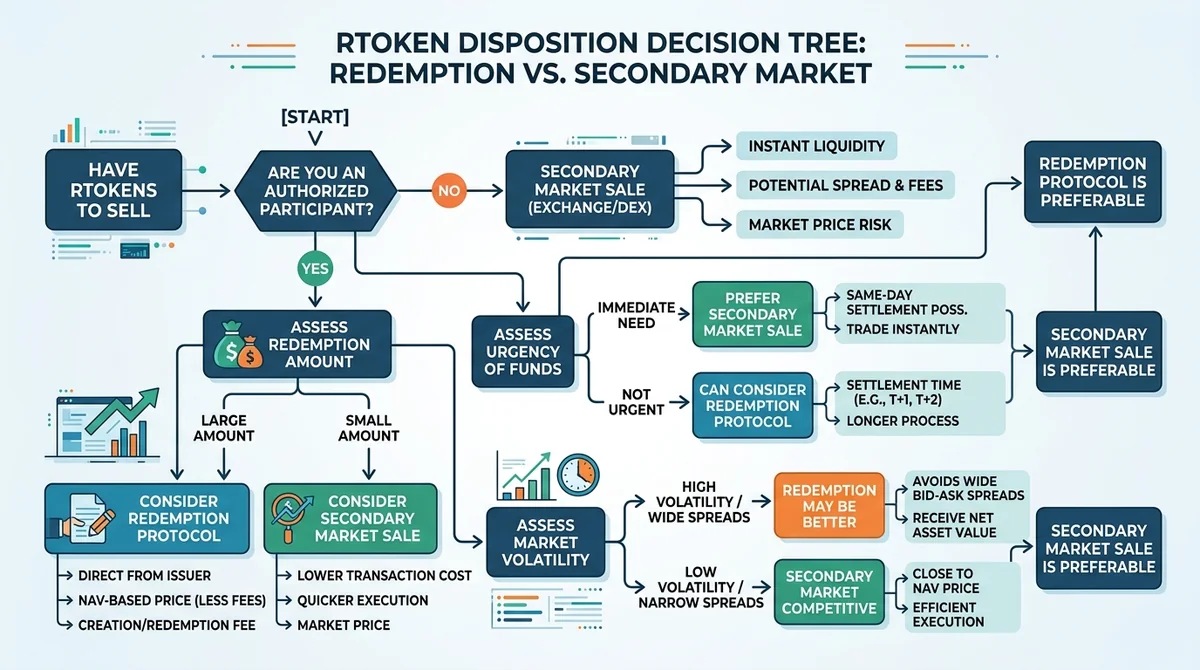
When you need quick liquidation or for small redemptions, secondary market sale provides immediate liquidity and flexible price control.
#What to do when you need quick liquidation?
Secondary market sale executes instantly, suitable for urgent funding needs. Trading pairs with sufficient liquidity allow quick exits.
#Which method is more cost-effective for small redemptions?
For small redemptions, secondary market trading fees may be a lower proportion because on-chain gas fees may be higher than trading fees. Secondary market sale allows setting limit orders to capture better prices.
#What are the risks of protocol redemption and secondary market sale?
Protocol redemption risks lie in protocol restrictions and smart contract security; secondary market sale risks lie in liquidity, slippage, and price volatility.
#What problems might protocol redemption encounter?
Protocol redemption may be delayed due to protocol suspension, limits, or on-chain congestion. Protocol redemption relies on smart contract security, with risks of contract vulnerabilities.
#What hidden risks does secondary market sale have?
Secondary market sale may face insufficient liquidity, slippage, and price discounts. Secondary market relies on exchange liquidity; exchange failures or manipulation may affect execution.
#What is the operational process for RToken redemption and sale?
Protocol redemption is done through the protocol interface at NAV; secondary market sale is done by placing orders on exchanges. The two processes differ and each has its own fees.
#Specific steps for protocol redemption?
Connect wallet → go to protocol redemption page → enter amount → confirm transaction → wait for settlement. Note gas fees and network confirmation time.
#Specific steps for secondary market sale?
Connect wallet → go to exchange → place sell order → withdraw after execution. Note trading fees and network confirmation time.
#Scenario Recommendations
- Suitable for protocol redemption: large redemptions, severe market volatility, long-term holders, no need for immediate liquidity.
- Suitable for secondary market sale: small redemptions, urgent funding needs, desire to capture better prices, need for immediate liquidity.
#FAQ
Q1: Which is cheaper, protocol redemption or secondary market sale? A1: It depends on the amount and market conditions. For small redemptions, secondary market trading fees may be a lower proportion; for large redemptions, protocol redemption can avoid slippage and may have lower overall cost. Specific fee rates are not publicly disclosed.
Q2: Does protocol redemption have minimum or maximum limits? A2: Limits may exist, set by the protocol; data not publicly disclosed.
Q3: Will secondary market sale result in a discount? A3: It may be at a discount or premium, depending on market supply, demand, and liquidity. Discount risk is higher when liquidity is insufficient.
Q4: How long does protocol redemption take? A4: It may be affected by protocol processing and on-chain congestion; timing is uncertain.
Q5: Can both methods be used simultaneously? A5: Yes, you can flexibly choose based on amount and market conditions.
This content is compiled from public data and does not constitute investment or open account advice. Data as of 2026-10-01; actual conditions may change. Check official sources for the latest information.
FAQ
Which is cheaper, protocol redemption or secondary market sale?
It depends on the amount and market conditions. For small redemptions, secondary market trading fees may be a lower proportion; for large redemptions, protocol redemption can avoid slippage and may have lower overall cost. Specific fee rates are not publicly disclosed.
Does protocol redemption have minimum or maximum limits?
Limits may exist, set by the protocol; data not publicly disclosed.
Will secondary market sale result in a discount?
It may be at a discount or premium, depending on market supply, demand, and liquidity. Discount risk is higher when liquidity is insufficient.
How long does protocol redemption take?
It may be affected by protocol processing and on-chain congestion; timing is uncertain.
Can both methods be used simultaneously?
Yes, you can flexibly choose based on amount and market conditions.
Related Terms
Done comparing? Ready to place your first trade?
The crypto assets, tokenized US stocks and ETFs you just compared are all tradable on MSX — spot or perpetuals.
Quick Start Trading →New here? Registration takes three quick steps.