RWA
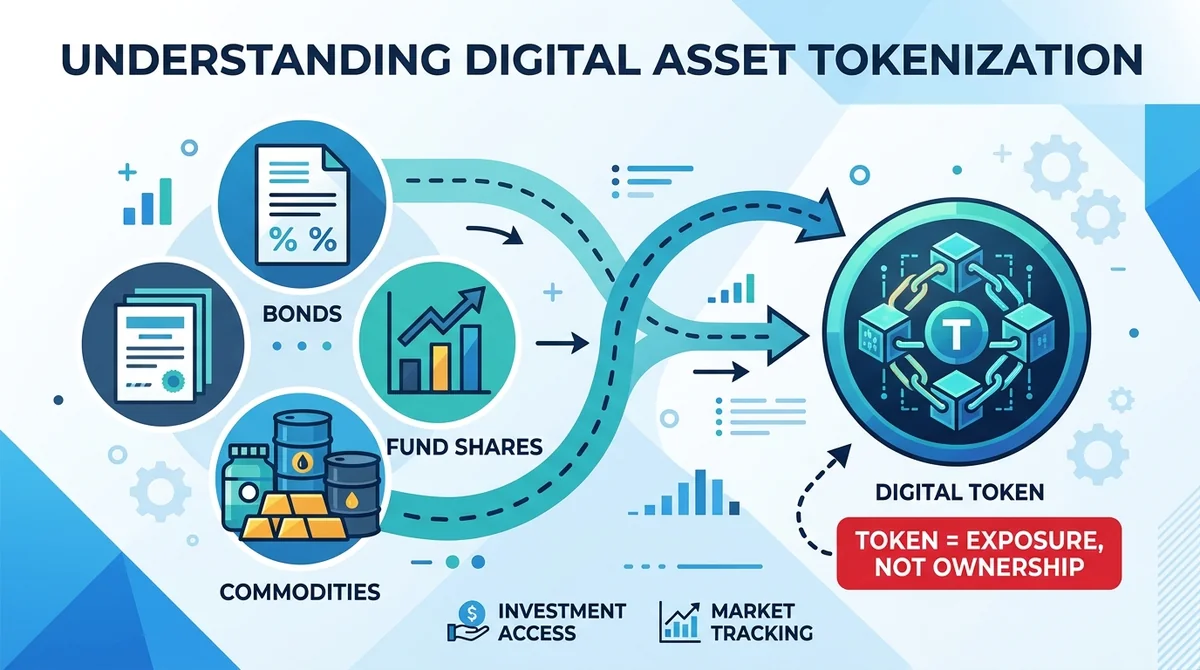
RWA tokenized assets news: real-world assets mapped on-chain as tokens offering price exposure, not the asset itself. Mechanics, pros, cons, and 4 evaluation dimensions.
Conclusion: RWA tokenized assets news refers to mapping real-world assets into on-chain tokens; the token provides price exposure, not the underlying asset itself. When evaluating, first look at custody fee and issuer transparency, then at liquidity and redemption terms.
#What Exactly Are RWA Tokenized Assets?
RWA (Real World Assets) tokenization refers to taking off-chain real assets—bonds, fund shares, commodities, real estate income rights, and so on—and mapping them into on-chain tokens through an issuer's custody fee arrangement. What users hold on-chain is a token, and the token corresponds to a claim arrangement set up by the issuer and custodian.
#What Is the Relationship Between the Token and the Underlying Real Asset?
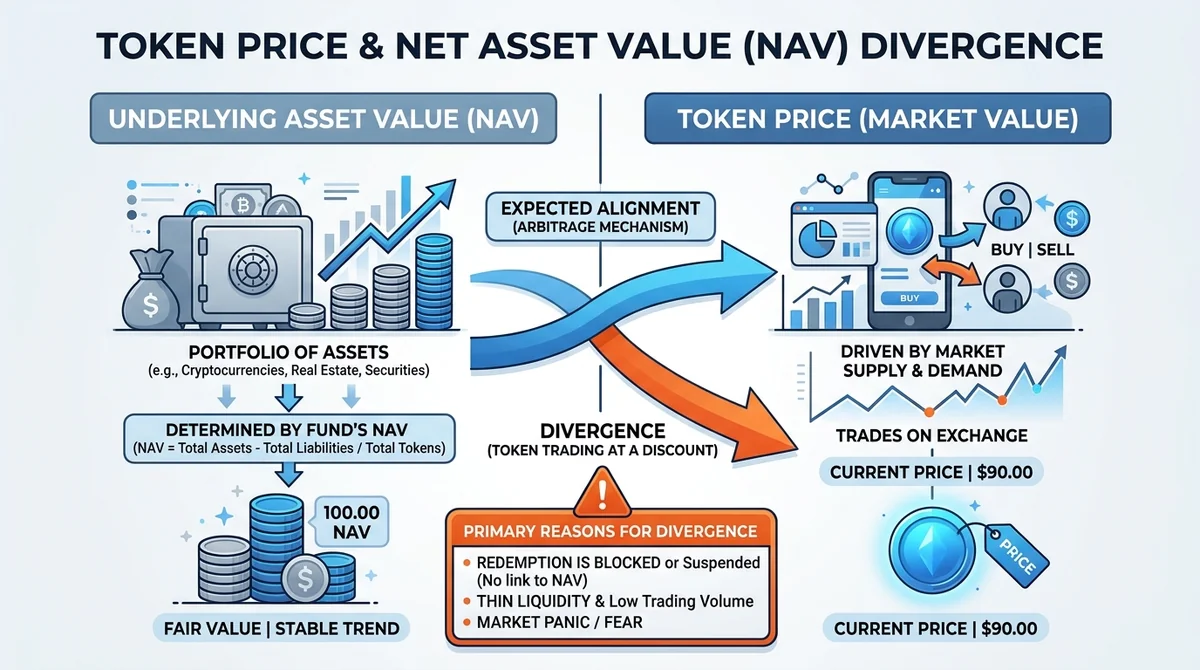
The two have a "mapping" relationship, not an "equivalence" relationship. The value of the underlying asset is the cause; the token price is the effect. The token price typically fluctuates around the underlying asset's net asset value, but this anchoring depends on market-making depth and whether the redemption channel is smooth. When redemption is blocked or liquidity is thin, the token price can deviate significantly from the underlying asset value.
Therefore, when judging an RWA project, you need to distinguish two things: how good the underlying asset itself is, and whether the mapping mechanism at the token layer is reliable. The former determines long-term value; the latter determines whether you can exit when needed.
#How Does the Scope of RWA Differ from Tokenized Stocks?
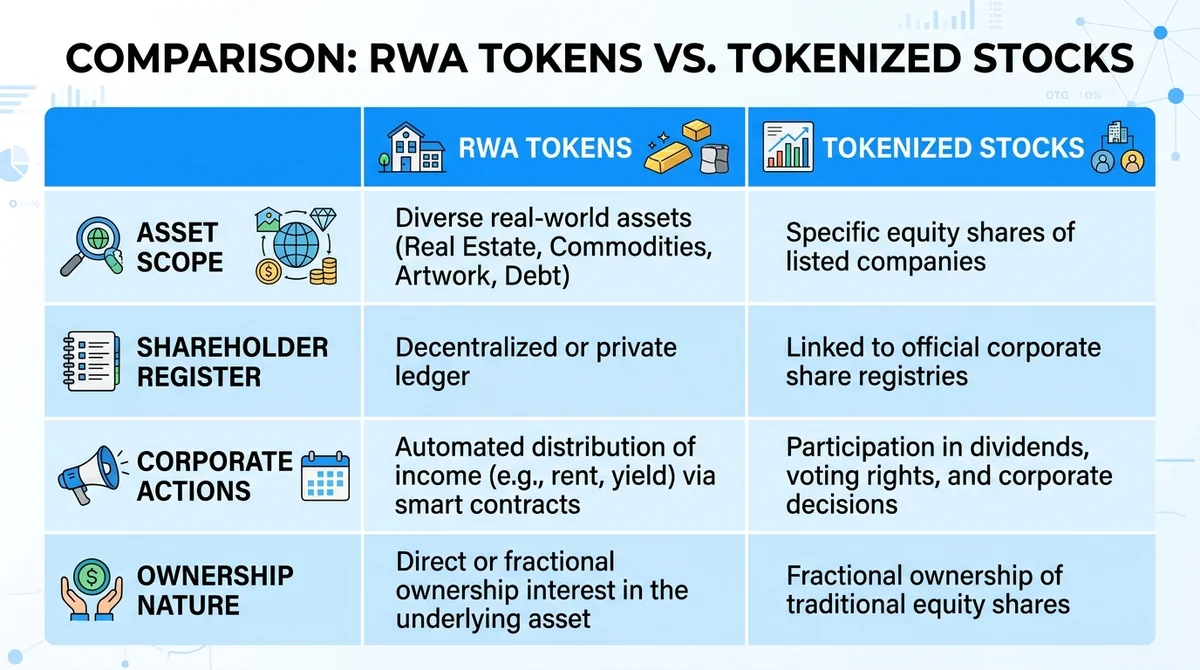
Tokenized stocks are likewise only price exposure and are not equivalent to real US stocks. Holding tokenized stocks generally does not mean being entered into the shareholder register; the handling of corporate actions (dividends, voting, stock splits) depends on the issuer's terms. RWA has a broader scope, covering non-equity assets such as bonds, commodities, and funds, but the common point is: on-chain tokens are exposure instruments, not the asset ownership certificate itself.
If you need to further distinguish direct shareholding from tokenized exposure, refer to the site's breakdown of ownership, taxation, and platform risk.
#How Do RWA Tokens Work?
#How Are Underlying Assets Mapped On-Chain?
The typical process has three layers: off-chain, the custodian holds the underlying asset; the issuer mints a corresponding number of tokens on-chain based on this; users complete subscriptions through a compliant entry point. The correspondence between off-chain custody fee and on-chain issuance is the core of the entire structure's credibility.
#What Anchors the Token Price?
Price anchoring depends on two conditions: the underlying asset value provides a reference benchmark, and market-making liquidity provides an executable price. Both are indispensable. With only a NAV reference but no market-making depth, the token will show a wide bid-ask spread; with only liquidity but no clear NAV disclosure, the price lacks a reference.
#Who Does Redemption and Settlement Depend On?
Redemption and settlement depend on the issuer and custodian, not on automatic completion by on-chain smart contracts. This means redemption timing, minimum redemption size, fees, and eligibility restrictions all fall within the issuer's terms. The specific redemption terms and settlement timing of most projects are data not disclosed and need to be verified against the issuer's official sources.
#What Are the Pros and Cons of RWA Tokenized Assets?
#What Benefits Do Accessibility and Liquidity Bring?
The advantages are on-chain accessibility, divisibility, and high settlement efficiency. Asset classes that traditionally required a higher threshold can, through tokenization, be split into smaller units and transferred on-chain in near real time. For users across jurisdictions, on-chain entry points reduce some intermediary steps.
#Where Do Custody Fee and Compliance Risks Show Up?
The disadvantages are custody fee dependence, compliance uncertainty, and potentially insufficient liquidity. Users effectively face the issuer's credit risk and the custodian's operational risk, neither of which is visible on-chain. On the compliance side, how jurisdictions characterize tokenized assets is still evolving, and eligibility and tax treatment differ.
#Can the Token Price Decouple from the Underlying Asset?
Yes. In extreme market conditions, the token price can deviate from the underlying asset value due to market makers pulling quotes, redemption channel congestion, on-chain liquidation cascades, and so on. The magnitude and duration of the decoupling depend on whether the redemption mechanism can recover. This should be included as a stress scenario when evaluating any RWA instrument.
#Who Are RWA Tokenized Assets Suitable For?
RWA tokenized assets news are suitable for users who understand the logic of tokenization and can accept that exposure is not fully equivalent to the underlying asset; they are not suitable for people who treat them as holding the real asset.
#What Type of Users Are Better Suited to Focus on RWA?
- Users who already understand the difference between spot and derivatives and can distinguish "holding an asset" from "holding exposure";
- Users who need on-chain settlement efficiency and can independently verify issuer and custodian disclosures;
- Users who treat RWA as a small portion of exposure in a portfolio rather than a core holding.
#Which Users Should Avoid It?
- People who equate RWA tokens with real bonds, real stocks, or physical commodities;
- Users who need clear legal ownership and shareholder status;
- Users with low risk tolerance who cannot withstand redemption delays or price decoupling.
#What Dimensions Matter Most When Evaluating RWA Tokenized Assets?
When evaluating RWA tokenized assets, focus on custody fee and issuer transparency, liquidity and redemption terms, compliance disclosure, and underlying asset information.
#How Do You Judge Custody Fee and Issuer Transparency?
Look at three things: whether the custodian is an independent third party, whether reserves are disclosed regularly, and whether the issuer publicly discloses entity information and audit arrangements. If this information is missing, treat it as data not disclosed and do not fill the gap with speculation.
#How Do You Compare Liquidity and Redemption Terms?
For liquidity, look at on-chain depth and bid-ask spread; for redemption terms, look at minimum size, timing, fees, and eligibility restrictions. Together they determine "whether you can exit at a price close to NAV when needed." Comparing only on-chain volume while ignoring redemption terms will overstate actual exitability.
#What Information Should Compliance Disclosure Cover?
Look at which jurisdictions the token is permitted to be sold in, which type of investors it targets, and whether there are clear transfer restrictions. The compliance scope directly determines the token's availability and potential liquidity ceiling.
#Four-Dimension Quick Reference
| Dimension | What to Look At | What to Do If Missing |
|---|---|---|
| Custody fee and issuer transparency | Custodian independence, reserve disclosure, audit arrangements | Mark as data not disclosed |
| Liquidity and redemption terms | On-chain depth, spread, redemption timing and fees | Mark as data not disclosed |
| Compliance disclosure | Jurisdiction eligibility, investor qualification, transfer restrictions | Mark as data not disclosed |
| Underlying asset information | Asset type, valuation method, NAV disclosure frequency | Mark as data not disclosed |
#Risk Warning and Disclaimer
RWA tokenized assets news carry custody fee, compliance, liquidity, and decoupling risks. Custody fee risk comes from the credit and operations of the issuer and custodian; compliance risk comes from jurisdictional characterization and eligibility changes; liquidity risk comes from insufficient market-making depth; decoupling risk comes from blocked redemption channels. This article only analyzes mechanics and dimensions and does not provide price forecasts.
This content is compiled from public data and does not constitute investment or open account advice. This article does not cite specific project data; for actual terms and disclosures, refer to the issuer's official sources.
FAQ
Are RWA tokens the same thing as the underlying real asset?
No. RWA tokens are a price exposure mapping of the underlying asset; the token price is the effect and the underlying asset value is the cause. Holding the token usually does not equal holding legal ownership of the underlying asset, and redemption and settlement still depend on the issuer and custodian.
Can the RWA token price deviate from the underlying asset value?
Yes. When market makers pull quotes, redemption channels are congested, or on-chain liquidation cascades occur, the token price can deviate from the underlying asset's NAV; the magnitude and duration depend on whether the redemption mechanism can recover.
What should you look at first when evaluating an RWA project?
First look at custody fee and issuer transparency, including whether the custodian is independent, whether reserves are disclosed regularly, and whether there are audit arrangements; then look at liquidity and redemption terms. When information is missing, mark it as data not disclosed and do not fill the gap with speculation.
What is the scope difference between RWA and tokenized stocks?
RWA covers the tokenization of non-equity assets such as bonds, commodities, and funds; tokenized stocks are one category within it that targets stock price exposure. The common point is that both provide price exposure and are not equivalent to the real asset or shareholder status.
Who should not participate in RWA tokenized assets?
People who treat RWA as holding the real asset, those who need clear legal ownership or shareholder status, and those with low risk tolerance who cannot withstand redemption delays and price decoupling should all avoid it.
Read the review? Ready to try a small position?
The crypto assets and tokenized US stocks/ETFs covered here are available on MSX — spot and perpetuals.
Quick Start Trading →New here? Registration takes three quick steps.