Intel vs TSMC: 2026 Advanced Process Yield and Customer Structure Comparison
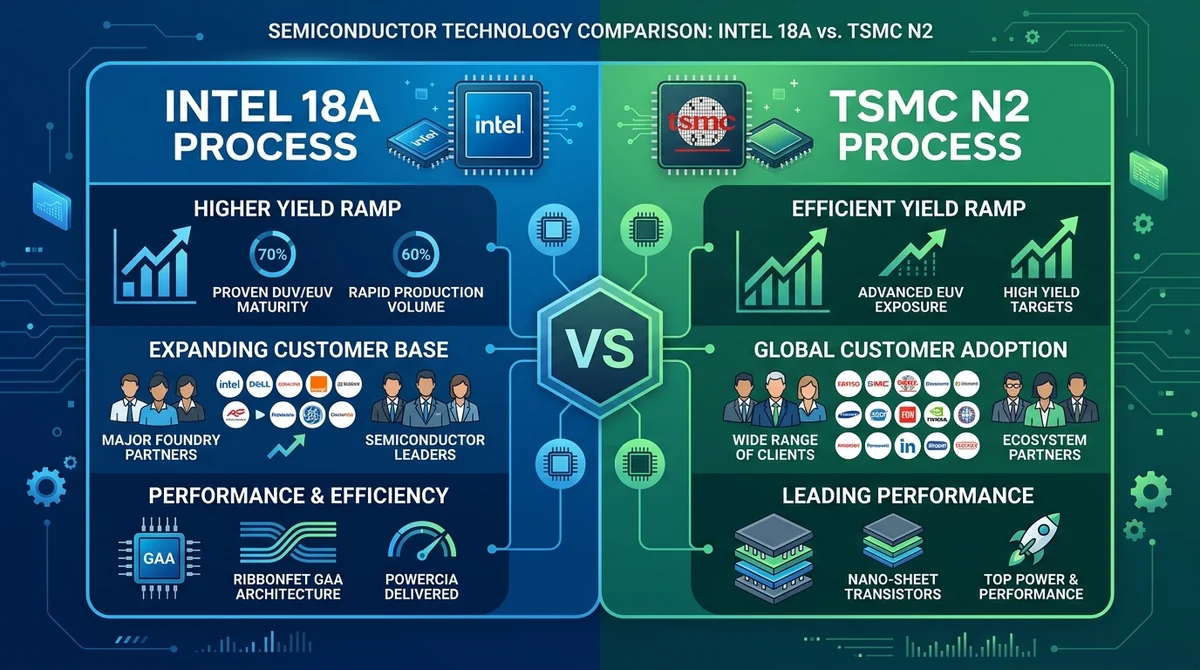
Compare Intel and TSMC on advanced process yield, customer structure, technology roadmap, and capacity ecosystem for data-driven foundry choices.
Conclusion: For advanced process foundry selection, TSMC remains the top choice for most design houses due to its faster yield ramp, diverse top-tier customer base, and massive capacity ecosystem. Intel seeks differentiation with 18A's RibbonFET and PowerVia technologies, but yield and external customer expansion carry uncertainty.
Data as of 2026-10-03.
#How do Intel and TSMC differ in advanced process yield?
TSMC has an advantage in advanced process yield ramp, typically reaching stable mass production faster. Intel, being the first to adopt RibbonFET (GAA) and PowerVia backside power delivery, faces higher integration complexity and greater yield ramp risk.
#Are yield data for Intel 18A and TSMC N2 publicly available?
Neither company has disclosed specific advanced process yield figures for 2026, so precise numerical comparison is impossible. Public information indicates TSMC typically ramps yield faster, while Intel faces yield ramp risks with new technologies like RibbonFET and PowerVia.
#What different challenges do the two companies face in yield improvement?
Intel, as the first to adopt RibbonFET (GAA) and PowerVia backside power delivery, faces higher integration complexity and greater yield ramp risk. TSMC N2 uses nanosheet transistors, a relatively smooth technology evolution, so yield improvement is usually faster.
#How do Intel and TSMC differ in customer structure?
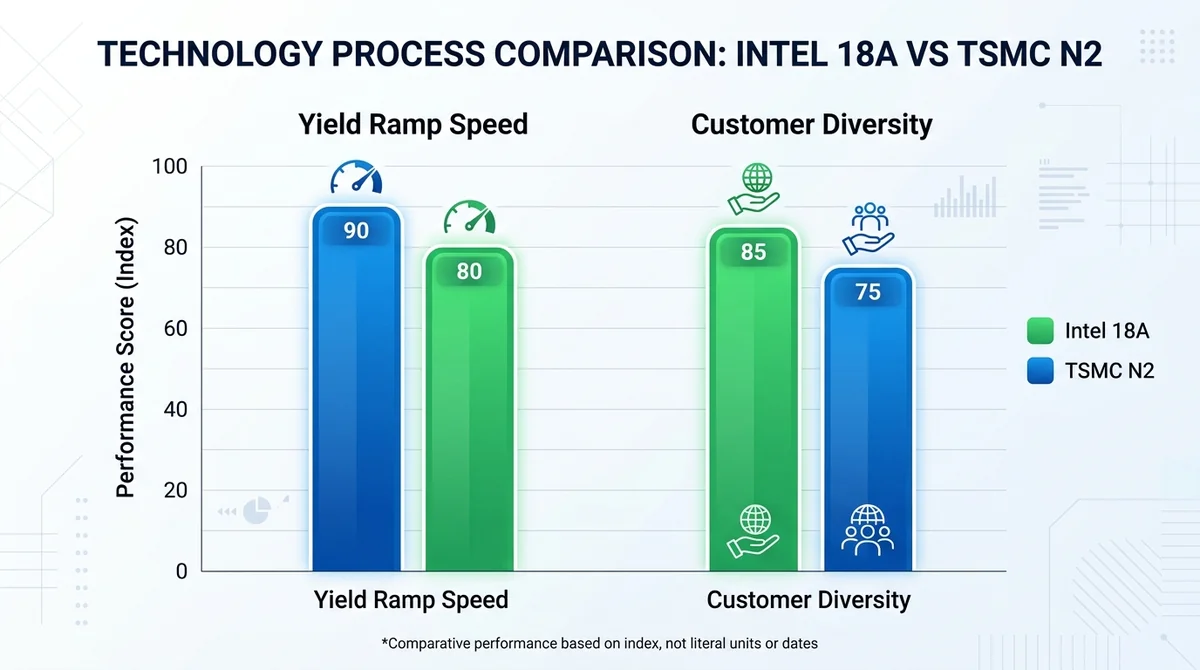
TSMC has a diverse and stable top-tier customer base, while Intel's foundry business has a more concentrated customer base, primarily serving its own product lines, with external customer expansion still in early stages. Customer structure differences affect capacity planning and risk diversification.
#Who are TSMC's main foundry customers?
TSMC's customers include Apple, AMD, NVIDIA, Qualcomm, and other top design houses, making its customer base diverse and stable. These top customers bring stable order volumes and help amortize advanced process R&D and capacity costs.
#What is the customer composition of Intel's foundry business?
Intel's foundry customers are relatively concentrated, primarily its own products, with few external customers. External customer expansion is still in early stages, and customer structure differences affect capacity planning and risk diversification. Intel is attracting specific customers through differentiated technology but has not yet formed a multi-customer ecosystem on TSMC's level.
#What are the technology roadmap differences between Intel 18A and TSMC N2?
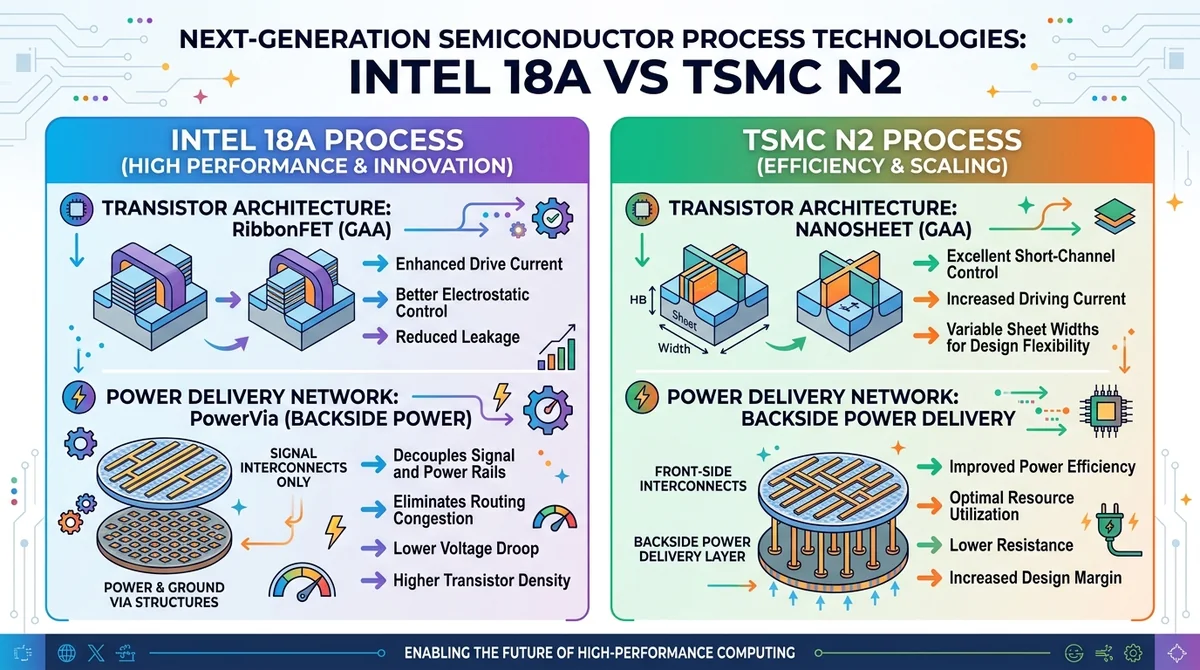
Intel 18A is the first to introduce RibbonFET and PowerVia backside power delivery, while TSMC N2 adopts nanosheet transistors but introduces backside power delivery later. The roadmap differences affect performance, power consumption, and yield.
#What transistor architectures do they use?
Intel 18A uses RibbonFET (GAA) and PowerVia backside power delivery; TSMC N2 uses nanosheet transistors, with backside power delivery expected in later nodes. RibbonFET is Intel's name for GAA transistors, while TSMC's nanosheet transistors belong to the same technology family but with different implementation and timing.
#How do new technologies like backside power delivery affect performance and yield?
Backside power delivery improves power and performance but increases process complexity, potentially slowing yield ramp. Intel introduces two new technologies simultaneously on 18A, posing greater yield challenges; TSMC chooses to adopt nanosheet transistors first on N2 and delay backside power delivery to reduce risk.
#What are the gaps in capacity and ecosystem support between the two companies?
TSMC holds an advantage with massive capacity and a mature design ecosystem, while Intel's foundry business is still catching up in capacity and ecosystem support, which affects external customer adoption decisions.
#How is TSMC's capacity scale and customer support system?
TSMC has the world's largest advanced process capacity and a mature design ecosystem with comprehensive support. Its capacity advantage allows TSMC to serve multiple top design houses simultaneously and provide complete support from design to mass production.
#How is Intel's foundry capacity and ecosystem development progressing?
Intel's foundry capacity is limited, and ecosystem support is still under construction, affecting customer adoption willingness and delivery capability. Intel is investing resources to expand foundry capacity and improve the design ecosystem, but the gap with TSMC remains significant in the short term.
#How to choose between Intel and TSMC foundry services based on your needs?
Design houses need to comprehensively evaluate yield, technology, capacity, and ecosystem when selecting a foundry. TSMC is currently the first choice for most top companies, while Intel needs to build attractiveness through differentiated technology or capacity.
#What factors determine which foundry a design house chooses?
Yield, customer structure, technology roadmap, capacity, and ecosystem are core considerations. For design houses seeking stable mass production and a mature ecosystem, TSMC is the safer choice; for those willing to try differentiated technology and accept certain risks, Intel 18A may offer unique performance advantages.
#How do selection strategies differ for design houses of different sizes?
Large design houses may prefer TSMC to reduce risk; Intel may attract specific customers through differentiated technology or capacity. Small and medium-sized design houses may focus more on cost and delivery capability, where TSMC's capacity and ecosystem advantages make it more attractive.
#Intel vs TSMC Comparison Matrix
| Dimension | Intel 18A | TSMC N2 |
|---|---|---|
| Transistor architecture | RibbonFET (GAA) | Nanosheet transistors |
| Backside power delivery | PowerVia (first to introduce) | Introduced later |
| Yield ramp | Higher risk | Usually faster |
| Customer structure | Primarily own products, few external customers | Diverse top-tier customers (Apple, AMD, NVIDIA, Qualcomm, etc.) |
| Capacity scale | Limited, still catching up | World's largest advanced process capacity |
| Ecosystem support | Under construction | Mature and complete |
#Frequently Asked Questions (FAQ)
#Are yield data for Intel 18A and TSMC N2 publicly available?
No, neither company has disclosed specific yield data.
#Who are TSMC's main foundry customers?
TSMC's customers include Apple, AMD, NVIDIA, Qualcomm, and other top design houses.
#What is the difference in transistor architecture between Intel 18A and TSMC N2?
Intel 18A uses RibbonFET (GAA) and PowerVia backside power delivery; TSMC N2 uses nanosheet transistors, with backside power delivery introduced later.
#Is the gap in capacity and ecosystem support between TSMC and Intel large?
TSMC has the world's largest advanced process capacity and a mature design ecosystem, while Intel's foundry capacity is limited and its ecosystem is still under construction.
#What factors do design houses mainly consider when choosing a foundry?
Yield, technology roadmap, capacity, ecosystem support, and customer structure are core considerations.
#Which customers can Intel 18A's differentiated technology attract?
Intel 18A's RibbonFET and PowerVia technologies may attract design houses seeking differentiated performance and willing to accept certain yield risks, especially those needing customized solutions or having strategic partnerships with Intel.
#Why does TSMC usually ramp yield faster in advanced processes?
TSMC adopts incremental technology evolution in advanced processes (e.g., from FinFET to nanosheet) and has massive capacity and a mature design ecosystem, allowing faster process tuning and stable yield achievement.
This content is compiled from public data and does not constitute investment or account opening advice. Data as of 2026-10-03; actual conditions may change. Check official Intel and TSMC sources for the latest information.
FAQ
Are yield data for Intel 18A and TSMC N2 publicly available?
No, neither company has disclosed specific yield data.
Who are TSMC's main foundry customers?
TSMC's customers include Apple, AMD, NVIDIA, Qualcomm, and other top design houses.
What is the difference in transistor architecture between Intel 18A and TSMC N2?
Intel 18A uses RibbonFET (GAA) and PowerVia backside power delivery; TSMC N2 uses nanosheet transistors, with backside power delivery introduced later.
Is the gap in capacity and ecosystem support between TSMC and Intel large?
TSMC has the world's largest advanced process capacity and a mature design ecosystem, while Intel's foundry capacity is limited and its ecosystem is still under construction.
What factors do design houses mainly consider when choosing a foundry?
Yield, technology roadmap, capacity, ecosystem support, and customer structure are core considerations.
Related Terms
Done comparing? Ready to place your first trade?
The crypto assets, tokenized US stocks and ETFs you just compared are all tradable on MSX — spot or perpetuals.
Quick Start Trading →New here? Registration takes three quick steps.